
Trolley
You have no items in your shopping cart

 Budgets
 Dumbers
 Discs
Discs
 Benches
 Racks and Rigs
 Weights Holders
 Isotonic machines
 Calisthenics
 Cardio
 Kettlebells
 Flooring
 Gym Set
 Accessories
 Combat
 ARTI MARZIALI
 CONTAINER GYM
 Tug-Of-War
 Used Gym Equipment
 PILATES MACCHINARI
 GINNASTICA ARTISTICA
 CAMPI DA PADEL
 Prodotti in Pronta Consegna
 Informazioni
 IRONMAN
 Gift Card
- Donatif
- General information
- 0 I like it
- 1914 Views
- 0 comments
- stress reduction, improved self-esteem, physical and mental well-being, gym training
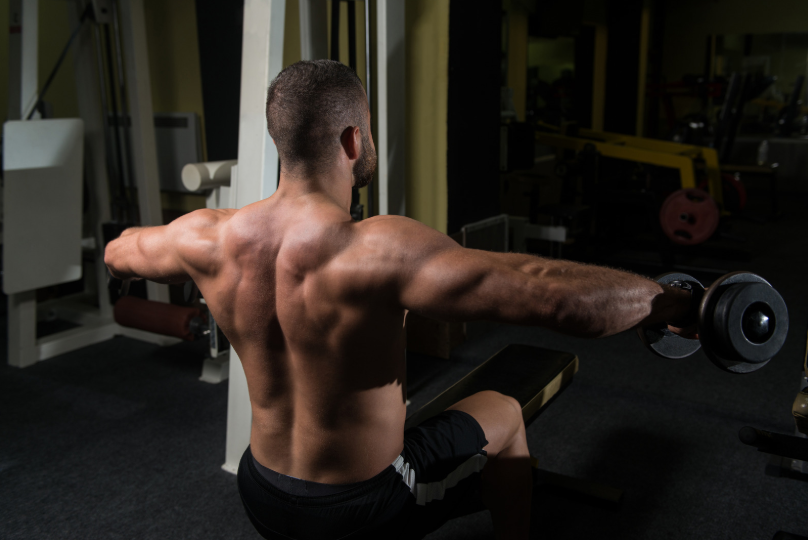
Adjustable Dumbbells, Multi-Gym or Small Rack: What Makes the Most Sense in Limited Space
When building a home gym in a small space, the challenge is not just figuring out which piece of equipment is best overall, but which one truly makes sense for your specific situation. This is where many people get stuck. They see adjustable dumbbells as a practical option, a compact multi-gym as a complete solution, and a small rack as the most advanced setup, but struggle to turn these labels into a concrete decision. The result is a common confusion: comparing very different tools using the wrong criteria, assuming that the most complete option is automatically the smartest choice.
In reality, when living in an apartment, studio, or a room that is not fully dedicated to training, the goal is not to get the most equipment possible, but to achieve the best balance between space, versatility, and long-term progression. The right question is not “what can do the most?”, but “what allows me to train consistently without turning my home into a permanent compromise?”. That’s why this comparison needs to be approached realistically: each option has value, but only within the right context.
- What really changes when space is the main constraint
- Adjustable dumbbells: the simplest way to start without mistakes
- Compact multi-gym: when convenience beats freedom
- Small rack: the option with the most growth potential, but requiring more planning
- How to choose based on your real scenario, not the “most complete” temptation
What really changes when space is the main constraint
The first mistake is focusing only on the dimensions listed in product specifications. In a small-space home gym, what matters much more is the real footprint: how the equipment affects movement, room usability, and how easily it can stay in place without becoming an everyday obstacle. Two square meters taken by a fixed structure are not the same as two square meters used flexibly. Something that looks compact on paper can feel intrusive in daily life, especially if it requires permanent clearance in front, above, or around it.
There is also a key difference between occupied space and blocked space. Adjustable dumbbells take up very little room and can blend into a multifunctional area when not in use. A compact multi-gym concentrates multiple exercises in one spot but essentially dedicates that area exclusively to training. A small rack, on the other hand, is not just a structure—it’s an ecosystem requiring a barbell, plates, a bench, and operational space. The right choice does not come from wanting more options, but from understanding how much space you are truly willing to commit permanently.
Adjustable dumbbells: the simplest way to start without mistakes
Adjustable dumbbells offer a decisive advantage: they provide the best balance between compactness, initial cost, and freedom of use. For beginners building a home gym without overwhelming their space, they are often the most logical option. They allow for a wide range of movement patterns, support effective full-body workouts, and do not require reorganizing the entire room. This significantly reduces initial friction: less clutter, fewer doubts, and a lower risk of regret after purchase.
Their limitation is not so much in training quality, but in progression and convenience during more structured sessions. Some exercises are less practical compared to guided machines or barbell setups, and adjusting weights can be less fluid. However, this is also their strength: they don’t promise everything, but they deliver exactly what matters most at the beginning—actually training consistently. For those worried about space-related purchase mistakes, adjustable dumbbells are often the most rational first step.
Compact multi-gym: when convenience beats freedom
A compact multi-gym is appealing because it creates a sense of order. Multiple exercises are concentrated into a single piece of equipment, usage is intuitive, and it feels like having a mini gym at home. For those living in apartments who want to avoid scattered equipment and prefer a streamlined experience, this can be a strong option. It also lowers the entry barrier for beginners who value guided, repeatable movements.
However, the multi-gym does not always win in terms of true versatility, even if it appears so. It performs certain movements very well and simplifies training, but it locks the user into fixed paths and configurations. In very small spaces, it can feel tidy but also restrictive: that space becomes permanently assigned to it. It is therefore ideal for those who prioritize ease of use, structure, and visual order, but less suitable for those seeking adaptability and long-term flexibility.
Small rack: the option with the most growth potential, but requiring more planning
The small rack is often the most attractive option because it conveys seriousness and durability. And rightly so—it offers the greatest long-term potential among the three. It allows training closer to a traditional gym setup, supports broader progression, and can evolve with the user. However, this potential only becomes real when there is enough space not just to fit it, but to use it properly with a bench, barbell, plates, and safe movement area.
This is also where many people misjudge it. On paper, it seems like the best possible investment; in reality, in a cramped environment, it can become the most limiting option. Not because it lacks value, but because it requires the right context. If your space is truly limited and shared with daily living, a rack may offer more theoretical possibilities but less practical usability. It makes sense when there is a clear intention to build a stable and evolving setup—not just to choose something “more complete.”
How to choose based on your real scenario, not the “most complete” temptation
The best decision almost always depends on your real-life setup. In a studio apartment or flexible room, adjustable dumbbells are typically the smartest choice: minimal space, high utility, and immediate usability. In a small but organized room, a compact multi-gym can make more sense by simplifying training and reducing clutter. In a dedicated or semi-dedicated space, a small rack becomes more appealing, especially with a long-term vision for your home gym.
Ultimately, there is no universal answer, but there is a practical hierarchy. When space is the main constraint, the winner is not the equipment that does the most, but the one that allows consistent training with the least friction and compromise. For most beginners, the smartest choice is the one that simplifies, not the one that impresses. This is how you move from overwhelming options to clear trade-offs, where every compromise is intentional and every benefit is concrete. At that point, the decision stops being a gamble and becomes a clear, rational choice.
Comments (0)