
Trolley
You have no items in your shopping cart

 Budgets
 Dumbers
 Discs
Discs
 Benches
 Racks and Rigs
 Weights Holders
 Isotonic machines
 Calisthenics
 Cardio
 Kettlebells
 Flooring
 Gym Set
 Accessories
 Combat
 ARTI MARZIALI
 CONTAINER GYM
 Tug-Of-War
 Used Gym Equipment
 PILATES MACCHINARI
 GINNASTICA ARTISTICA
 CAMPI DA PADEL
 Prodotti in Pronta Consegna
 Informazioni
 IRONMAN
 Gift Card
- Donatif
- General information
- 0 I like it
- 1955 Views
- 0 comments
- gym, sports, glute exercises, glute strength
READING TIME: 9 MINUTES ➤➤
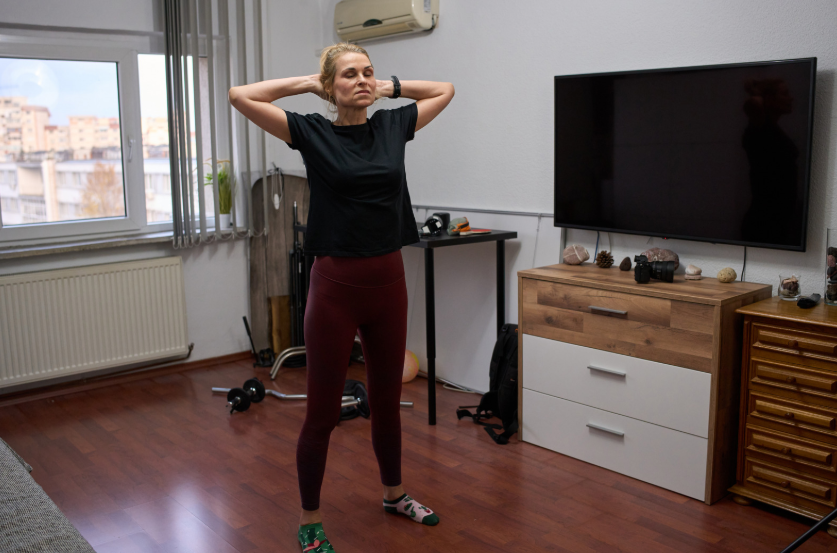
Pre-workout warm-up is one of the most overlooked yet crucial phases for anyone engaging in physical activity, at any level. Whether you are a recreational athlete or a professional competitor, dedicating the right amount of time to preparing your body means preventing injuries, improving performance, and optimizing the effectiveness of the entire training session. In this article, we will explore the most effective protocols, validated by science, to build a customized warm-up tailored to your discipline and personal goals.
The goal is to provide a clear and practical framework, starting from physiological principles to methods for monitoring warm-up quality. Investing just a few minutes at the beginning can translate into a significant advantage in terms of performance and athletic longevity.
- Why warm-up is essential
- How to structure an effective protocol
- Heart rate, recovery, and body response
- Monitoring and quality control of the warm-up
- Conclusions and practical recommendations
Why Warm-Up Is Essential
The warm-up is not just an introductory phase of training, but a complex physiological process aimed at preparing the entire body for physical effort, reducing the risks associated with muscle and joint injuries. An effective protocol gradually stimulates the cardiovascular, muscular, and neurological systems, activating the main muscle chains according to the technical movement required.
Numerous studies have shown that a well-designed warm-up increases muscle elasticity, improves the viscosity of synovial fluid, and most importantly optimizes neuromuscular transmission, making movements smoother and more reactive. This means not only injury prevention, but also better technical execution, faster acceleration, and more efficient effort management.
How to Structure an Effective Protocol
A good warm-up always follows a progressive logic: from general to specific. The initial phase may include low-impact dynamic movements (brisk walking, joint mobility exercises, light jogging), followed by exercises that replicate in a simplified or controlled manner the athletic movement of the sport practiced. The ideal duration ranges from 10 to 20 minutes, with a gradually increasing intensity, which can be monitored through subjective parameters such as rate of perceived exertion or objective ones like heart rate.
The importance of progression is twofold: on one hand, it stimulates the body without prematurely fatiguing it; on the other, it promotes mental adaptation, preparing the athlete to approach the main part of the workout with maximum focus and neuromuscular activation. There is no single protocol suitable for everyone: the context (sport practiced, training goal, individual physical condition) is decisive.
Heart Rate, Recovery, and Body Response
A crucial parameter to observe during warm-up is heart rate, which should gradually increase until reaching a moderate range, indicating the activation of the aerobic metabolism. An increase that is too rapid may indicate an excessively intense start, potentially affecting subsequent performance, while a response that is too mild suggests the need to raise the intensity.
Furthermore, warm-up plays a key role in facilitating recovery mechanisms between efforts, thanks to improved oxygenation and early activation of thermoregulation. When properly executed, it helps maintain homeostasis and reduce early lactate accumulation, a determining factor for those who train intensely and consistently.
Monitoring and Quality Control of the Warm-Up
To make the warm-up truly effective, it is useful to constantly monitor body signals. This can be done simply by tracking heart rate (with a heart rate monitor or smartwatch), or with more advanced tools in professional settings (thermal cameras, neuromuscular sensors, accelerometers). The goal is to obtain immediate feedback on the effectiveness of the protocol and the athlete’s readiness.
However, monitoring should not be limited to instruments. Subjective perception also plays a fundamental role: feelings of stiffness, early fatigue, or lack of concentration may indicate that the warm-up was not properly calibrated. It is therefore essential to adapt each protocol in real time, based on the feedback received, without rigidity or automatism.
Conclusions and Practical Recommendations
An effective warm-up is the result of a balance between science and listening to your body. It cannot be improvised or left to chance. Every athlete should build a personalized routine consistent with the demands of their discipline and their current fitness level. In this sense, individualizing the protocol is the key to maximizing benefits.
Investing in the warm-up phase means investing in the longevity of your athletic practice, avoiding injury-related downtime and maximizing results in the medium to long term. The final advice is simple: treat your warm-up with the same care you dedicate to your actual training. Because that’s where the difference begins between those who train… and those who perform.
Comments (0)