
Trolley
You have no items in your shopping cart

 Budgets
 Dumbers
 Discs
Discs
 Benches
 Racks and Rigs
 Weights Holders
 Isotonic machines
 Calisthenics
 Cardio
 Kettlebells
 Flooring
 Gym Set
 Accessories
 Combat
 ARTI MARZIALI
 CONTAINER GYM
 Tug-Of-War
 Used Gym Equipment
 PILATES MACCHINARI
 GINNASTICA ARTISTICA
 CAMPI DA PADEL
 Prodotti in Pronta Consegna
 Informazioni
 IRONMAN
 Gift Card
- Donatif
- General information
- 0 I like it
- 2280 Views
- 0 comments
READING TIME: 7 MINUTES ➤➤
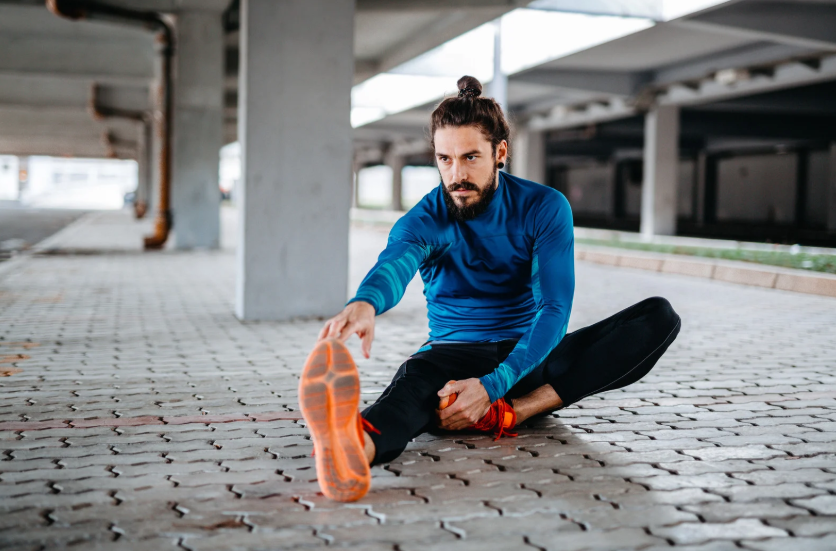
Anyone who practices Streetlifting knows how every rep leaves its mark: lingering tension, contracted muscles, compressed joints. Yet, it's in the minutes following the final lift that a crucial part of future performance is determined. Implementing a post-Streetlifting stretching routine isn’t just a closing gesture: it’s an investment in recovery, longevity, and movement quality. Let’s explore how to decompress and relax the body with targeted exercises for every area involved.
- Why stretching matters after Streetlifting
- Effects of post-workout decompression
- Complete post-Streetlifting stretching routine
- When and how long to stretch
- Long-term benefits and progress
Why stretching matters after Streetlifting
Recovery doesn’t begin when you get home—it starts the moment you set the bar down. During this window, the body is still in a state of neuromuscular excitement: heart rate elevated, muscles engorged, joints compressed. This is where post-Streetlifting stretching comes in, paving the way for tension release and a gradual return to balance.
Neglecting this moment leads to stiffness, increased injury risk, and compromised movement quality. A solid post-workout decompression protocol acts as a pressure release valve for the musculoskeletal system, helping the body assimilate the training effort effectively.
Effects of post-workout decompression
Adding a cool-down phase after Streetlifting isn't just about subjective feelings. The benefits are real and measurable: lowered muscle tone, improved venous return, and reduced inflammation in tendons and joints. In practice, it speeds up recovery and significantly lessens next-day soreness.
Neurologically, post-exercise stretching activates the parasympathetic response: the body enters “recovery mode,” improving sleep quality and tissue regeneration. Muscular decompression is much more than stretching—it's a physiological reset.
Complete post-Streetlifting stretching routine
Glutes and lower back
Streetlifting puts intense demand on the glutes, spinal erectors, and lumbar area. That’s why the posterior chain should be the first to decompress. Exercises like the supine “figure 4” or seated spinal twist help release the glutes and decompress the lower back, which is often overactive.
Holding each position for at least 30 seconds allows the connective tissue to adapt and let go of tension. The goal isn’t to "pull" but to breathe into the stretch, enabling deep muscles to relax naturally.
Lats and shoulders
Lats are often tight after weighted pull-ups and heavy rows. Effective stretches include child’s pose with arms extended and chest sinking toward the floor, or wall-assisted lat stretches. Shoulders benefit from scapular opening drills and passive rotations.
These movements promote thoracic mobility and ease upper back tension. Reducing stress on the shoulder girdle is essential for maintaining performance in future sessions.
Forearms and wrists
One of the most overlooked areas in recovery is the forearms, strained by pull-ups, dips, and static holds. Stretching wrist flexors and extensors—both in extension and flexion—helps decompress the joint and boost local circulation.
These moves are best done on the floor, with palms facing in various directions, using body weight to intensify the stretch. This small step can help prevent inflammation and chronic discomfort.
Chest and thorax
Pressing movements easily cause chronic chest tightness. Simple wall stretches or foam roller openings give space back to the ribcage and improve posture.
These exercises should be paired with deep diaphragmatic breathing to stimulate relaxation and increase stretch effectiveness. Thoracic decompression also positively impacts fatigue perception and overall well-being.
When and how long to stretch
The timing of post-workout stretching is critical. The ideal moment is within 10 minutes of ending your workout, while the body is still warm and responsive. A solid routine can last just 10–15 minutes if it's complete and well-balanced.
Overdoing it isn’t necessary: a few well-executed exercises, with mindful breathing and progressive intensity, are more effective than long, distracted sessions. Consistency is the real key to benefit.
Long-term benefits and progress
Consistently integrating post-Streetlifting stretching yields tangible results: increased range of motion, reduced soreness, better body awareness. But there’s more: by reducing stiffness, you also improve technical execution, prevent joint burnout, and ensure training continuity.
Those who “close the session properly” truly feel the difference the next day. It’s a small act that creates a major divide between those who just train and those who truly take care of their body. Post-session stretching isn’t optional—it’s part of peak performance.
Comments (0)