
Trolley
You have no items in your shopping cart

 Budgets
 Dumbers
 Discs
Discs
 Benches
 Racks and Rigs
 Weights Holders
 Isotonic machines
 Calisthenics
 Cardio
 Kettlebells
 Flooring
 Gym Set
 Accessories
 Combat
 ARTI MARZIALI
 CONTAINER GYM
 Tug-Of-War
 Used Gym Equipment
 PILATES MACCHINARI
 GINNASTICA ARTISTICA
 CAMPI DA PADEL
 Prodotti in Pronta Consegna
 Informazioni
 IRONMAN
 Gift Card
- Donatif
- General information
- 0 I like it
- 1486 Views
- 0 comments
- gym flooring, safety flooring, gym safety, shock-absorbing materials
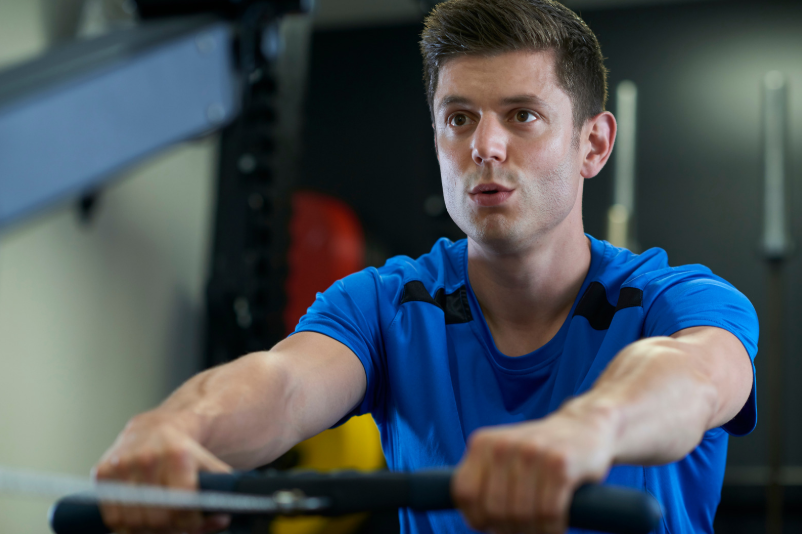
Rowing Machine for Rehabilitation and Posture: What to Know and When It’s Useful
A rowing machine for rehabilitation can be perceived in two very different ways: on one hand as a smooth, controllable, low-impact piece of equipment, and on the other as a movement involving the back, hips, knees, and shoulders, which may create concern for people recovering from pain or returning to physical activity. The practical reality lies somewhere in between: a rowing machine is not automatically suitable for everyone, but it can become an interesting tool when used with proper technique, moderate intensity, and guidance consistent with an individual’s condition.
For adults over 50, beginners, or people in recovery, the goal is not simply to “work hard,” but to move safely. International physical activity guidelines suggest that, even in the presence of limitations, staying active according to one’s abilities is beneficial, starting with small amounts and progressing gradually. NICE recommendations for lower back pain also encourage maintaining normal activities and exercise when appropriate as part of conservative management. These principles do not replace professional medical advice, but they help explain why controlled movement can be beneficial when properly managed.
Why a rowing machine can help in cautious recovery programs
The rowing machine is often considered a low-impact exercise machine because the movement is performed while seated and does not involve jumping, running, or repeated ground impact. This can make it appealing for people looking for controlled cardiovascular activity, especially when brisk walking or running feels uncomfortable. The movement engages the legs, core, and arms in sequence, with adjustable resistance that allows low-intensity training. In a physical therapy or rehabilitation setting, however, the real value depends on movement quality rather than the machine itself.
From a physiological perspective, rowing may help improve coordination, controlled hip and knee mobility, activation of posterior-chain muscles, and moderate aerobic conditioning. For someone who feels hesitant about exercise, this can be reassuring because it allows movement without excessive loading. Still, because the rowing motion requires good synchronization, it is generally better to begin with short sessions, low resistance, and a slow pace. In cases involving persistent pain, neurological symptoms, recent surgery, or specific diagnoses, the decision should always be discussed with a doctor, physiotherapist, or qualified healthcare professional.
Proper rowing posture and spinal control
The relationship between a rowing machine and posture depends largely on how the stroke is performed. The back should not collapse forward or excessively arch backward. A safer posture includes a stable torso, relaxed shoulders, a light grip, and movement driven first by the legs, then the trunk, and finally the arms. During the recovery phase, the sequence reverses in a controlled manner: arms, torso, and legs. This helps prevent compensations that may overload the lower back, neck, or shoulders.
People using a rowing machine for postural reasons should avoid the mindset of “pulling hard” during early sessions. The priority should be maintaining a smooth, repeatable movement pattern with steady breathing and no increasing pain. A lumbar support, a stable floor mat under the machine, and low-intensity training programs may increase the sense of control, but they cannot correct poor technique on their own. If tingling, radiating pain, loss of strength, or significant worsening of symptoms occurs during exercise, the activity should be stopped and reassessed.
When it may be recommended and when it should be avoided
A rowing machine can be useful when the goal is to restore general movement, improve exercise tolerance, and introduce cardiovascular activity without high impact. It may suit sedentary individuals, adults over 50, or beginners who do not have specific contraindications and who can maintain stable technique. In rehabilitation programs, it may be included as a light, progressive, and measurable exercise, especially if a professional has already assessed mobility, pain levels, muscular balance, and trunk control.
Greater caution is recommended in the presence of acute unexplained pain, severe flare-ups, symptomatic herniated discs, intense sciatica, spinal instability, recent surgery, or uncontrolled cardiovascular conditions. In these situations, choosing a “gentle” exercise machine is not enough: it is necessary to determine whether that specific movement is appropriate for the current phase of recovery. The safest approach is to consider the rowing machine for posture support as a possible aid rather than an independent therapy. Safety comes from personalization, gradual progression, and careful monitoring of symptoms.
What to consider before starting
Before using a rowing machine, it is helpful to clarify the purpose: improving endurance, moving without impact, enhancing coordination, regaining confidence, or following a physiotherapy program. This step helps avoid improvised workouts and reduces the risk of turning a light exercise into excessive strain. For beginners, an initial session can be very short, even just a few minutes, while focusing on movement quality and observing the body’s response afterward. Pain should never be ignored or automatically interpreted as a normal adaptation.
A practical strategy is to monitor three elements: perceived intensity, postural control, and how the body reacts after the session. If the exercise remains light, technique stays stable, and no worsening occurs within the following 24 hours, progression may be considered cautiously. If the back stiffens, the neck tightens, or pain increases, reducing duration, resistance, or frequency is advisable. During sensitive recovery phases, consulting a physiotherapist can help determine appropriate movement range, rhythm, recovery time, and possible alternatives.
How to use a rowing machine at home with gradual progression
For home use, the rowing machine should be placed on a stable surface with enough space to get on and off without awkward twisting movements. A floor mat can improve grip and protect the flooring, while simple timed workouts help prevent overexertion. For a cautious user, the safest progression does not begin with increasing resistance but with becoming comfortable with the movement itself: sitting correctly, practicing slowly, maintaining a steady rhythm, and stopping before significant fatigue appears. This approach reduces performance anxiety and encourages consistency.
Over time, the rowing machine can become part of a broader routine that includes gentle mobility work, balance exercises, light strengthening, and walking. WHO recommendations emphasize that adults and older adults benefit from combining aerobic activity, muscle strengthening, and, when necessary, balance training and fall prevention. A rowing machine addresses only part of this picture, but it can still be a valuable tool when used sensibly. For people seeking low-impact exercise, the safest choice remains one guided by gradual progression, awareness of symptoms, and professional evaluation whenever necessary.
Comments (0)