
Trolley
You have no items in your shopping cart

 Budgets
 Dumbers
 Discs
Discs
 Benches
 Racks and Rigs
 Weights Holders
 Isotonic machines
 Calisthenics
 Cardio
 Kettlebells
 Flooring
 Gym Set
 Accessories
 Combat
 ARTI MARZIALI
 CONTAINER GYM
 Tug-Of-War
 Used Gym Equipment
 PILATES MACCHINARI
 GINNASTICA ARTISTICA
 CAMPI DA PADEL
 Prodotti in Pronta Consegna
 Informazioni
 IRONMAN
 Gift Card
- Donatif
- General information
- 0 I like it
- 1660 Views
- 0 comments
- gym flooring, safety flooring, gym safety, shock-absorbing materials
READING TIME: 5 MINUTES ➤➤
Noise and Neighbors: How Loud Is a Rowing Machine and How to Reduce It
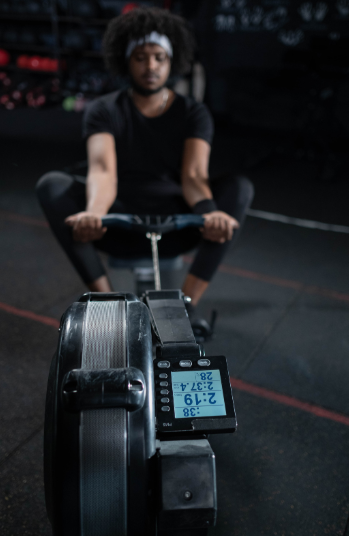
The fear that a noisy rowing machine could create problems with neighbors, family members, or roommates is far more common than many people think. Those living in apartments often imagine heavy impacts on the floor, vibrations traveling downstairs, and constant noise during the least appropriate hours. In reality, a rowing machine is generally less problematic than many high-impact home fitness machines, but it is not automatically silent. The final experience depends on the type of resistance, the quality of the frame, the flooring, and how the machine is actually used.
Talking realistically about rowing machine noise means distinguishing between the sound produced by the machine itself and the vibrations transmitted through the home. The first is heard inside the room, while the second can more easily reach neighbors, especially in buildings with lightweight floors or poor insulation. With practical solutions such as an anti-vibration mat, correct positioning, and sensible workout schedules, it is possible to train more comfortably and remove one of the biggest barriers for people considering creating a small home fitness space.
How Much Noise Does a Rowing Machine Really Make
A home rowing machine does not produce just one type of sound. There is the resistance noise, which may resemble a fan, a sliding mechanism, or moving water, and there is also the mechanical sound generated by the seat, rail, footrests, chain, or belt. In practice, a quiet rowing machine is not completely silent, but rather a machine capable of keeping noise within a level compatible with normal home life. For many users, the concern is not hearing the machine in the same room, but understanding whether the workout could disturb someone sleeping, studying, or living downstairs.
Perceived noise changes significantly depending on the environment. An empty room with hard flooring and few sound-absorbing surfaces amplifies noise far more than a furnished room with carpets, curtains, and furniture. Distance also matters. A moderate sound near the machine may become almost irrelevant in the next room, while vibrations transmitted through the floor can feel much more annoying than airborne noise. For this reason, it is useful to think not only in terms of decibels, but also in terms of vibration transmission, frame stability, and the quality of floor contact.
Types of Rowing Machines and Noise Levels
Air rowing machines are often the most noticeable from an acoustic perspective because resistance is generated by a fan that becomes louder as rowing intensity increases. This does not mean they are unsuitable for home use, but they may require more attention if you live in an apartment or train early in the morning. Water rowing machines create a softer and more continuous sound, similar to moving water, which some people find relaxing while others still perceive as significant. Magnetic rowers, on the other hand, are often chosen by people searching for a quiet rowing machine because their resistance system tends to produce less direct noise.
The difference between models is not based only on resistance technology. An inexpensive rowing machine with an unstable seat, rough rail movement, or poorly assembled components may become more annoying than a technically louder machine built with higher quality materials. Bearing quality, frame solidity, and precision in moving parts all affect real-world noise during workouts. For apartment living, it is important to evaluate not only specifications, but also smoothness, lateral stability, and how well the support points are isolated from the floor.
Vibrations, Flooring, and Neighbors
When neighbors feel disturbed, they are often not hearing the flywheel or resistance system itself, but rather small impacts and vibrations transmitted through the floor. Rowing with abrupt movements may create repeated pressure transfers through the footrests, seat return, and uncontrolled end-of-stroke movements. On rigid flooring or in buildings with limited insulation, these impulses become more noticeable. This explains why two people using the same rowing machine may have completely different experiences depending on the building where they live.
The first sensible solution is creating a separation layer between the machine and the floor. A thick and stable anti-vibration mat helps distribute weight, reduce slipping, and limit vibration transfer. In some situations, noise-reducing pads under the support points may also help, provided they do not compromise stability. The goal is not to cushion the rowing machine excessively, but to create a firm and balanced base capable of absorbing part of the energy generated during training.
How to Reduce Rowing Machine Noise
The position of the rowing machine is one of the most underestimated solutions. Avoiding walls shared with bedrooms, moving the machine away from corners, and choosing an area above less sensitive rooms can make a significant difference. Furnishings also help. Carpets, curtains, and furniture reduce echo and make sound feel less sharp. In very empty rooms, noise appears stronger even when the machine itself is not particularly loud. A well-designed workout area is often more effective than expensive fixes applied later.
Maintenance is just as important as insulation. Loose screws, dirty rails, unstable seats, or neglected moving parts can turn normal equipment noise into repetitive squeaks and impacts. Regular cleaning of the rail, checking support points, and periodically tightening components help keep the rowing machine quieter over time. Technique also matters. Controlled rowing without aggressive starts or violent returns is not only more effective for training, but also more respectful of domestic living conditions.
Workout Hours, Technique, and Good Habits
Recommended workout hours depend on building regulations and household habits, but a practical rule is avoiding intense sessions during the most sensitive periods, such as very early mornings, late evenings, or designated quiet hours. Training during central daytime hours reduces the risk of tension, especially in buildings with poor insulation. There is no need to approach the rowing machine with anxiety. It simply requires the same common sense applied to any repetitive household activity.
A useful habit is performing a real-world test before establishing a regular routine. Row for ten minutes at moderate intensity, listen to what can be heard from the next room, and check whether vibrations are transmitted through the floor. If possible, ask a family member to stand elsewhere in the house during the test. This approach is often more reassuring than relying only on theoretical measurements. In many cases, a quality mat, smoother technique, and better workout timing are enough to solve most concerns.
Practical Questions Before Buying
Before buying a rowing machine for home use, it is worth considering where it will be positioned, what type of flooring it will sit on, and during which hours it will be used. People living on the ground floor usually face fewer limitations than those living above other apartments. Families with children or people resting at home should consider not only sound volume, but also sound consistency. In this context, searching for a quiet rowing machine makes sense, but building a setup compatible with the living environment matters even more.
The most balanced solution combines choosing the right equipment with good daily habits. A stable machine, suitable resistance type, a quality anti-vibration mat, regular maintenance, and controlled rowing technique all significantly reduce the risk of disturbance. For those worried about complaints, judgment, or condominium disputes, the key is not giving up exercise, but preventing the most likely problems in advance. With a realistic approach, a rowing machine can become fully compatible with apartment living and sustainable long-term wellness routines.
Comments (0)