
Trolley
You have no items in your shopping cart

 Budgets
 Dumbers
 Discs
Discs
 Benches
 Racks and Rigs
 Weights Holders
 Isotonic machines
 Calisthenics
 Cardio
 Kettlebells
 Flooring
 Gym Set
 Accessories
 Combat
 ARTI MARZIALI
 CONTAINER GYM
 Tug-Of-War
 Used Gym Equipment
 PILATES MACCHINARI
 GINNASTICA ARTISTICA
 CAMPI DA PADEL
 Prodotti in Pronta Consegna
 Informazioni
 IRONMAN
 Gift Card
- Donatif
- General information
- 0 I like it
- 2719 Views
- 0 comments
READING TIME: 4 MINUTES ➤➤
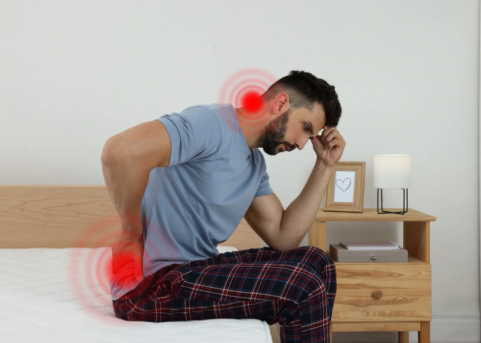
Understanding the difference between common lower back pain and potential sciatica is essential to prevent worsening symptoms and manage pain with greater awareness. Many people tend to underestimate the first warning signs, assuming that every lower back discomfort is simply caused by muscle tension or an incorrect movement. However, there are situations in which the body sends very specific signals that should never be ignored. This article is a practical guide designed to help anyone dealing with lower back pain or pain radiating down the leg distinguish between muscular tension and more complex symptoms, while understanding when it may be time to consult a specialist.
- When back pain becomes a warning sign
- Sciatica: symptoms, causes and how to recognize it
- Move or rest? Best practices to follow
- When to see a professional
When back pain becomes a warning sign
Muscle stiffness or something more serious?
A feeling of stiffness in the lower back is often linked to poor posture, intense physical effort or lack of movement. In these situations, the discomfort tends to remain localized, improves with heat or gentle movement and does not affect other areas of the body. However, when the pain begins to radiate toward the glutes or the leg, there may be more involved than a simple muscle contraction. The difference between muscular tension and sciatic nerve compression is not always immediately obvious, but learning to recognize the distinctive signs is extremely important.
Warning signs you should not ignore
If lower back pain is accompanied by tingling, muscle weakness or an electric shock sensation running down the leg, it may indicate sciatica. These symptoms are caused by inflammation or compression of the sciatic nerve and should never be underestimated. Loss of sensation in the foot or difficulty controlling movement are also important warning signs. In these situations, it is essential not to wait for the issue to resolve on its own: timely intervention may help prevent further complications.
Sciatica: symptoms, causes and how to recognize it
How sciatica presents itself: from the glute to the leg
Sciatica is a condition characterized by pain that begins in the lower back or glute and radiates along the path of the sciatic nerve, extending through the thigh, calf and sometimes even to the foot. It is not simply localized discomfort, but rather a sharp pain often described as burning, stabbing or pulsating. In some cases it appears suddenly after physical strain, while in others it develops gradually over time. One of its most recognizable characteristics is that it typically affects only one leg, unlike more common muscular pain that remains confined to the lower back.
Common symptoms and specific signs to observe
Typical symptoms of sciatica include leg pain originating from the lower back, tingling, numbness and muscular weakness. In more severe cases, walking or balance difficulties may also occur. Another sign that should not be ignored is difficulty bending forward or lifting objects: if these movements trigger an intense pain shooting down the leg, sciatic nerve involvement becomes more likely.
Move or rest? Best practices to follow
Why complete rest is not always the best solution
When back pain appears, the instinctive reaction is often to stop moving completely. However, prolonged inactivity may actually worsen stiffness and slow down recovery. In many situations, gentle and controlled movement helps maintain circulation, preserve mobility and reduce muscular tension. The key is understanding which movements are tolerated and avoiding activities that clearly aggravate symptoms.
Walking, light stretching and gradual mobility exercises are often better tolerated than remaining still for long periods. At the same time, it is important to avoid sudden twisting, heavy lifting or intense physical effort during acute phases.
Listening to your body without forcing it
Every situation is different, which is why body awareness becomes essential. Pain should not be ignored, but neither should it automatically lead to complete inactivity. The goal is to find a balance between protection and movement, allowing the body to recover progressively without creating additional overload.
If symptoms improve with gentle activity and worsen with prolonged sitting or specific movements, this information can also help professionals better understand the origin of the problem and identify the most appropriate strategy.
When to see a professional
Situations that require specialist evaluation
While mild lower back discomfort is common and often temporary, certain symptoms require professional evaluation. Persistent pain lasting several weeks, progressive weakness, numbness or difficulty walking should never be ignored. Likewise, intense pain that significantly limits daily activities may indicate the need for further assessment.
A healthcare professional can help identify the real source of the symptoms and determine whether imaging tests, rehabilitation strategies or more specific interventions are appropriate.
The importance of early awareness
Recognizing the difference between simple muscular tension and potential sciatica allows you to respond more effectively and avoid worsening the condition over time. Learning to observe symptoms carefully, respecting pain signals and acting early are fundamental steps toward protecting long-term mobility and well-being.
Back pain should never automatically create panic, but it should always be approached with awareness. Understanding your body’s signals is the first step toward making safer and more informed decisions for your health and daily movement.
Comments (0)