
Trolley
You have no items in your shopping cart

 Budgets
 Dumbers
 Discs
Discs
 Benches
 Racks and Rigs
 Weights Holders
 Isotonic machines
 Calisthenics
 Cardio
 Kettlebells
 Flooring
 Gym Set
 Accessories
 Combat
 ARTI MARZIALI
 CONTAINER GYM
 Tug-Of-War
 Used Gym Equipment
 PILATES MACCHINARI
 GINNASTICA ARTISTICA
 CAMPI DA PADEL
 Prodotti in Pronta Consegna
 Informazioni
 IRONMAN
 Gift Card
- Donatif
- General information
- 0 I like it
- 2333 Views
- 0 comments
- gym, sports, Stretching
READING TIME: 5 MINUTES ➤➤
Testosterone and Performance: The Complete Scientific Guide
Testosterone is much more than a hormone linked to masculinity. It is a key molecule in regulating physical performance, body composition, energy metabolism, and resilience to stress. Understanding how it truly works, which factors influence its production, and how to optimize it naturally represents a concrete competitive advantage for men aged 25 to 45, athletes, and fitness professionals.
In this guide, we will analyze testosterone with a rigorous medical-scientific approach, focusing on natural and measurable strategies to improve strength, energy, and hormonal balance without resorting to unnecessary pharmacological solutions.
- The physiological role of testosterone
- Testosterone and physical performance
- Factors influencing hormonal levels
- Natural optimization strategies
The physiological role of testosterone in adult men
Testosterone is primarily produced by the Leydig cells in the testes under the control of the hypothalamic-pituitary-gonadal axis. This finely tuned regulatory system ensures a dynamic balance between production and negative feedback, maintaining plasma levels compatible with health, sexual function, and physical performance.
Beyond its reproductive function, testosterone exerts an anabolic action on muscle tissue, stimulates erythropoiesis, contributes to bone density, and modulates insulin sensitivity. A decline does not only lead to reduced libido, but can also affect energy, recovery, fat accumulation, and motivation.
Hypothalamic-pituitary-gonadal axis and endocrine regulation
The hypothalamus releases GnRH, which stimulates the pituitary gland to produce LH and FSH. LH acts directly on the testes, promoting testosterone synthesis. This process is regulated by feedback mechanisms: when blood levels are adequate, the system reduces stimulation.
Chronic stress, prolonged caloric deficit, or sleep disturbances can disrupt this neuroendocrine communication. Understanding this physiology allows for targeted interventions, avoiding superficial approaches that ignore the complexity of hormonal balance.
Testosterone, metabolism, and body composition
Testosterone promotes the activation of satellite muscle cells and the expression of genes involved in protein synthesis. At the same time, it modulates enzymatic activity in adipose tissue, influencing fat distribution.
Optimal levels are associated with greater lean mass and reduced visceral fat accumulation. When the hormone declines, the risk of worsening body composition increases, with cascading effects on basal metabolism and overall performance.
Testosterone and physical performance: what science says
Numerous studies highlight a direct correlation between physiological testosterone levels and the ability to express maximal strength. The hormone acts both at the muscular and neurological levels, improving the efficiency of motor unit recruitment.
It is not only about increasing muscle mass, but about optimizing the interaction between the nervous system and contractile tissue. This aspect is crucial for athletes and fitness professionals seeking measurable and progressive results.
Strength, hypertrophy, and neuromuscular adaptations
Testosterone enhances the adaptive response to resistance training. In the presence of adequate mechanical stimulus, it promotes hypertrophy and improved myofibrillar density.
From a biomechanical perspective, adequate levels allow individuals to sustain heavier loads and recover more quickly between sessions, reducing the risk of performance regression.
Recovery, energy, and resilience to metabolic stress
During intense training, metabolic stress occurs, with the production of lactate, free radicals, and muscle microlesions. Testosterone helps modulate the inflammatory response and supports tissue repair.
A proper balance between testosterone and cortisol represents a key indicator of physiological resilience. When cortisol chronically dominates, performance tends to decline and recovery becomes prolonged.
Factors influencing testosterone levels
Testosterone levels do not depend solely on age. Sleep, nutrition, body composition, and stress management play a decisive role. Ignoring these elements means overlooking powerful levers of natural optimization.
Addressing modifiable factors makes it possible to act on physiology without artificially altering the endocrine axis.
Sleep, stress, and cortisol
Most daily testosterone production occurs during deep sleep. Sleeping less than six hours for prolonged periods can significantly reduce morning levels.
Chronic stress increases cortisol, a catabolic hormone that interferes with testosterone production. Stress management techniques and circadian rhythm regularity are often underestimated yet highly effective interventions.
Nutrition, micronutrients, and essential fats
An excessively restrictive or low-fat diet can compromise hormonal synthesis. Testosterone is derived from cholesterol, and adequate intake of quality monounsaturated and saturated fats is physiologically necessary.
Micronutrients such as zinc, magnesium, and vitamin D are key cofactors in enzymatic processes involved in hormone production. A subclinical deficiency may translate into suboptimal levels.
Training: optimal stimulus vs overtraining
Resistance training acutely stimulates testosterone production, but excessive volume without adequate recovery can have the opposite effect.
Chronic overtraining disrupts the endocrine axis, increasing cortisol and reducing the anabolic response. Intelligent periodization is therefore a fundamental strategy.
Natural strategies to optimize testosterone
Natural testosterone optimization requires an integrated approach involving training, nutrition, sleep, and stress management. There are no miraculous shortcuts, but there are scientifically validated protocols.
The goal is not to exceed physiological limits, but to reach your optimal endocrine potential in a sustainable and safe way.
Integrated science-based protocol
An effective protocol includes high-intensity, multi-joint training, adequate protein intake, and an energy balance aligned with body composition goals.
At the same time, it is essential to ensure 7–9 hours of quality sleep and periodically monitor blood parameters to assess the effectiveness of interventions.
Monitoring, biomarkers, and measurable results
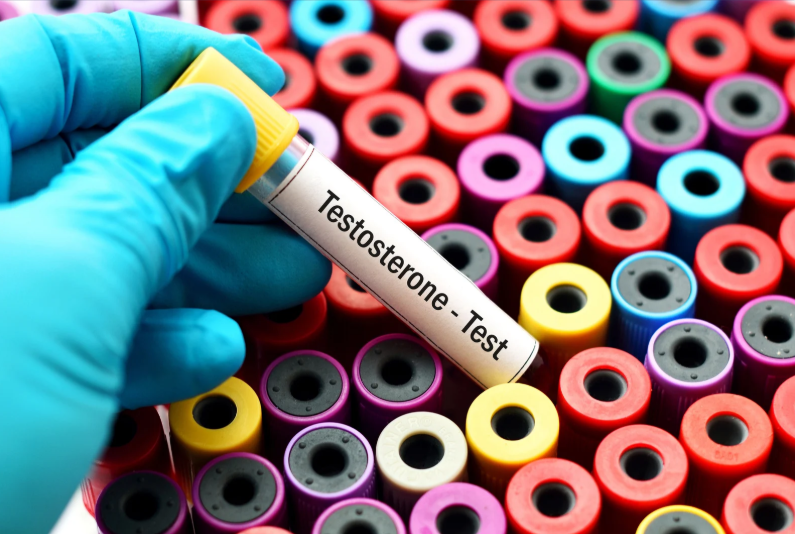
Monitoring total and free testosterone, along with SHBG, LH, and cortisol, provides a more comprehensive assessment of hormonal status. Interpretation must be contextualized with symptoms and actual performance.
Adopting a data-driven approach reduces performance anxiety and restores conscious control over physiological status, transforming hormonal management into a measurable and rational process.
Comments (0)