
Trolley
You have no items in your shopping cart

 Budgets
 Dumbers
 Discs
Discs
 Benches
 Racks and Rigs
 Weights Holders
 Isotonic machines
 Calisthenics
 Cardio
 Kettlebells
 Flooring
 Gym Set
 Accessories
 Combat
 ARTI MARZIALI
 CONTAINER GYM
 Tug-Of-War
 Used Gym Equipment
 PILATES MACCHINARI
 GINNASTICA ARTISTICA
 CAMPI DA PADEL
 Prodotti in Pronta Consegna
 Informazioni
 IRONMAN
 Gift Card
- Donatif
- General information
- 0 I like it
- 1947 Views
- 0 comments
- gym flooring, safety flooring, gym safety, shock-absorbing materials
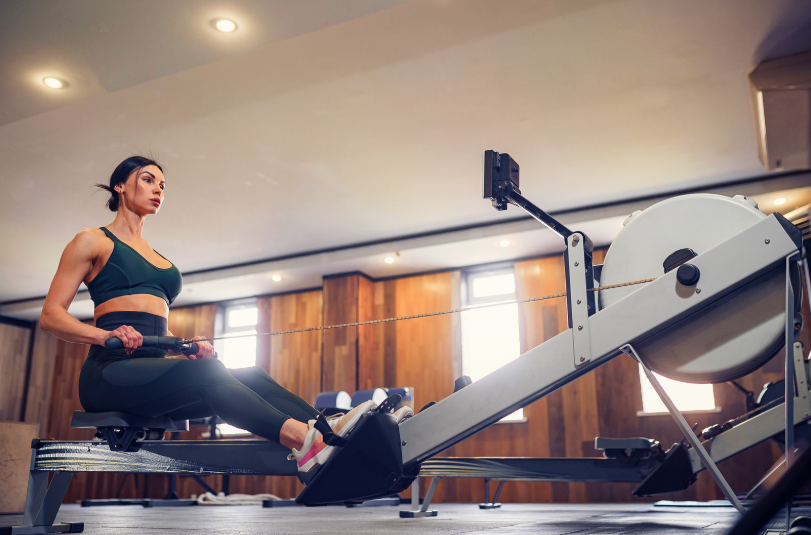
The 10 Most Common Rowing Machine Mistakes and How to Fix Them Immediately
The rowing machine is often chosen for home workouts because it engages most muscle groups without requiring a large amount of space. Despite this, many first-time users quickly develop small incorrect habits that end up compromising comfort, movement fluidity, and workout consistency. In many cases, the problem does not depend on the machine itself, but on technical details that are not immediately obvious during the first training sessions.
The most common rowing machine mistakes are not limited to posture alone. Rhythm, resistance settings, foot placement, and coordination between legs and arms can also affect the quality of execution. Understanding these aspects helps improve movement control and reduces the sense of frustration often experienced by people who think they are “not naturally suited” to this kind of training.
Read also:
- How to Use a Rowing Machine at Home Correctly
- Rowing Machine: Benefits and Practical Tips for Beginners
Posture Mistakes That Immediately Affect Movement
Rounded Back During the Pull
One of the most common mistakes is the tendency to round the back during the drive phase or the final pull. This behavior often appears in beginners who try to generate more power mainly with their arms. In reality, the correct movement starts from the legs and gradually involves the torso. An excessively closed posture reduces movement control and may increase lower back tension after only a few minutes of training.
To correct this issue, it is useful to keep the chest open and imagine a stable line between the head and pelvis. Many users improve quickly simply by slowing down the rhythm and checking their movement in front of a mirror or through a short smartphone video recording. In many cases, after a few sessions focused on technique, the sensation of back fatigue decreases significantly and the movement becomes smoother.
Incorrect Foot Placement on the Footrests
An incorrect adjustment of the foot supports affects the entire rowing mechanics. If the straps are too high or too low, the knees tend to work at unnatural angles and the drive loses stability. This detail is often underestimated by home users, especially when the rowing machine is used quickly without checking the initial settings.
The most practical solution is to adjust the strap so it crosses the middle section of the foot, keeping the ankle stable during the drive. When the position is correct, the movement feels more continuous and the recovery phase becomes less dispersive. A small adjustment at the beginning can immediately improve the feeling of balance and reduce instability.
Rhythm and Coordination Mistakes That Reduce Effectiveness
Pushing With the Arms Too Early
Many beginners start the pull by immediately using their arms without taking advantage of leg drive. This mistake makes the movement fragmented and leads to early shoulder fatigue. On the rowing machine, the lower body should generate most of the power, while the arms should only complete the movement in the final phase.
An effective correction is to mentally divide the movement into three steps: legs, torso, and arms. Training slowly for a few sessions helps create a more natural sequence. Users who apply this strategy often notice smoother movement and reduced perceived fatigue after only a few workouts.
Going Too Fast Without Control
Another common mistake is associating workout quality exclusively with speed. Many users increase the pace believing they will achieve better results, but they end up losing coordination and technical precision. On the rowing machine, excessively fast movement tends to create unnecessary oscillations and reduces the effectiveness of the drive.
Maintaining a regular cadence instead allows for better breathing and posture control. A useful approach is to focus on fluidity rather than speed. Even a moderate pace can become challenging when the technique is stable and continuous. This approach helps avoid abrupt movements and gradually improves overall workout quality.
Mistakes in Resistance Adjustment
Using Resistance That Is Too High
Many users believe that higher resistance automatically means a more effective workout. In reality, excessive resistance makes it difficult to maintain clean technique, especially during the first weeks of use. When resistance is too high, the movement becomes rigid and increases the likelihood of compensating with the back and shoulders.
For beginners, it is generally more useful to work with moderate resistance while focusing on movement control. A more balanced setting allows for continuity and precision throughout the entire session. This approach also helps build confidence when using the rowing machine without developing incorrect movement patterns that are difficult to correct later.
Ignoring Recovery During the Return Phase
The recovery phase is often overlooked because it is perceived as “passive.” In reality, it is a crucial moment for regaining control and preparing for the next drive. Returning too quickly or rushing the recovery leads to disorganized movements and reduces the overall quality of execution.
A good reference is to keep the recovery slightly slower than the drive phase. This simple adjustment improves coordination and overall rhythm. Many users report immediately feeling a more natural movement when they begin managing this transition more effectively.
How to Improve Control and Execution on the Rowing Machine
Training Without Monitoring Technique
Many beginners continue training while repeating the same mistakes because they never actually observe their movement. Even a small technical flaw, if repeated over time, tends to become ingrained. For this reason, it is useful to introduce simple monitoring tools from the very first weeks.
Recording short side-view videos during training allows users to notice details that often go unnoticed during execution. Some users also wear a heart rate monitor to understand whether they are training too intensely for their current level. These tools help develop greater awareness without making workouts unnecessarily complicated.
Skipping the Warm-Up
At home, it is common to start the session immediately without preparation. On the rowing machine, this behavior can make the movement feel stiff during the first few minutes and increase the sensation of early fatigue. Even a brief warm-up contributes to improved mobility and coordination.
A five-minute introductory phase at a controlled pace helps the body gradually adapt to the movement. This approach makes it easier to maintain proper technique from the very beginning of the session and reduces the likelihood of compensations caused by muscle stiffness.
Useful Tools to Quickly Correct the Most Common Mistakes
People using a rowing machine at home can quickly improve workout quality even with very simple tools. A stable mat helps reduce vibrations and small machine movements, improving the feeling of control during the drive. A heart rate monitor, on the other hand, allows users to monitor intensity and rhythm, avoiding overly aggressive starts that compromise technique.
Many users also find video feedback extremely useful. Recording short sequences makes it possible to identify recurring mistakes such as a rounded back, incomplete drive, or overly fast recovery. This method is often used in professional settings as well because it makes details immediately visible that are otherwise difficult to perceive during training. Over time, these corrections help build greater confidence in using the rowing machine and make the movement feel more natural and controlled.
Comments (0)