
Trolley
You have no items in your shopping cart

 Budgets
 Dumbers
 Discs
Discs
 Benches
 Racks and Rigs
 Weights Holders
 Isotonic machines
 Calisthenics
 Cardio
 Kettlebells
 Flooring
 Gym Set
 Accessories
 Combat
 ARTI MARZIALI
 CONTAINER GYM
 Tug-Of-War
 Used Gym Equipment
 PILATES MACCHINARI
 GINNASTICA ARTISTICA
 CAMPI DA PADEL
 Prodotti in Pronta Consegna
 Informazioni
 IRONMAN
 Gift Card
- Donatif
- General information
- 0 I like it
- 1952 Views
- 0 comments
- gym flooring, safety flooring, gym safety, shock-absorbing materials
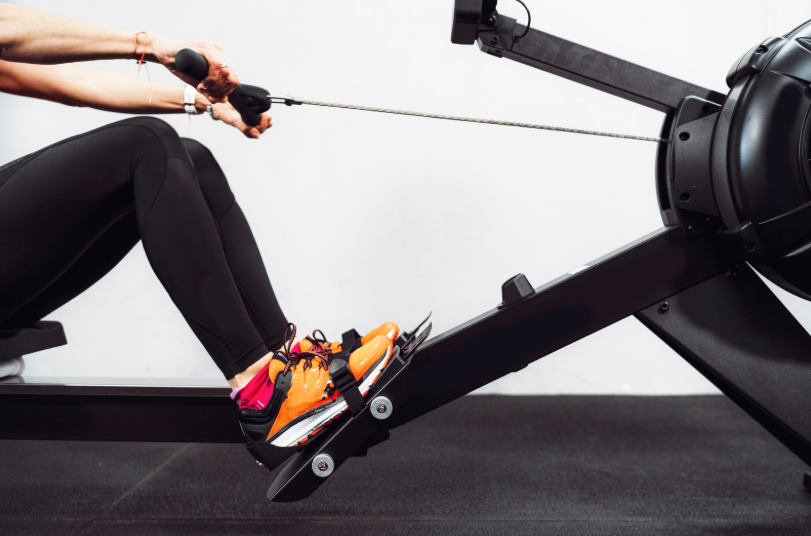
Top Mistakes to Avoid When Using a Rowing Machine for Weight Loss
The rowing machine is often chosen by people who want to lose weight because it allows both the upper and lower body to work simultaneously while maintaining an interesting calorie expenditure even during relatively short sessions. Despite this, many people go through a phase of strong frustration: training is consistent, fatigue is noticeable, but body weight seems unchanged or results arrive very slowly.
In many cases, the problem does not depend on a lack of commitment, but on some very common mistakes in training management and daily habits. Small details such as training at too low an intensity, random recovery periods, or unrealistic expectations can reduce the effectiveness of the work being done. Understanding these aspects helps make the rowing machine a more effective tool for achieving weight loss goals.
Read also:
Training Without a Clear Structure
One of the most common mistakes is the complete lack of programming. Many people use the rowing machine randomly, alternating very light sessions with particularly intense days without a specific logic. This approach often creates the feeling of being constantly active, but it does not allow the body to adapt effectively. Weight loss tends to improve when there is consistency in managing training frequency, duration, and intensity.
Another important aspect concerns workout duration. Training for five minutes sporadically or using the rowing machine only when there is spare time makes it harder to create a consistent calorie expenditure over time. A simple but stable structure, with defined workout days and realistic goals, is often more sustainable than extremely intense random sessions followed by long periods of inactivity.
Always Using the Same Intensity
Many users maintain the exact same pace for weeks without changing resistance or speed. However, the body adapts quickly to repetitive stimuli, especially during cardio workouts. If the level of effort remains identical over time, relative calorie expenditure may decrease and the feeling of being stuck becomes stronger. This does not mean training at maximum intensity every day, but gradually introducing variations that help keep the metabolic stimulus active.
A common mistake is also confusing sweat with workout effectiveness. Feeling tired does not automatically mean you are losing weight. In some cases, sessions are too light to produce meaningful change, while in others they are excessively intense and difficult to recover from. A practical solution is to alternate moderate sessions with more dynamic phases, progressively introducing interval work and slightly longer workouts.
Neglecting Proper Rowing Technique
Technique affects not only comfort during training, but also movement efficiency. Incorrect rowing form tends to overload the back and arms, reducing the involvement of the legs and core muscles. This often leads to less productive sessions and greater joint discomfort. When movement becomes inefficient, workout consistency can also suffer.
Many beginners pull almost exclusively with their arms or maintain a stiff and unnatural posture. The result is poor effort distribution that limits overall muscular work. A more organized technique instead allows you to maintain rhythm longer and use the rowing machine more effectively. Even small posture and coordination corrections can improve workout quality without necessarily increasing training time.
Compensating Training with Bad Habits
Another very common mistake is unconscious compensation. After an intense rowing session, some people tend to move less during the rest of the day or significantly increase portion sizes during meals. This behavior can reduce the overall calorie deficit, creating the feeling of training without achieving concrete results. It is not about “lack of willpower” or failure, but a very common dynamic when starting a weight loss journey.
Recovery also affects the perception of progress. Sleeping poorly, managing stress badly, or alternating very strict periods with moments of complete inconsistency makes it harder to maintain long-term consistency. For many people, a more balanced and sustainable approach works better, with gradual habit changes instead of drastic modifications that are difficult to maintain over time.
Not Monitoring Real Progress
People who use the rowing machine for weight loss often evaluate results exclusively through body weight. This approach can become demotivating because the body changes in ways that are not always immediately visible. Improvements in endurance, movement quality, or body composition do not always appear instantly on the scale. Focusing only on numbers can create a sense of failure even when the process is actually producing positive effects.
Monitoring a few simple parameters helps make progress clearer. Workout duration, training frequency, or perceived effort can show concrete improvements over time. Observing how recovery ability changes can also help determine whether the program is working. A more realistic evaluation of results reduces performance anxiety and makes the journey mentally more sustainable.
Expecting Results Too Quickly
One of the most underestimated obstacles concerns initial expectations. Many people start using the rowing machine expecting to see dramatic changes within just a few days. When this does not happen, they begin believing they are doing everything wrong or are simply not suited for weight loss. In reality, the body adapts at different rates for each individual, and progress rarely follows a perfectly linear path.
Approaching the process with a more gradual mindset helps maintain motivation and consistency. Correcting small mistakes, improving workout quality, and building sustainable habits generally produces more solid results than aggressive strategies maintained only for short periods. In many cases, overcoming a plateau simply requires better workout organization and a clearer evaluation of progress achieved over time.
Comments (0)