







Trolley
You have no items in your shopping cart
 Budgets
 Dumbers
 Discs
Discs
 Benches
 Racks and Rigs
 Weights Holders
 Isotonic machines
 Calisthenics
 Cardio
 Kettlebells
 Flooring
 Gym Set
 Accessories
 Used Gym Equipment
 Combat
 ARTI MARZIALI
 Tug-Of-War
 CAMPI DA PADEL
 PILATES MACCHINARI
 GINNASTICA ARTISTICA
 Gift Card
 Informazioni
- Donatif
- General information
- 0 I like it
- 11 Views
- 0 comments
- stress reduction, improved self-esteem, physical and mental well-being, gym training
READING TIME: 5 MINUTES ➤➤
How to Understand Whether Your Real Goal Is Fat Loss, Strength, or Posture
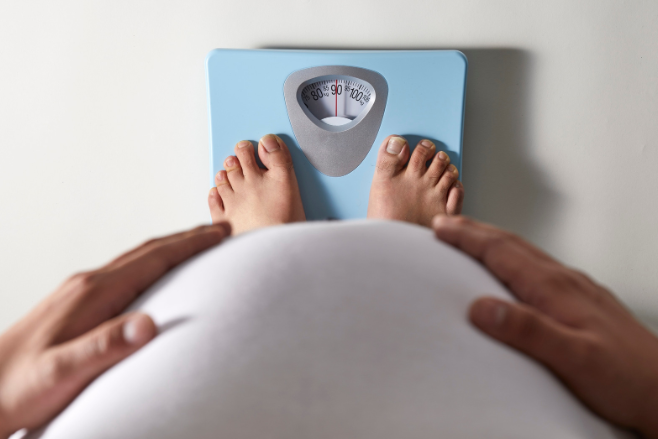
Many people start training at home with a very general idea in mind. They want to feel better, get fitter, look different in the mirror, and maybe have more energy throughout the day. The problem is that a goal that is too broad rarely turns into a consistent routine. When everything feels equally important, it becomes difficult to understand where to start, how to organize your workouts, and above all how to measure whether you are actually moving in the right direction. For this reason, even before choosing sets, reps, or equipment, you need to ask a more concrete question: is your real goal right now mainly fat loss, strength, or posture?
Gaining clarity does not mean giving up other training benefits. On the contrary, it means setting a credible priority for your journey to make it simpler, more understandable, and much more sustainable over time. In an entry-level home gym or a condo environment, this clarity becomes even more valuable, because you often have limited space, time, and equipment. If you understand which improvement matters most right now, you can build a simple yet effective routine, avoiding the feeling of doing a lot without actually achieving anything.
- Why starting with the right goal changes everything
- The difference between what you say you want and what you actually need
- Signs that indicate a fat loss priority
- Signs that indicate a strength priority
- Signs that indicate a posture priority
- Why trying to do everything at once creates confusion
- How to choose a priority without feeling limited
- An example of a minimal routine based on your goal
Why starting with the right goal changes everything
When your goal is clearly defined, every decision becomes easier. The type of exercises you choose changes, the way you distribute your energy throughout the week changes, and even how you perceive results changes. If your focus is fat loss, for example, you will look for a routine that promotes consistency, regular movement, and manageable effort. If your focus is strength, load progression and movement quality will play a central role. If your priority is posture, you will need to work more on body awareness, control, and technical precision.
The key point is that there is no universally “best” goal. There is only the goal that is most useful for you right now. This distinction reduces much of the initial frustration. Instead of chasing a vague idea of total improvement, you start building a path based on a clear criterion. This is what turns training from a vague intention into a concrete practice. A clear priority does not limit your potential—it gives it direction.
The difference between what you say you want and what you actually need
Very often, the perceived goal comes from what you notice the most. Some people say they want to lose weight because they feel heavy, but in reality they always quit because they lack enough strength to sustain even a basic routine. Others think they need to work on strength because they feel untoned, but their real daily limitation is poor posture, constant back discomfort, or a general difficulty moving well. In other cases, someone talks about posture because of stiffness and tension, but what they truly need is to regain consistency, burn more energy, and break out of a sedentary phase.
Understanding this difference requires honesty, not perfection. The useful question is not “what would I ideally like to achieve?”, but “which improvement would truly change my relationship with training in the next few weeks?”. Your real goal is the one that makes consistency more likely, not the one that sounds better. If identifying a priority helps you feel less scattered, more in control, and more motivated to stay consistent, then you are already on the right path.
Signs that indicate a fat loss priority
Fat loss becomes a real priority when the main issue is not performance but the need to get your body moving again in a regular and sustainable way. This often happens when you feel easily fatigued, are not very active during the day, notice a general drop in energy, and feel the need to regain lightness before chasing athletic results. In these cases, the most common mistake is starting with overly complex or intense workouts, which only create mental resistance and increase the risk of quitting.
If your real goal is fat loss, the most important question is not how hard you can push today, but what kind of routine you can maintain without turning it into punishment. Your priority should be building frequency, managing effort, and creating a simpler relationship with physical activity. In a basic home gym, this often means choosing full-body movements, accessible circuits, and sessions that make you feel active without draining you. The clearest signal is this: you first need to get back into a consistent flow.
Signs that indicate a strength priority
Strength becomes the priority when your main limitation is not body weight or posture, but your ability to manage your body and loads effectively. You may notice that basic exercises tire you out too quickly, that you struggle to maintain good technique, or that you feel physically unstable in everyday activities. This is not just about aesthetics. Often, the desire to “tone up” actually reflects the need to become more stable, efficient, and capable of producing force consistently.
When this is the real issue, scattered training approaches lead you off track. Instead, you need a structured base with a few well-chosen exercises, simple progression, and greater attention to execution quality. Even with dumbbells and resistance bands, you can start effectively—as long as your focus is clear. The key indicator is simple: the improvement that would give you the most confidence is not looking different immediately, but feeling stronger, more stable, and more capable week after week.
Signs that indicate a posture priority
Posture becomes the dominant goal when the main issue in your daily experience is how you sit, move, and manage tension. You feel stiff after long hours of sitting, experience widespread discomfort, have rounded shoulders, limited mobility, and a general lack of body control. In these situations, jumping straight into calorie-burning or load-increasing workouts can be premature, because your body is already signaling that movement quality needs to be restored first.
Prioritizing posture does not mean following an easy or less effective path. It means creating the conditions to train better later on. Improving alignment, mobility, and control can reduce unnecessary fatigue, increase exercise tolerance, and make everything else smoother. If the relief you are looking for is to feel less tight, less restricted, and freer in basic movements, then posture is not secondary—it is likely your true starting point.
Why trying to do everything at once creates confusion
The idea that you can effectively work on everything at the same time is very common, but it often leads to the opposite of what it promises. In theory, it sounds like a complete approach. In practice, especially at the beginning, it turns into a routine without hierarchy, where each session tries to do too much and nothing well enough. The result is a constant sense of dispersion. You train, you put in the effort, but you cannot clearly see what is improving, and this erodes your trust in the process.
This confusion becomes even more significant when you have limited time and train at home. In a small space, with minimal equipment and typical condo constraints, simplification is not a compromise—it is a smart strategy. Choosing a priority does not eliminate other training benefits; it organizes them. If you focus on strength, you will still improve tone and control. If you focus on fat loss, you will also build endurance and movement quality. If you focus on posture, you create a stronger base for everything that comes next. The goal is not doing less, but doing better what matters most right now.
How to choose a priority without feeling limited
To choose effectively, ask yourself three simple questions. First: what problem do I feel most in my daily life? Second: which change would immediately make me feel like I’m on the right track? Third: what type of training could I realistically maintain over the next few weeks with minimal mental resistance? These questions work because they shift your focus from abstract ideals to real behavior. They do not ask who you want to be in six months—they ask what you need to start well now.
Another useful approach is to observe where your frustration comes from. If you feel weighed down and inactive, fat loss is likely your starting priority. If you are bothered by feeling weak and unstable, strength should take the lead. If what limits you most is stiffness, tension, or discomfort in your body, posture deserves first place. This is not a permanent decision. It is a working priority, a way to give direction without losing sight of the bigger picture.
An example of a minimal routine based on your goal
Once you identify your priority, even a minimal routine becomes clearer. If your focus is fat loss, you might start with three short, consistent sessions based on simple bodyweight movements or exercises using a mat and resistance bands, keeping intensity manageable. If your focus is strength, it may be more effective to work on a few key movement patterns with dumbbells, focusing on progression and technique. If your focus is posture, a solid base might include mobility work, core control, breathing, and slow, controlled fundamental movements. In all cases, the logic is the same: reduce noise and increase coherence.
This approach also helps better define the type of setup or equipment you may need later on. Those who identify fat loss as their priority may initially benefit from a simple, organized space that supports consistency. Those focused on strength can make the most of progressive and versatile equipment. Those working on posture will benefit from essential tools that enhance control and precision. The real turning point, however, comes before any equipment: it happens when you move from a generic goal to a clear priority. That is when training stops being confusing and finally starts to make real sense.
Comments (0)