








Trolley
You have no items in your shopping cart
 Budgets
 Dumbers
 Discs
Discs
 Benches
 Racks and Rigs
 Weights Holders
 Isotonic machines
 Calisthenics
 Cardio
 Kettlebells
 Flooring
 Gym Set
 Accessories
 Used Gym Equipment
 Combat
 ARTI MARZIALI
 Tug-Of-War
 CAMPI DA PADEL
 PILATES MACCHINARI
 GINNASTICA ARTISTICA
 Gift Card
 Informazioni
- Donatif
- General information
- 0 I like it
- 67 Views
- 0 comments
- stress reduction, improved self-esteem, physical and mental well-being, gym training
READING TIME: 9 MINUTES ➤➤
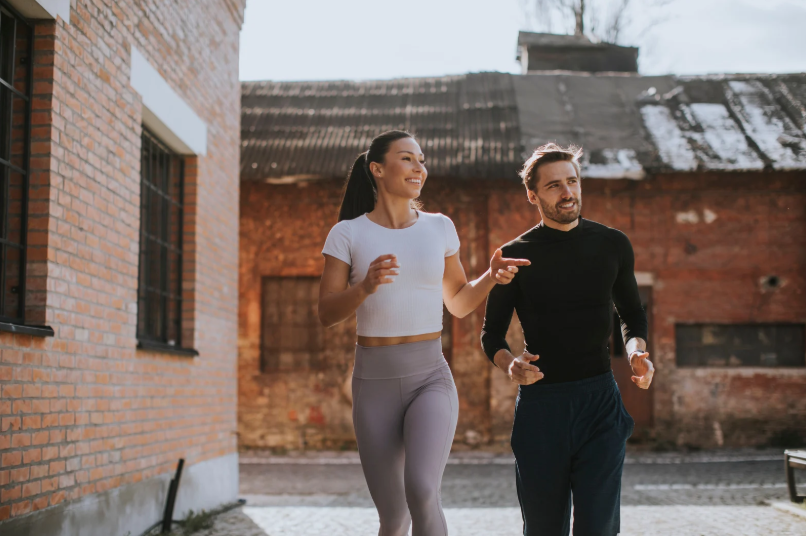
The idea of locking yourself inside four walls to work out is no longer the only option. More and more young people are choosing urban fitness as a concrete, dynamic, and stimulating alternative to the traditional gym. The city becomes a space to experience, not just to pass through, turning into a real playground where every architectural element can take on a new function.
In an urban setting made up of parks, staircases, benches, and public structures, training breaks free from memberships and time constraints. The approach is creative, accessible, and deeply connected to the surrounding environment. It’s not just about exercising, but about reinterpreting urban space through movement.
Read also:
- Complete Guide to Calisthenics for Beginners
- Functional Training: Benefits and Practical Applications
What Urban Fitness Is and Why It’s Changing the Way We Train
The City as a Functional Space
Urban training is based on a simple principle: using what is already available in public spaces to create effective training stimuli. A bench becomes support for dips and step-ups, a staircase turns into a tool for sprints and dynamic lunges, and a park bar becomes the focal point for pull-ups and muscle-ups.
This approach enhances the versatility of the urban environment and develops adaptability. Unlike a standardized weight room, the city imposes variability and requires body control in space. The result is a more instinctive workout based on natural movements and a direct relationship with the environment.
Why More and More Young People Are Choosing Urban Training
For the 18–35 age group, urban fitness represents freedom. Financial freedom, because it doesn’t require memberships; organizational freedom, because it can be practiced anywhere; expressive freedom, because every session can be different from the last. This creative aspect is one of the main drivers behind its growing popularity.
Training outdoors also means breaking routine. Contact with fresh air and the urban environment encourages more active mental engagement. The experience becomes less mechanical and more immersive, strengthening motivation and long-term consistency.
Calisthenics and Bodyweight Training: The Technical Foundation of Urban Fitness
Using Bars, Benches, and Public Structures
Calisthenics is the discipline that most naturally integrates with urban fitness. Based on bodyweight exercises such as pull-ups, push-ups, and dips, it allows you to take advantage of simple structures found in many city parks. Workout areas dedicated to calisthenics are increasingly widespread to meet this demand.
Working with your own bodyweight develops relative strength, stability, and coordination. Every urban element can become a support point or lever, making training extremely adaptable. No complex machines are required—just technical awareness and proper progressions.
Progressions and Body Control in Urban Spaces
One of the most interesting aspects of bodyweight training is the ability to build personalized progressions. From assisted pull-ups to muscle-ups, each exercise can be adjusted according to your level of strength and control.
In an urban environment, this process becomes even more stimulating. Surfaces are not always perfectly symmetrical, requiring greater neuromuscular adaptation. The body learns to stabilize under variable conditions, improving balance and spatial awareness.
Functional Training in an Urban Environment
Natural Movements and Multi-Joint Patterns
Functional training finds an ideal setting in the urban environment. Running, jumping, pushing, pulling, and climbing are movements that belong to human nature. When integrated into a structured program, they become effective tools for developing strength and endurance.
Outdoor functional training activates multiple muscle groups simultaneously and improves the ability to coordinate entire kinetic chains. This approach makes training more transferable to daily and sports activities, increasing movement efficiency.
Physical and Coordination Benefits of Outdoor Functional Training
Training outdoors enhances certain physiological benefits. The alternation of surfaces, inclines, and support points constantly activates stabilizing muscles. The result is improved posture and better management of body load.
In addition, environmental variability stimulates attention and responsiveness. Training is never completely predictable, requiring greater cognitive involvement. Body and mind work together, creating a more complete experience compared to a repetitive gym circuit.
Urban Fitness as a Sustainable Lifestyle Choice
Training for Free and Reducing Financial Barriers
One of the most appealing aspects of urban fitness is its economic sustainability. It requires no monthly memberships or expensive equipment. This makes it accessible to students, young professionals, and anyone who wants to stay active without impacting their budget.
The possibility of training for free in public spaces democratizes physical activity. The city becomes a widespread gym, available in every neighborhood. This accessibility encourages consistency and inclusion.
Community, Motivation, and Urban Identity
Urban training is not only individual. In parks and workout areas, spontaneous communities of calisthenics and functional fitness enthusiasts often form. Sharing progress and techniques strengthens the sense of belonging.
Training together in public spaces builds a collective identity tied to the urban lifestyle. Urban fitness thus becomes a form of personal and social expression, capable of combining creativity, movement, and city culture into one dynamic experience.
Comments (0)