
Trolley
You have no items in your shopping cart

 Budgets
 Dumbers
 Discs
Discs
 Benches
 Racks and Rigs
 Weights Holders
 Isotonic machines
 Calisthenics
 Cardio
 Kettlebells
 Flooring
 Gym Set
 Accessories
 Combat
 ARTI MARZIALI
 CONTAINER GYM
 Tug-Of-War
 Used Gym Equipment
 PILATES MACCHINARI
 GINNASTICA ARTISTICA
 CAMPI DA PADEL
 Prodotti in Pronta Consegna
 Informazioni
 IRONMAN
 Gift Card
- Donatif
- General information
- 0 I like it
- 1823 Views
- 0 comments
- stress reduction, improved self-esteem, physical and mental well-being, gym training
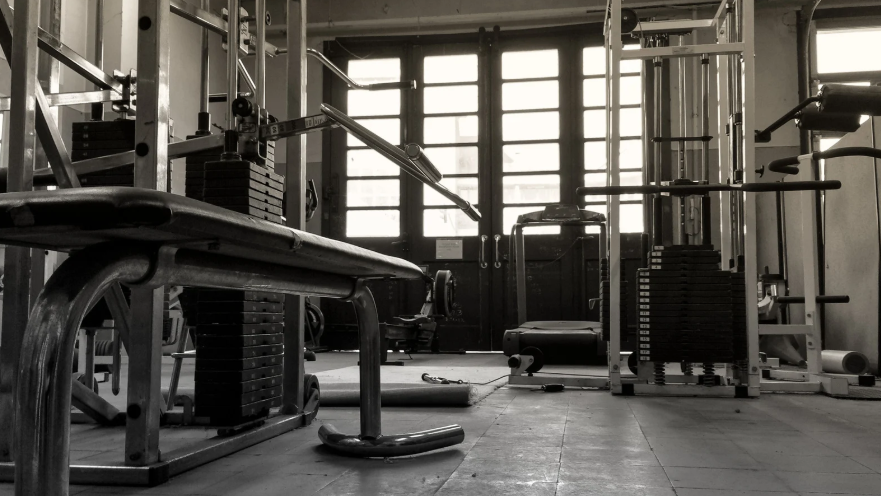
When to Upgrade Benches and Racks in a Gym Without Rebuilding the Entire Strength Area
Managing a gym, especially a micro facility or an independent fitness center, means constantly facing a practical question: when is it really time to upgrade equipment without overhauling everything? Benches, racks, and supports represent the core of the strength area, yet they are often replaced too late or, conversely, changed without real necessity.
The point is not choosing between keeping or replacing everything, but developing a logic of modular and progressive evolution. Understanding the right signals helps avoid both waste and delays, keeping the gym efficient, safe, and aligned with users’ needs over time.
- Clear signs that indicate the limits of benches and racks
- When equipment no longer aligns with new usage needs
- Why you don’t need to replace everything: the value of targeted upgrades
- How to evaluate what really needs upgrading
- A practical example of progressive upgrade in a micro gym
Clear signs that indicate the limits of benches and racks
One of the most common mistakes is thinking that if a rack “still works,” there is no reason to upgrade it. In reality, minimum functionality is very different from operational adequacy. Equipment may still be usable, but no longer efficient, safe, or aligned with the level of service offered.
Recognizing these limit signals is essential to avoid delayed upgrades, which often lead to higher costs and less controlled interventions. Observing real daily usage becomes a more reliable decision-making tool than simply considering equipment age.
Structural wear and loss of stability
Wear and tear on benches and racks does not only appear as visible damage, but also as micro-instability, looseness in components, and loss of rigidity. Over time, these factors compromise workout quality and increase users’ perceived risk.
Even when the structure still holds the load, a feeling of instability can negatively impact the experience. This is especially critical in compound exercises, where trust in the equipment is an integral part of performance.
Perceived and actual safety during use
Safety is not only a technical parameter, but also a psychological one. A rack with poorly functioning adjustment systems or a bench with worn padding sends an implicit message of neglect.
Over time, this can reduce user engagement and increase the risk of improper use. Acting before the issue becomes obvious helps maintain continuity and trust in the training environment.
When equipment no longer aligns with new usage needs
Another often overlooked signal is the change in how the space is used. Even equipment in good condition can become obsolete compared to new training methods.
The evolution of user needs, the introduction of new protocols, or simply a different space organization can make structures designed for past contexts limiting.
Evolution of training and new user needs
In recent years, strength training has evolved toward more functional, dynamic, and personalized approaches. This requires equipment that is more versatile, adjustable, and suitable for different experience levels.
A traditional rack may no longer provide the necessary flexibility, just as an overly specific bench can limit exercise variety. In these cases, upgrading is not replacement, but a strategic adaptation.
Functional limitations of existing structures
Limitations often emerge in daily use: difficult adjustments, incompatibility with modern accessories, and inefficient space usage. These are signs of a mismatch between equipment and real operations.
Ignoring these aspects leads to progressive inefficiency, resulting in lower user turnover and reduced perceived service quality.
Why you don’t need to replace everything: the value of targeted upgrades
Completely replacing the strength area is rarely necessary. In most cases, it is more effective to adopt a targeted and progressive upgrade approach, intervening only where truly needed.
This approach ensures operational continuity, avoiding interruptions and distributing investment more sustainably over time.
Modular logic and operational continuity
A modular system allows individual elements to be replaced without compromising the entire setup. For example, upgrading only the most used racks or introducing new multifunctional benches can create immediate impact.
This type of intervention maintains a balance between innovation and stability, avoiding drastic changes that could disorient regular users.
Optimizing investments over time
Spreading upgrades over time allows for more accurate evaluation of each intervention’s return. It’s not just about cost, but about value generated in terms of usage, safety, and perception.
Moreover, a gradual approach reduces strategic risk, enabling adjustments based on observed results.
How to evaluate what really needs upgrading
Deciding what to upgrade requires a structured approach that goes beyond simple impressions. It is necessary to observe the interaction between equipment, users, and operational flows.
An effective evaluation combines technical and behavioral elements, creating a solid foundation for consistent and sustainable decisions.
Operational checklist for benches, racks, and supports
A well-structured checklist helps quickly identify priorities. Key elements to observe include stability, adjustment fluidity, surface condition, and compatibility with current accessories.
It is equally important to analyze frequency of use: the most used equipment generates the greatest impact and therefore deserves more attention during upgrades.
Intervention priorities and impact on user experience
Not all upgrades carry the same weight. Intervening on central elements of the user experience produces more visible results than marginal changes.
Priority should be given to what affects safety, comfort, and training flow, creating noticeable improvements even in the short term.
A practical example of progressive upgrade in a micro gym
To better understand this logic, it is useful to consider a typical case of a micro gym with equipment that still works but is no longer optimal.
In these contexts, the challenge is not replacing everything, but identifying interventions that generate maximum value with minimal operational impact.
Initial situation and critical issues
The gym has stable racks but limited versatility and benches showing clear signs of wear. Users continue to use them, but with certain limitations and adjustments.
The issue is not immediately critical, but it gradually affects the quality of the experience and the overall perception of the space.
Gradual interventions and mid-term results
The first intervention involves replacing a high-use bench with a more adjustable and stable model. Subsequently, a rack is upgraded by introducing greater modularity.
Within a few months, without interrupting operations, the gym improves the overall functionality of the strength area, demonstrating how a progressive upgrade can generate continuity, control, and real evolution.
Comments (0)