
Trolley
You have no items in your shopping cart

 Budgets
 Dumbers
 Discs
Discs
 Benches
 Racks and Rigs
 Weights Holders
 Isotonic machines
 Calisthenics
 Cardio
 Kettlebells
 Flooring
 Gym Set
 Accessories
 Combat
 ARTI MARZIALI
 CONTAINER GYM
 Tug-Of-War
 Used Gym Equipment
 PILATES MACCHINARI
 GINNASTICA ARTISTICA
 CAMPI DA PADEL
 Prodotti in Pronta Consegna
 Informazioni
 IRONMAN
 Gift Card
- Donatif
- General information
- 0 I like it
- 1433 Views
- 0 comments
- gym flooring, safety flooring, gym safety, shock-absorbing materials
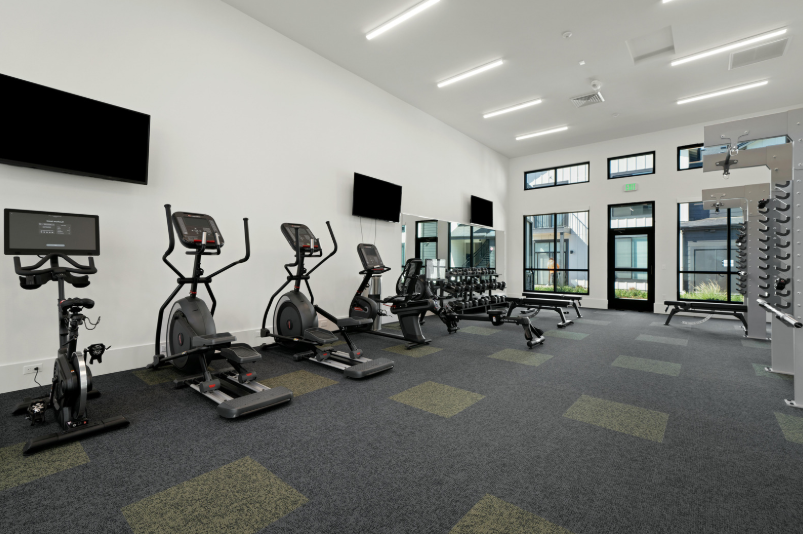
Compact multifunction machine or separate modules: which works better in a really small room?
When designing a home gym in an apartment, the word “compact” often becomes the main deciding factor. Many people assume that a multifunction station is automatically the most efficient choice for a small room, especially when the space must coexist with other daily activities. In reality, perceived compactness does not always match the actual livability of the environment. A machine that occupies fewer square meters on a specification sheet can still limit walkways, openings, and freedom of movement much more than a setup made of separate elements.
The key issue is not only how much space the equipment occupies, but how that space is actually used throughout the day. A domestic room is rarely dedicated exclusively to training. It may also function as an office, laundry room, guest room, or passage area. For this reason, the comparison between a compact multifunction machine and separate modules should start from the real use of the room rather than from the dimensions declared by the manufacturer.
Why advertised compactness does not always match usable space
The mistake of evaluating only the occupied square footage
One of the most common mistakes when choosing a compact multifunction machine is evaluating only the width and depth of the structure. In everyday use, many other factors come into play: the space needed to sit down, load weights, move sideways, and access the various stations. In a small room, even a few extra centimeters can completely change the perception of order and freedom of movement.
A multifunction structure also tends to concentrate many functions in the same area. This may seem advantageous on paper, but it also means having a highly “dense” section of the room where every exercise requires operational space around the machine. On the other hand, separate elements such as compact racks, folding benches, and adjustable dumbbells can often be distributed more efficiently along walls or corners, leaving the center of the room free.
Dead zones, openings, and everyday walkways
The difference between theoretical footprint and actual usable space becomes especially clear in so-called “dead zones.” A multifunction machine may occupy a relatively small surface area while still creating difficult-to-use spaces around arms, cables, or seats. In small domestic environments, these unusable areas have a much greater impact than people initially expect.
A modular setup, instead, often allows the room to adapt to different needs throughout the day. A folding bench can be closed after training, adjustable dumbbells can be moved into vertical storage, and a compact rack can leave the central walkway clear. This approach reduces the feeling of having a room permanently dominated by a large machine.
When a compact multifunction machine truly makes sense
Dedicated rooms with linear usage
A compact multifunction machine can be a very practical solution when the room is primarily dedicated to training. In this situation, concentrating multiple exercises within a single structure helps simplify space organization and reduce the number of separate pieces of equipment in the room. For entry-level users, multifunction machines also provide a more intuitive training experience.
The presence of a single stable structure eliminates the need to constantly move equipment around. In a room used almost exclusively as a home gym, this can significantly improve everyday practicality. The overall visual order also tends to feel cleaner compared to a room filled with many separate elements placed along the walls.
The advantage of concentrating training stations
Another concrete advantage is the concentration of training stations. A multifunction machine allows users to perform different exercises without constantly moving to another part of the room. This can be especially useful in narrow environments where movement itself becomes inconvenient.
Multifunction machines also reduce the risk of accumulating accessories over time. People who choose separate modules often continue adding new components, eventually creating setups that no longer fit the available space coherently. A well-sized compact solution, instead, usually maintains a more organized and predictable structure over the long term.
When separate modules work better in a domestic room
Freedom of movement and flexibility
In many homes, the training room must coexist with completely different daily activities. In these situations, separate modules often provide greater flexibility than a multifunction machine. The possibility of moving, folding, or redistributing equipment radically changes how the space can be managed.
A compact rack placed near the wall, a foldable bench, and adjustable dumbbells can leave the center of the room free for most of the day. This approach is particularly useful in small apartments, where the perception of open space also affects mental comfort and the overall livability of the home.
Transformable setups and everyday living
The greatest strength of a modular setup is adaptability. A room can quickly transition from a workout area to a study or guest room without a large structure permanently occupying the center of the environment. This detail becomes crucial in apartments and homes where every square meter serves multiple purposes.
There is also an important advantage related to movement paths inside the room. A multifunction machine often requires precise access points and dedicated side clearances, while separate elements make it easier to create natural pathways around the furniture. In small spaces, this freedom significantly improves everyday usability.
Multifunction machine or separate modules: practical room-by-room comparison
Multi-purpose room and home office
When the room is also used as a home office or relaxation area, separate modules usually integrate better with domestic furniture and design. A multifunction machine can visually transform the entire room, making it feel more technical and less versatile. Compact and foldable equipment, instead, tends to remain more discreet.
In a home office, for example, the ability to quickly free central space improves the overall functionality of the environment. Even simple movements toward desks, wardrobes, or windows become more natural when the setup does not force people into fixed paths around a single structure.
Small garage, attic, and adapted living room
In a small garage or attic, a multifunction machine may actually be a sensible solution if the environment is dedicated almost entirely to training. In these contexts, concentrating all training stations in one area helps keep the rest of the room more organized and reduces the dispersion of accessories.
In adapted living rooms or shared environments, however, the situation changes. Here, the management of walkways and visual perception matters just as much as actual footprint. A well-designed modular setup often integrates better into domestic life because it can more easily “disappear” once the workout is finished.
The most useful criteria for choosing without mistakes
Real accessibility during workouts
Before choosing between a compact multifunction machine or separate modules, it is important to analyze the actual movements that will take place inside the room. It is not enough to verify whether the equipment physically fits the available space. Door openings, window access, furniture distance, and freedom of movement during exercises must also be considered.
Looking at the room as a living environment rather than only as a gym helps avoid many poor decisions. Very often, the most manageable solution is not the most compact one on paper, but the one that preserves smoother pathways and more natural daily activities inside the home.
Future evolution of the setup
Another important factor involves the future evolution of the home gym. A multifunction machine is generally a more definitive and less modifiable choice. Separate modules, instead, make it easier to add or replace elements over time according to new training needs or changes in room layout.
For many entry-level users, this gradual approach represents a major advantage. Starting with a few well-distributed elements helps people better understand how the space is truly used every day. Only after this practical experience does it become easier to determine whether a compact multifunction machine can genuinely improve space management or reduce the room’s overall livability.
Comments (0)