
Trolley
You have no items in your shopping cart

 Budgets
 Dumbers
 Discs
Discs
 Benches
 Racks and Rigs
 Weights Holders
 Isotonic machines
 Calisthenics
 Cardio
 Kettlebells
 Flooring
 Gym Set
 Accessories
 Combat
 ARTI MARZIALI
 CONTAINER GYM
 Tug-Of-War
 Used Gym Equipment
 PILATES MACCHINARI
 GINNASTICA ARTISTICA
 CAMPI DA PADEL
 Prodotti in Pronta Consegna
 Informazioni
 IRONMAN
 Gift Card
- Donatif
- General information
- 0 I like it
- 420 Views
- 0 comments
- gym flooring, safety flooring, gym safety, shock-absorbing materials
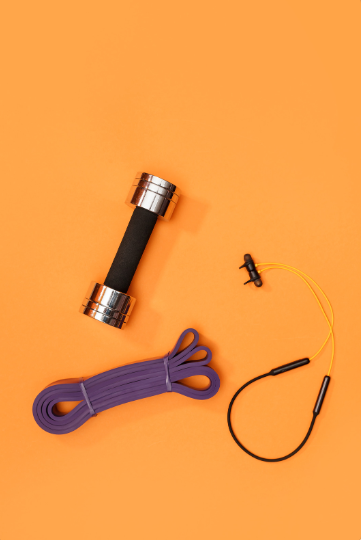
How to Combine Resistance Bands and Weights: When to Use Them Together
Integrating resistance bands and weights together does not mean making your workout more complicated, but rather learning how to use two different forms of resistance within the same training plan. Free weights provide a stable, measurable, and progressive load, while resistance bands change tension throughout the movement and help improve control, movement patterns, and muscle awareness. For people who train at home, runners, athletes, or anyone looking to build strength without filling their routine with unnecessary exercises, this combination can be highly effective.
The goal is not to always replace one tool with the other, but to understand when it makes sense to combine resistance bands and weights, when to use only free weights, and when bands alone are sufficient. Making the right choice helps improve movement quality, manage fatigue more effectively, and create smarter progression strategies. This approach benefits both beginners training at home who are concerned about performing exercises incorrectly and more advanced athletes looking for greater efficiency and control.
When to Use Resistance Bands and Weights in the Same Exercise
Using resistance bands and weights together makes sense when you want to modify the resistance curve of an exercise. A dumbbell or barbell provides the same weight throughout the entire repetition, even though the perceived difficulty changes depending on body position and joint leverage. A resistance band, on the other hand, increases tension as it stretches. This means it can make the final portion of a movement more challenging, where athletes often tend to accelerate or lose control.
A practical example is a barbell squat combined with a resistance band, or a dumbbell press paired with a light band. In these situations, the free weight builds the foundation of strength, while the band encourages a cleaner movement pattern. This combination is useful when weight alone is not enough to improve technique or when you want to increase training stimulus without simply adding more weight. For home gym users, this can be a significant advantage: with only a few pieces of equipment, it becomes possible to create a richer progression strategy.
When to Replace and When to Combine
Resistance bands can replace weights when the goal is activation work, warm-ups, technical practice, or low-impact training. They are particularly useful before a session involving dumbbells, barbells, or kettlebells because they help prepare the shoulders, hips, back, and core without creating excessive fatigue. In this context, the objective is not maximum resistance but rather improving movement quality and enhancing muscle engagement.
It is generally better to combine resistance bands and weights when the goal is to develop strength, stability, and control within the same exercise. If an athlete already demonstrates good control with free weights, a resistance band can add progressive technical difficulty. However, if the movement is still unstable, adding complexity too soon is usually counterproductive. A simple rule applies: first master the basic exercise, then introduce band resistance. This approach reduces the risk of overtraining and prevents each workout from becoming an experiment that is difficult to measure and track.
Effective Mixed Exercises for Strength and Control
Some of the most effective mixed exercises include goblet squats with a band positioned above the knees, hip thrusts with both a band and a weight plate, dumbbell rows combined with a band anchored in front of the athlete, chest presses with dumbbells and a light resistance band, and bicep curls performed with dumbbells while maintaining controlled band tension. These combinations work because they do not add complexity for its own sake but instead improve movement direction and control during the final phase of the exercise.
For runners, mixed resistance training can be particularly beneficial for the glutes, hamstrings, core, and hip stabilizers. For home gym enthusiasts, it offers an effective way to create exercise variations even when only limited weights are available. Choosing the right resistance loops or a set of bands with different resistance levels allows the training stimulus to be matched to the athlete’s actual ability. A band that is too strong can compromise technique, while one that is too light may provide little benefit. The correct resistance should improve control, not reduce movement precision.
Practical Progression with Resistance Bands and Weights
A sensible progression begins with simple exercises. During the first few weeks, the resistance band can be used primarily for activation or movement correction while keeping the free-weight load moderate. In the next phase, the band can be integrated directly into the main exercise, but only for one or two key lifts within the workout. Finally, once movement control becomes consistent, either the weight load or the band's resistance can be increased, avoiding the temptation to increase both variables at the same time.
A practical progression model may follow this structure: beginner level with a light band and manageable weight, intermediate level with heavier free weights and a medium-resistance band, and advanced level with band tension selected specifically to target the most challenging portion of the movement. This system makes training easier to understand and reduces unnecessary complexity. The most important factor remains repetition quality: if technique deteriorates, the combination is not improving the exercise—it is simply making it more chaotic.
Mistakes to Avoid to Prevent Confusion
The first mistake is assuming that adding resistance bands automatically makes an exercise more effective. In reality, if the basic movement pattern is not solid, a band can amplify compensations, imbalances, and poor mechanics. The second common mistake is including too many variations within the same program. An effective routine does not require ten different combinations; instead, it relies on a small number of well-chosen exercises performed consistently and monitored over time.
Another frequent mistake is confusing fatigue with progress. Feeling more muscle burn does not necessarily mean developing more strength. The combination of bands and weights is effective when it produces better control, improved stability, and measurable progression. For this reason, it is useful to track weight load, band resistance, repetitions, and perceived movement quality. A practical and results-oriented approach does not seek unnecessary complexity but rather clear and observable improvements. In this sense, resistance bands and weights together become a valuable tool when applied with purpose, not when they are used simply to make every workout harder than necessary.
Comments (0)