
Trolley
You have no items in your shopping cart

 Budgets
 Dumbers
 Discs
Discs
 Benches
 Racks and Rigs
 Weights Holders
 Isotonic machines
 Calisthenics
 Cardio
 Kettlebells
 Flooring
 Gym Set
 Accessories
 Combat
 ARTI MARZIALI
 CONTAINER GYM
 Tug-Of-War
 Used Gym Equipment
 PILATES MACCHINARI
 GINNASTICA ARTISTICA
 CAMPI DA PADEL
 Prodotti in Pronta Consegna
 Informazioni
 IRONMAN
 Gift Card
- Donatif
- General information
- 0 I like it
- 2894 Views
- 0 comments
READING TIME: 7 MINUTES ➤➤
Pilates for Students: 20 Minutes for Focus and Posture
Studying is not just a matter of the mind. To get the most out of books and learning, the body also needs to cooperate: proper posture, deep and conscious breathing, active rather than tense muscles. This is why more and more students – from high school to university – are turning to Pilates. It is an accessible and effective practice that fits perfectly into a daily routine to improve concentration, prevent back pain, and reduce mental fatigue.
In this article, you will discover how a short daily session of just 20 minutes can help you study more effectively, feel more energetic, and maintain a functional posture during long hours at your desk. We will guide you through exercises designed for those who spend a lot of time sitting, with special attention to thoracic mobility, hip hinge mechanics, scapular activation, and breathing. Everything you need to clear your mind… starting with the body.
- Why is Pilates useful for students?
- The 20-minute routine: aligned body, free mind
- When and how to integrate Pilates into your study day
- Preventing postural problems at school
Why is Pilates useful for students?
Improve studying by starting with posture
Spending hours sitting between books, tablets, and computers exposes the spine to prolonged loads and incorrect positions. Many students end up with rounded shoulders, a posterior pelvic tilt, and the head pushed forward. These conditions not only compromise posture but also directly affect attention, mental endurance, and the quality of study. Pilates works precisely on these aspects by strengthening deep muscles, improving alignment, and restoring the body’s natural balance.
When posture improves, the mind reacts positively as well: oxygenation increases, stress levels decrease, and mental energy stabilizes. It becomes a virtuous cycle: a less tense body allows you to maintain concentration more easily, avoid attention drops, and approach studying with greater clarity and presence.
Breathing as a tool for cognitive focus
Another key element of Pilates is conscious breathing. Breathing properly – through the diaphragm – activates the parasympathetic nervous system, the one responsible for relaxation and recovery. For students, this means accessing a more stable, clear, and less reactive mental state, ideal for effective studying.
In addition, breath control helps reduce exam anxiety, improves time management, and allows students to face school days with greater calm. Integrating breathing exercises into a daily routine means investing in a simple and practical tool to improve academic performance and overall well-being.
The 20-minute routine: aligned body, free mind
Thoracic mobility to counter long hours at the desk
Thoracic mobility is one of the first motor abilities that decreases when sitting for hours. The upper back stiffens, the shoulder blades become restricted, and breathing becomes shallow. Pilates exercises designed to open the chest, mobilize the rib cage, and reactivate the thoracic spine are essential to release accumulated tension and restore freedom of breathing. Just a few precise movements can quickly create a feeling of openness and lightness in the upper body.
This part of the routine is particularly helpful for students who feel upper back fatigue, shoulder stiffness, or breathing difficulty after long study sessions. Performing thoracic mobility exercises daily helps prevent postural pain and improves the quality of time spent studying.
Hip hinge and core activation
The hip hinge – the movement of bending from the hips while keeping the spine neutral – is fundamental in many Pilates exercises and essential for maintaining functional posture. Teaching the body to move correctly from the pelvis reduces strain on the lower back and activates the deep abdominal muscles and pelvic floor. This type of exercise is perfect for counteracting abdominal weakness caused by sedentary habits.
An active core also improves postural balance while studying and supports emotional stability. It is an internal, quiet but powerful form of training that helps support the spine and maintain concentration for longer periods. Integrating hip hinge work into a daily routine teaches the body to support itself, even during moments of stress or mental fatigue.
Scapular movement and conscious breathing to release tension
The final part of the routine focuses on the connection between breathing and scapular movement. School stress often manifests as neck tension and tightness between the neck and shoulders. Through scapular mobility exercises combined with deep breathing, it is possible to release these areas, improve movement fluidity, and restore a sense of lightness.
Ending the session with a few minutes of guided breathing – inhaling for three counts and exhaling for six – helps bring the nervous system back into balance and improves the assimilation of what has been studied. It is a simple yet highly effective ritual for students who want to enhance cognitive performance and maintain a calm, focused mental state.
When and how to integrate Pilates into your study day
Morning or afternoon practice?
There is no “perfect” time to practice Pilates. The most important factor is choosing a schedule that is sustainable and compatible with your study rhythm. However, practicing in the morning – even for just 15–20 minutes – can give a strong boost to the day. It helps wake up the body, activate the mind, and face classes with energy and clarity. It is an effective way to start the day well, reducing fatigue and increasing productivity in the early hours.
On the other hand, afternoon practice also has advantages. A session after school or studying can help release accumulated stress, relax tense muscles, and support better sleep quality. In this sense, Pilates becomes a regenerating break between study sessions, helping students return to their books with greater clarity.
Consistency and small changes: the key to improvement
When it comes to posture and concentration, the golden rule is consistency. Hours of training are not necessary – short routines repeated over time are enough. Real transformation happens through small daily habits that gradually produce tangible results. Practicing Pilates three or four times a week can already make a significant difference in posture, mental energy, and the ability to study without stress.
The best approach is to start small, perhaps with just two exercises per day, allowing the body to adapt gradually. The goal is not to become athletes but to educate the body toward movement and awareness. Once the benefits are experienced, the body itself will begin to ask for that active break that benefits both body and mind.
Preventing postural problems at school
Back and posture: what happens when sitting all day
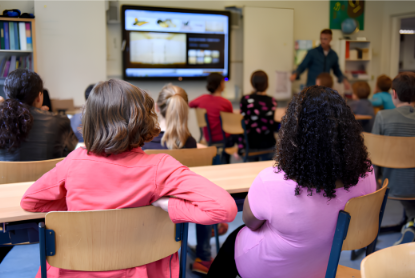
The school system often requires students to spend many hours seated at desks that are not always ergonomic or designed for postural well-being. This sedentary lifestyle can compromise the harmonious development of the spine, leading to lower back stiffness, neck pain, and muscular imbalances. Over time, these issues may even affect the way a person walks, breathes, and moves.
Pilates provides a concrete prevention tool capable of educating students to become aware of their body and maintain correct posture. It is not simply about “sitting up straight,” but about activating the deep muscles that stabilize and support the entire body structure. Students who integrate this practice into their routine learn to perceive their bodies in a more functional way, reducing the likelihood of developing chronic pain in adulthood.
Teaching movement awareness from the classroom
Today more than ever, it is important to bring movement education into schools. One weekly physical education class is not enough: young people need a culture of movement that accompanies them daily. Pilates, with its low-impact exercises and its focus on breathing and alignment, can become a valuable resource for teachers, educators, and families.
Introducing short posture-activation breaks during lessons, practicing breathing exercises before oral exams, or teaching students to move consciously are simple actions that can have lasting effects. Training the body to free the mind: this is the real goal. And Pilates, in this journey, is a practical and accessible ally for everyone.
Comments (0)