
Trolley
You have no items in your shopping cart

 Budgets
 Dumbers
 Discs
Discs
 Benches
 Racks and Rigs
 Weights Holders
 Isotonic machines
 Calisthenics
 Cardio
 Kettlebells
 Flooring
 Gym Set
 Accessories
 Combat
 ARTI MARZIALI
 CONTAINER GYM
 Tug-Of-War
 Used Gym Equipment
 PILATES MACCHINARI
 GINNASTICA ARTISTICA
 CAMPI DA PADEL
 Prodotti in Pronta Consegna
 Informazioni
 IRONMAN
 Gift Card
- Donatif
- Sports products
- 0 I like it
- 5554 Views
- 0 comments
READING TIME: 12 MINUTES ➤➤
In the world of calisthenics, choosing the right equipment can make the difference between an effective workout and a frustrating one. Whether you are a curious beginner or an enthusiast looking to take your training to the next level, having the right tools is essential for building a safe, progressive, and satisfying routine. In this guide, you will discover how to navigate equipment, materials, spaces, and experience levels in order to create your ideal setup.
- Why it is important to choose the right calisthenics equipment
- Types of calisthenics equipment
- How to choose the most suitable equipment
- Setting up a calisthenics area at home
- Frequently asked questions when choosing calisthenics equipment
Why it is important to choose the right calisthenics equipment
Performance, progressions, and injury prevention
Every calisthenics athlete knows how important progression is in this sport. Choosing unsuitable or low-quality equipment can slow down improvements, limit the execution of advanced exercises, or even cause injuries. Using stable, ergonomic, and safe structures allows you to focus on technique, build strength progressively, and minimize the risk of muscle or joint injuries.
Equipment designed to withstand both static and dynamic loads properly supports the body during training, promoting correct posture and effective motor control. This is even more important for those who train at home, where the quality of equipment must compensate for the absence of technical supervision.
The role of equipment in technique and motivation
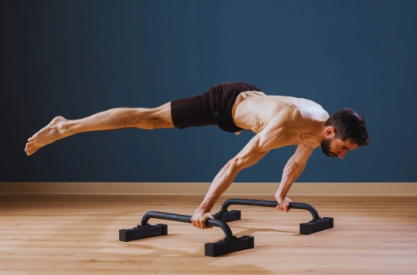
Training with functional and well-designed equipment also affects motivation. A set of professional tools, even if minimal, communicates seriousness and commitment, helping maintain consistency and intensity in workouts. Moreover, the correct dimensions, height, and mechanical response of equipment facilitate proper execution of technical movements such as planche, muscle-ups, front levers, or handstands.
Calisthenics, more than many other sports, requires body control and awareness: poorly designed equipment provides distorted feedback, making it harder to develop precise and clean movements. Choosing wisely is the first step toward real and measurable progress.
Types of calisthenics equipment
Parallettes: models, heights, and materials
Parallettes are one of the most versatile tools in the world of calisthenics. There are tall versions for exercises such as dips and handstand push-ups, and low versions ideal for isometric holds, planche work, and core training. The choice of material is crucial: wood offers a more natural grip, while steel ensures greater stability and durability. It is also important to check for anti-slip bases, especially for indoor use.
Some parallettes are foldable or height-adjustable, which is useful for those with limited space or who want a modular structure. Evaluating the maximum load capacity is essential, particularly for intense training sessions or workouts with additional weight.
Fixed and portable pull-up bars: which one to choose
The pull-up bar is the symbol of calisthenics. For home training, the main options are wall-mounted (or doorway) bars and freestanding structures. The former are ideal for small spaces but require solid walls; the latter take up more room but provide greater stability.
For movements such as muscle-ups, front levers, or explosive pull-ups, structural stability is essential. Some models offer adjustable height or the possibility of adding accessories, making them suitable for mobility or stretching sessions as well.
Gymnastic rings: versatility and adaptability
Gymnastic rings represent a natural progression in calisthenics. They allow for a wide range of exercises, increase instability, and develop deep strength. They are lightweight, easy to transport, and adaptable to multiple environments (gym, home, or outdoor park). Choosing wooden rings ensures excellent grip and reduced slipping from sweat.
The quality of the straps and adjustment system is fundamental: they must be secure, intuitive, and durable. Rings require a higher technical level, but they represent a long-term investment in terms of progression.
Useful accessories: weighted vests, bands, and grips
Accessories complete and enrich the workout. Weighted vests increase the intensity of advanced exercises, while resistance bands help during the learning phase and mobility work. Even small accessories such as anti-slip grips, wrist wraps, and liquid chalk improve comfort and safety.
Although they are not mandatory, these tools can make a significant difference in the variety and quality of training. Investing in a few strategic accessories can make workouts more engaging and personalized.
How to choose the most suitable equipment
Experience level: beginners vs advanced
The first selection criterion is your technical level. Beginners benefit from simple, stable equipment with moderate height and few variables. More experienced athletes, on the other hand, can opt for more versatile or technical tools that allow them to work on complex movements or advanced conditioning.
A well-structured progression always starts from solid foundations: it is better to invest in simple but reliable equipment that does not require constant maintenance or adjustment.
Training goals and related disciplines
Those practicing calisthenics to improve strength and mobility may prioritize rings and resistance bands; those focusing on static skills such as planche or front lever will need low parallettes, rigid bars, and non-slip flooring. Defining your goal helps avoid impulsive purchases and supports building a coherent training path.
Some practitioners integrate elements of yoga, weightlifting, or functional training: in these cases, hybrid equipment or modular structures may be useful.
Build quality and materials: what to evaluate
Wood, steel, aluminum: each material has advantages and disadvantages. Wood is warm and anti-slip but more sensitive to humidity; steel is durable but colder and potentially more slippery. Checking welds, base stability, and finish quality is essential to guarantee safe and long-lasting use.
Quality is also visible in the details: strong bolts, anti-slip surfaces, and durable coatings. Price alone does not always indicate quality, but extremely low prices often signal poor materials.
Brands, certifications, and manufacturer reliability
Choosing well-known brands in the calisthenics or functional training sector offers greater guarantees in terms of quality, support, and compatibility with other modules. The presence of CE certifications or resistance testing adds an extra level of safety, especially for intensive or professional use.
Reading verified reviews, comparing models, and consulting enthusiast forums are effective strategies for navigating the many options available on the market.
Setting up a calisthenics area at home
Space-saving and modular solutions
Those who do not have a dedicated room can still build a functional home gym. There are foldable parallettes, doorway pull-up bars, rings that can be attached to the ceiling or portable supports. Choosing compact and easily storable equipment is key to maintaining order and consistency in home workouts.
Some freestanding structures are modular and allow additional accessories or modules to be added over time, adapting to the user's growth and evolving goals.
Safety and stability tips
In a home environment, safety is a priority. It is essential to place equipment on non-slip floors, avoid uneven surfaces, and periodically check structural integrity. Using mats or platforms can help reduce vibrations and noise while improving grip.
During use, equipment should not move or tilt: ensure bases are wide enough and equipped with rubber or high-grip materials.
Costs and priorities: where to start
You do not need to buy everything immediately. A good starting point can be a set of low parallettes, a pull-up bar, and a pair of rings. With less than €200, it is possible to build a solid base for complete training.
As your training evolves, you may add a weighted vest, resistance bands, or more advanced equipment. The rule is simple: invest in quality first, then quantity.
Frequently asked questions when choosing calisthenics equipment
What is the minimum equipment needed to start?
For beginners, a stable pull-up bar, a pair of low parallettes, and perhaps a resistance band to assist certain movements are sufficient. With these three tools, most basic progressions can be covered.
Is it better to buy individual equipment or complete sets?
It depends on your budget and goals. Complete sets can offer good value for money, but it is important that they are modular and do not limit technical progression. It is usually better to start with a few well-chosen tools and expand gradually.
Is it worth investing in professional equipment?
If the goal is to practice calisthenics consistently and progress over time, the answer is yes. Professional calisthenics equipment guarantees greater durability, safety, and resistance. Even in a home setting, quality makes a significant difference in the long term.
Comments (0)