
Trolley
You have no items in your shopping cart

 Budgets
 Dumbers
 Discs
Discs
 Benches
 Racks and Rigs
 Weights Holders
 Isotonic machines
 Calisthenics
 Cardio
 Kettlebells
 Flooring
 Gym Set
 Accessories
 Combat
 ARTI MARZIALI
 CONTAINER GYM
 Tug-Of-War
 Used Gym Equipment
 PILATES MACCHINARI
 GINNASTICA ARTISTICA
 CAMPI DA PADEL
 Prodotti in Pronta Consegna
 Informazioni
 IRONMAN
 Gift Card
- Donatif
- Sports products
- 0 I like it
- 1777 Views
- 0 comments
- gym flooring, safety flooring, gym safety, shock-absorbing materials
READING TIME: 5 MINUTES ➤➤
Resistance Bands for Seniors: Safe Low-Impact Exercises
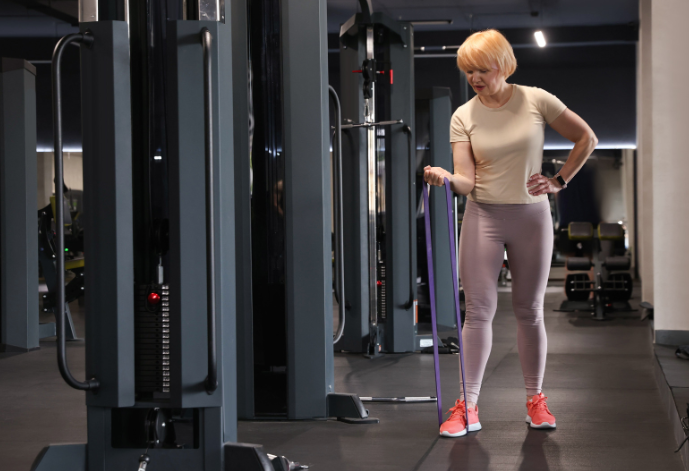
Staying active regularly is important at any age, but after 60 it becomes essential to choose simple, gradual activities that are easy to manage even at home. Resistance bands for senior exercises are a practical solution because they allow the body to be trained with controlled movements, without placing excessive strain on joints and muscles. For many people, they can be a valuable support for maintaining mobility, balance, and daily independence.
One of the most appreciated benefits of resistance bands is the ability to adapt every movement to personal abilities. No sports experience or advanced fitness level is required. With a low-resistance exercise band, it is possible to perform gentle, safe, and easily repeatable exercises even while seated. This helps reduce the fear of falls or sudden movements, providing greater confidence and peace of mind during exercise.
Why resistance bands are suitable for seniors
Resistance bands are widely used in physiotherapy because they allow smooth and progressive movements. Unlike traditional weights, the tension increases gradually during movement, helping maintain better control. For seniors, this means being able to work muscles without experiencing loads that feel too intense or uncomfortable.
Another important advantage is safety. Low-resistance bands help improve mobility and coordination without requiring complex movements. Even people with a sedentary lifestyle can begin with small daily exercises, dedicating just a few minutes each day to physical well-being. Over time, this consistency can support greater stability in movement and improved independence in daily activities.
How to start safely
Before starting, it is helpful to choose a quiet space with a stable chair and enough room to move the arms comfortably. Exercises should be performed slowly, without rushing or aiming for high performance. The body should experience movement as natural and never as excessive strain. In the presence of persistent pain or specific medical conditions, it is always recommended to consult a doctor or physiotherapist.
For beginners, it is preferable to use soft resistance bands with light resistance. Excessive tension could create discomfort in the shoulders or joints. It is important to breathe regularly during each exercise and stop immediately if pain occurs. Even taking short breaks between movements helps maintain calmness and control.
Simple exercises for arms and shoulders
Arm opening movement
This exercise is useful for keeping the shoulders and upper back active. Sitting comfortably on a chair, simply hold the resistance band with both hands and slowly open the arms outward. The movement should be controlled and accompanied by steady breathing. Just a few repetitions are enough to begin feeling slight muscle activation.
Many seniors tend to develop shoulder stiffness due to a sedentary lifestyle. This simple exercise helps improve mobility without placing stress on the joints. If the movement feels difficult, it is possible to further reduce the band tension or decrease the range of motion.
Gentle arm curls
For this exercise, the resistance band can be placed under the feet while holding the ends with both hands. Slowly bend the arms toward the chest while keeping the elbows close to the body. The movement should remain slow and stable, without sudden pulling.
This exercise helps maintain tone and strength in the arms, making everyday gestures easier, such as lifting a light bag or moving household items. The goal is not exhaustion, but rather continuity and confidence in movement.
Gentle exercises for legs and mobility
Controlled leg extension
While seated, the resistance band can be wrapped around the foot and the leg slowly extended forward. This simple movement helps engage the thighs and knees without overloading the joints. It is important to keep the back supported and the movement smooth.
Resistance band exercises for seniors focused on the legs help preserve mobility and stability. Even a few minutes per day can contribute to improving confidence while walking and during small movements around the house.
Side leg movement
With the resistance band placed around the ankles, a slight side opening of the leg can be performed while standing near a chair for extra support. The chair helps maintain balance and confidence throughout the movement.
This exercise stimulates the muscles involved in pelvic stability and balance. For those concerned about falls or instability, it is important to perform very small and controlled movements without forcing the body.
Seated exercises with resistance bands
Seated exercises are often the best solution for those who want to stay active without feeling unsafe. A stable position allows focus on movement without worrying about balance. Even people with little training experience can start with very simple exercises, gradually improving confidence and security.
One particularly useful exercise involves slowly lifting the arms above the head while holding the resistance band between the hands. This movement promotes shoulder mobility and improves coordination. Even small movements can provide meaningful benefits when practiced consistently.
Another very simple activity is the pulling movement toward the torso. Sitting comfortably, slowly pull the ends of the band toward the chest while keeping the back straight. This exercise helps engage the upper back and counteracts stiffness caused by inactivity.
The most important thing is listening to your body. Exercises should create a feeling of controlled movement and never excessive fatigue. Even short sessions, when performed consistently, can help maintain good daily mobility and overall movement quality.
Which resistance bands to choose
For seniors, it is preferable to choose soft resistance bands with low resistance. Bands that are too stiff may make movements less fluid and create unnecessary tension. Lighter exercise bands instead allow gradual exercises that can easily adapt to personal abilities.
Grip comfort is also important. Resistance bands with soft handles can provide greater comfort, especially for those with weak grip strength or hand discomfort. It is useful to prefer durable yet gentle materials that are easy to use even for short home workouts.
Many physiotherapy resistance bands are specifically designed for slow and controlled exercises. This makes them suitable for people who want to improve mobility and safety without engaging in intense activity. Choosing simple and reliable equipment helps make physical activity feel more approachable and reassuring.
Keeping the body moving does not mean facing difficult or exhausting workouts. With simple and regular exercises, resistance bands can become a valuable support for improving mobility, confidence, and daily independence. Even just a few minutes a day can help people feel more active and secure in their everyday movements.
Comments (0)