
Trolley
You have no items in your shopping cart

 Budgets
 Dumbers
 Discs
Discs
 Benches
 Racks and Rigs
 Weights Holders
 Isotonic machines
 Calisthenics
 Cardio
 Kettlebells
 Flooring
 Gym Set
 Accessories
 Combat
 ARTI MARZIALI
 CONTAINER GYM
 Tug-Of-War
 Used Gym Equipment
 PILATES MACCHINARI
 GINNASTICA ARTISTICA
 CAMPI DA PADEL
 Prodotti in Pronta Consegna
 Informazioni
 IRONMAN
 Gift Card
- Donatif
- Sports products
- 0 I like it
- 9592 Views
- 0 comments
READING TIME: 3 MINUTES ➤➤
Gym Weight Plates: Essential for Every Type of Workout
Gym weight plates are among the most versatile and essential pieces of equipment for strength training, used both in weight rooms and home gyms. Whether you want to improve strength, increase muscle mass, or tone the body, plates are fundamental tools to combine with barbells, dumbbells, or even to use on their own for functional workouts.
Types of Weight Plates: Which One Should You Choose?
In the wide range of gym equipment available, weight plates differ in materials, structure, and intended use. Each type is designed to meet specific needs, which vary depending on the athlete’s level, the type of training, and the environment in which it takes place.
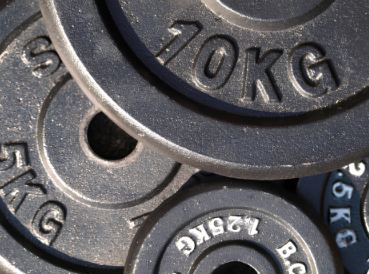
Painted cast iron plates represent the most classic choice: compact, durable, and widely used in bodybuilding, they offer excellent resistance to wear. However, they require some caution during use, as they may damage floors if not paired with protective mats.
For those who train at home or in shared spaces, rubber-coated plates with handles are a practical and safe solution. The non-slip rubber coating reduces noise and protects surfaces, while the ergonomic handles provide a secure grip, ideal for functional exercises such as lunges, torso rotations, and core movements.
Another highly appreciated category, especially in professional environments, is that of bumper plates. These are solid rubber plates designed for Olympic weightlifting, with a uniform diameter regardless of weight. This feature helps maintain proper technique and allows safe drops to the ground, making them perfect for weightlifting, cross training, and high-intensity workouts.
Completing the set are fractional plates, also known as fractional plates. With weights ranging from 0.5 kg to 2.5 kg, they allow gradual and precise increases, which are essential for improving strength progressively. They are indispensable in powerlifting and functional recovery, where even small increases in load can make a difference.
Finally, colored plates, also known as competition plates or training plates, stand out thanks to standardized color coding (for example, green for 10 kg, yellow for 15 kg, blue for 20 kg, and red for 25 kg). This visual classification is very useful for quickly identifying loads during training and is widely used in professional environments and official competitions.
Understanding the characteristics of the different types of plates will help you select those best suited to your needs, optimizing performance and ensuring a safe, effective, and personalized workout.
Weight and Dimensions: What to Consider
Weight plates are available in different weights, from 0.5 kg up to 25 kg. It is important to choose them based on your training level and the exercises you plan to perform. Bumper plates, for example, all have the same diameter but different thicknesses, while cast iron plates vary in both diameter and thickness.
Tip: for a complete home gym, a mixed set with lighter weights (1.25 kg – 5 kg) and medium/heavy weights (10 kg – 25 kg) is recommended.
Center Hole: Standard or Olympic?
One of the most important aspects to consider when choosing gym plates is the diameter of the center hole, which must be perfectly compatible with the barbell being used. There are mainly two standards that differ in terms of intended use and level of professionalism.
The standard hole, with a diameter of 28 mm, is commonly used with amateur barbells and home gym sets. It is suitable for those who train at home or do not have competitive requirements, since standard barbells are lighter, easier to handle, and often more affordable.
On the other hand, Olympic plates feature a 50 mm hole, designed to fit professional barbells used in equipped gyms and official competitions. These barbells provide greater stability, durability, and load capacity, making them ideal for disciplines such as powerlifting, weightlifting, and high-level cross training.
Choosing the correct hole type is not just a technical matter but also a guarantee of safety and performance. Using compatible plates and barbells ensures smoother training, reduces the risk of damage, and improves movement efficiency.
How to Build Your Ideal Set of Weight Plates
Building a well-balanced set of gym plates is essential to perform a complete, progressive, and adaptable workout. A smart strategy is to start with one pair of each weight, for example 2.5 kg, 5 kg, 10 kg, 15 kg, 20 kg, and 25 kg. This allows you to adjust the load depending on the exercise and your level of experience, maintaining versatility and control.
For beginners, a basic set consisting of two 5 kg plates, two 10 kg plates, and two 15 kg plates may be sufficient: a progressive but manageable load that allows you to learn technique without excessive effort. Intermediate users can opt for a full set up to 20 kg per side, increasing resistance in major compound exercises and varying intensity more effectively. For experienced athletes or those practicing disciplines such as powerlifting and weightlifting, it is recommended to include 25 kg plates and bumper plates, ideal for Olympic lifts and high-intensity training.
Additionally, including so-called fractional plates – plates of 0.5 kg, 1 kg, or 2.5 kg – is an excellent choice for managing more gradual and precise increases in load, especially in strength programs where every small improvement matters.
A well-designed set not only improves workout quality but also allows you to adapt over time to the evolution of your body and goals, making each session stimulating, safe, and effective.
Gym Weight Plates: Choose the Right Ones Based on Your Goal
Every training path requires the right equipment, and gym plates are no exception. Choosing the right type of plate can make a significant difference depending on the goal you want to achieve.
Those who practice bodybuilding or aim for a toned and defined physique will find cast iron or rubber-coated plates an ideal ally. Compact, durable, and versatile, they are perfectly suited for use on barbells or gym machines for targeted and progressive exercises.
For fans of cross training and functional training, the most suitable plates are bumper plates, designed to withstand impact when dropped during dynamic and explosive movements. Their solid rubber construction ensures safety and durability, even during the most intense workouts.
Those dedicated to powerlifting, on the other hand, need precise and reliable plates: the best choices are calibrated cast iron plates or competition bumper plates, which guarantee stable loads, minimal tolerances, and competition-level performance.
Finally, for women’s fitness, functional recovery, or the beginning of a training journey, light and fractional plates are ideal. Easy to manage and combine with other equipment such as kettlebells and dumbbells, they allow gradual improvements in strength and coordination with exercises tailored to the athlete’s level.
In summary, understanding the characteristics of the various plates allows you to consciously choose the equipment best suited to your needs, optimizing every training session and maximizing results.
Comments (0)