








Trolley
You have no items in your shopping cart
 Budgets
 Dumbers
 Discs
Discs
 Benches
 Racks and Rigs
 Weights Holders
 Isotonic machines
 Calisthenics
 Cardio
 Kettlebells
 Flooring
 Gym Set
 Accessories
 Used Gym Equipment
 Combat
 ARTI MARZIALI
 Tug-Of-War
 CAMPI DA PADEL
 PILATES MACCHINARI
 GINNASTICA ARTISTICA
 Gift Card
 Informazioni
- Donatif
- Sports products
- 0 I like it
- 32 Views
- 0 comments
- stress reduction, improved self-esteem, physical and mental well-being, gym training
READING TIME: 5 MINUTES ➤➤
Rehabilitation Gym Bench: Why Robustness Is Crucial
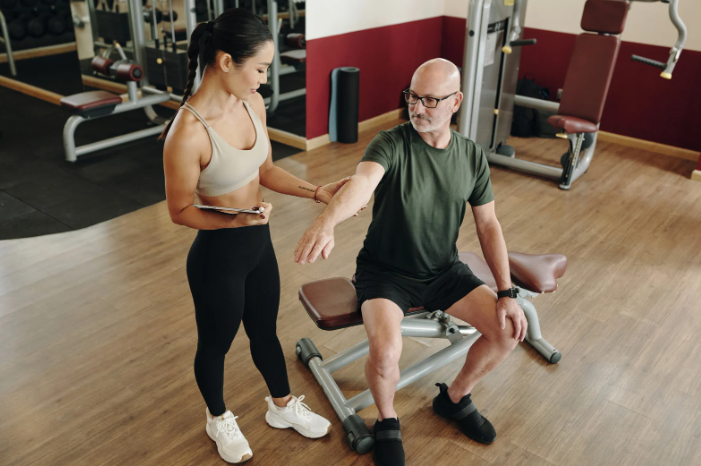
In the context of functional recovery, choosing a rehabilitation gym bench does not simply mean purchasing a support on which to perform a few exercises. On the contrary, it means providing patients, professionals, and facilities with a tool that directly impacts session quality, movement precision, and the overall perception of safety. When working with individuals who need to regain mobility, strength, or joint stability, every construction detail carries far more weight than in standard fitness use.
It is precisely in this scenario that the difference between a standard bench and a flat bench professional designed for more advanced use becomes clear. Frame robustness, weld quality, base stability, and padding density are not secondary elements, but key components that contribute to creating a reliable, consistent, and durable support. In rehabilitation, where postural precision is essential, an unstable structure or collapsing padding can compromise comfort, continuity, and the quality of the intervention.
- When a standard bench becomes a limitation in functional recovery
- Frame stability and patient safety during exercises
- Padding density, ergonomic support, and work continuity
- Commercial vs professional benches
- Operational value for personal trainers and micro gyms
- How to recognize a truly rehabilitation-ready bench
When a standard bench becomes a limitation in functional recovery
A standard gym bench is often designed for general use, focused on traditional fitness sessions where the goal is training rather than recovery. In rehabilitation, however, the situation changes significantly. Patients may require more stable support, a surface that does not transmit micro-movements, and a structure that properly sustains the body even during slow, controlled, and repetitive exercises. A bench designed for generic use risks becoming a compromise, and in recovery paths, compromise is rarely effective.
The most evident limitation emerges when focusing on movement quality. If the support does not provide a firm and consistent base, the professional is forced to constantly compensate, adapting the exercise to inadequate equipment. This affects workflow fluidity and patient confidence, as they immediately perceive when the support surface does not provide a sense of control. A true ergonomic physiotherapy bench is not just meant to hold the body, but to support a technical progression where comfort and precision are integral to the outcome.
Frame stability and patient safety during exercises
Among the elements that determine the effectiveness of a rehabilitation bench, frame stability plays a decisive role. A solid frame reduces vibrations, minimizes unwanted movements, and allows professionals to work with greater precision. This aspect is especially important when patients present motor control deficits, reduced muscular strength, or altered postural sensitivity. In such conditions, even slight instability can alter exercise perception and generate insecurity.
Robustness should not be interpreted solely as the ability to withstand heavy loads. In a professional context, it also means maintaining consistent performance over time, resisting deformation under intensive use, and providing a reliable base in every session. For a personal trainer or micro gym working with recovery clients, investing in a well-built structure means enhancing the quality of the service delivered. A bench that remains stable and consistent immediately communicates material quality, thoughtful design, and patient care.
Padding density, ergonomic support, and work continuity
In rehabilitation, padding cannot be evaluated solely based on its initial softness. The real difference lies in padding density, meaning the material’s ability to support the body without excessive sinking. Padding that is too soft leads to instability, misalignment, and reduced support quality, whereas well-calibrated density supports the patient while maintaining a stable and comfortable base. This is where comfort becomes a technical function.
Ergonomic support is essential, especially during prolonged sessions or exercises requiring control, breathing, and postural precision. A surface that properly distributes pressure improves patient comfort and allows exercises to be performed with fewer compensations. For this reason, postural supports and contact materials must be carefully evaluated, not as simple finishes, but as elements that directly influence treatment effectiveness. In a professional bench, padding and structure work together to deliver a consistent, solid, and reassuring experience.
Commercial vs professional benches
When comparing commercial benches to professional models, differences emerge that may seem minor at first but become evident in daily use. Commercial benches are often designed for mass distribution and cost containment. This can result in less robust structures, lower-density padding, and finishes focused more on initial appearance than long-term durability. In a rehabilitation setting, however, these limitations quickly surface, especially under continuous use.
Certified professional benches, designed for specialized environments, focus instead on selected materials, superior stability, and consistent performance. This is not just a matter of price range, but of construction philosophy. Patients perceive greater reliability, professionals work with more confidence, and facilities benefit from equipment aligned with higher service standards. From a comparative perspective, the Anchoring Effect also plays a role: once a truly solid bench is experienced, anything less stable immediately feels inadequate, especially in rehabilitation contexts.
Operational value for personal trainers and micro gyms
For a personal trainer working with individual programs or a micro gym aiming to position itself as a high-quality reference, choosing the right bench is not just about equipment, but about service strategy. A rehabilitation gym bench that is robust and well-designed allows for higher-quality offerings, better management of clients with specific needs, and a clear message of professionalism. This is especially important in the MOFU phase, where clients evaluate whether to trust one facility over another.
Social proof also stems from the real experience users and professionals have within the training environment. When a facility uses professional equipment, the message is clear: attention to detail matters, safety is a priority, and material quality is not overlooked. Over time, this translates into increased trust, better reviews, and a stronger reputation. A truly stable and comfortable bench is therefore not just an operational tool, but a key element in building brand authority.
How to recognize a truly rehabilitation-ready bench
To determine whether a bench is truly suitable for functional recovery, it is essential to start with concrete criteria. The first is the actual feeling of stability during use, not just technical specifications. The second is padding quality, which must support without collapsing and maintain its elastic response over time. The third is overall design consistency: frame, base, upholstery, and finishes must work together to provide a reliable surface designed for continuous professional use.
In a comparative analysis between commercial benches and certified professional models, the difference is most evident in performance consistency. A well-built bench maintains its precision over time, supports the professional’s work reliably, and reduces performance degradation risks. For this reason, when evaluating a professional flat bench for rehabilitation, robustness is not a minor technical detail, but the foundation upon which safety, ergonomics, and experience quality are built. In a context where patient support is central, choosing a solid structure means making a more responsible, credible, and long-term value-driven decision.
Comments (0)