
Trolley
You have no items in your shopping cart

 Budgets
 Dumbers
 Discs
Discs
 Benches
 Racks and Rigs
 Weights Holders
 Isotonic machines
 Calisthenics
 Cardio
 Kettlebells
 Flooring
 Gym Set
 Accessories
 Combat
 ARTI MARZIALI
 CONTAINER GYM
 Tug-Of-War
 Used Gym Equipment
 PILATES MACCHINARI
 GINNASTICA ARTISTICA
 CAMPI DA PADEL
 Prodotti in Pronta Consegna
 Informazioni
 IRONMAN
 Gift Card
- Donatif
- Sports products
- 0 I like it
- 3390 Views
- 0 comments
READING TIME: 9 MINUTES ➤➤
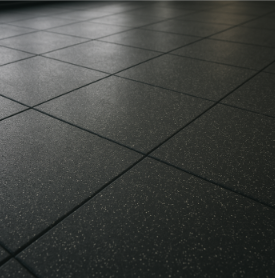
Safety Flooring: When It’s Mandatory and How to Choose It
Safety flooring is a fundamental element in any sports environment where user safety is a priority. Whether it’s a private gym, a fitness center, or a public facility, ensuring a safe and shock-absorbing surface is not just a technical choice, but in many cases a legal requirement. Understanding when it is needed, what features it must have, and how to choose the right solution is essential to comply with regulations and protect users.
In this article, we will explore in detail everything you need to know about safety flooring for gyms: from technical regulations to required certifications, from recommended thickness to the most effective materials, offering a practical and comprehensive guide for gym owners, designers, and architects.
- Why safety flooring is essential in gyms
- Regulations on safety flooring
- Technical features and materials of safety flooring
- Certifications and safety requirements
- How to choose the right safety flooring for your gym
Why safety flooring is essential in gyms
Protection and injury prevention
The primary function of safety flooring is to minimize the consequences of accidental falls, impacts, and collisions during physical activity. This is especially important in areas dedicated to weightlifting, functional training, or high-intensity classes, where the likelihood of accidents is higher. A shock-absorbing surface can make the difference between a minor fall and a serious injury.
Moreover, flooring with high impact absorption helps prevent muscle and joint strain in athletes, improving overall comfort during workouts. This aspect is increasingly valued in modern fitness space design, where performance and safety go hand in hand.
Shock absorption and user comfort
Another key feature of safety flooring is its ability to absorb impact in a uniform and controlled way. This ensures excellent stability during movement, preventing slips and enhancing workout quality. Materials such as vulcanized rubber or expanded polyurethane are engineered to provide a balance between elasticity and mechanical resistance, maintaining their properties even under intensive use.
From a user experience perspective, well-designed flooring reduces fatigue, facilitates transitions between exercises, and conveys an overall sense of safety and quality. For this reason, flooring choice also affects the gym’s reputation and member retention.
Regulations on safety flooring
The UNI EN 1177 standard: what it requires
The UNI EN 1177 standard is the main European reference for evaluating the safety of impact-absorbing surfaces. It defines criteria for determining the critical fall height (HIC) and the testing methods used to verify a flooring system’s ability to absorb impacts. This regulation is particularly important in high-risk areas such as weight rooms and functional training zones.
According to UNI EN 1177, every safety floor must guarantee a minimum level of impact absorption, calculated based on the potential fall height of users. Tests are conducted using specialized equipment that simulates real impacts, ensuring the material effectively reduces the risk of head injuries or severe trauma.
Obligations for gym owners and designers
For gym owners and professionals involved in designing sports facilities, understanding and complying with safety regulations is a necessity—not only legally, but also ethically. The absence of certified flooring can expose a facility to penalties, legal disputes, and reputational damage in case of accidents. It is therefore essential to include compliant flooring solutions from the design phase.
In addition to UNI EN 1177, local building regulations, health authority requirements, and public safety standards may also apply. Consulting with industry experts helps avoid design errors and ensures full compliance.
Situations where safety flooring is mandatory
Not all gym areas legally require safety flooring, but in many cases it is mandatory or strongly recommended. This applies to weight rooms, CrossFit areas, functional training zones, and spaces dedicated to children or high-impact activities. In such environments, the absence of proper flooring may constitute a violation of current regulations.
Beyond legal obligations, every facility should conduct a risk assessment to identify areas most exposed to falls or impacts. Installing safety flooring is not just a requirement, but a responsibility toward user health.
Technical features and materials of safety flooring
Common materials: rubber, polyurethane, and hybrid solutions
The materials used in safety flooring vary in composition, performance, and intended use. The most common include recycled rubber, often derived from regenerated tires, expanded polyurethane, and hybrid solutions combining multiple layers to enhance durability and flexibility. The choice of material directly impacts shock absorption, product lifespan, and maintenance needs.
Vulcanized rubber is one of the most popular options for indoor environments: it is durable, hygienic, easy to clean, and provides excellent stability under heavy loads. Composite materials, on the other hand, are ideal for multifunctional or outdoor spaces, where resistance to weather conditions and temperature changes is required.
Thickness, density, and shock-absorbing capacity
Floor thickness is a crucial parameter for ensuring safety. It typically ranges from a few millimeters to over 4–5 cm, depending on the type of activity and the expected critical fall height. Greater thickness provides higher shock absorption but also requires more complex installation and structural support.
Another key factor is material density, which must strike the right balance between absorption and mechanical resistance. Flooring that is too soft may compromise stability, while overly rigid solutions fail to absorb impact effectively. This is why it is essential to rely on certified manufacturers and test materials before purchasing.
Certifications and safety requirements
CE marking and compliance with European standards
Professional-grade safety flooring must have appropriate safety certifications. The most important is the CE marking, which certifies compliance with European directives on health, safety, and environmental protection. It is not just a formal label, but a guarantee of technical quality, durability, and functional safety.
In addition to CE marking, it is advisable to check for certifications related to impact absorption tests, fire resistance, anti-slip properties, and hygiene standards. Purchasing from qualified and transparent suppliers ensures access to updated technical sheets and laboratory test results—essential documents in case of inspections.
Fall testing and HIC evaluation criteria
The Head Injury Criterion (HIC) is the technical parameter used to measure a floor’s effectiveness in absorbing impact. It is calculated through simulated falls from different heights, recording the acceleration of impact on a test head. The HIC value must fall within safety limits set by regulations, typically below 1000 to prevent serious head injuries.
Advanced manufacturers offer solutions with HIC values well below the maximum threshold, providing greater safety assurance for facility managers. Choosing flooring with certified HIC performance is essential for combining safety and regulatory compliance.
How to choose the right safety flooring for your gym
Analyzing functional and regulatory needs
Choosing the right safety flooring starts with a proper assessment of the environment: what activities will take place? What are the associated risks? Are there critical fall heights to consider? Only by answering these questions can you determine the most suitable material, thickness, and certifications. It is also important to consider usage frequency, the movement of heavy equipment, and the presence of children or vulnerable users.
A common mistake is focusing solely on price or aesthetics. While visual appeal is important, especially in commercial settings, it should never come at the expense of safety. Relying on certified products designed for sports use ensures protection, durability, and compliance.
Tips for purchasing and installation
When purchasing, always request certifications, HIC test results, and technical documentation from the supplier. A qualified installer will recommend the correct installation method, which may include proper subfloor preparation, interlocking systems, adhesive application, and regular maintenance checks.
Finally, it is advisable to compare multiple offers and visit facilities where the materials have already been installed, in order to assess their real-world performance. A well-chosen safety floor is not just an investment in safety, but also a key element in enhancing the perceived quality of your gym.
Comments (0)