
Trolley
You have no items in your shopping cart

 Budgets
 Dumbers
 Discs
Discs
 Benches
 Racks and Rigs
 Weights Holders
 Isotonic machines
 Calisthenics
 Cardio
 Kettlebells
 Flooring
 Gym Set
 Accessories
 Combat
 ARTI MARZIALI
 CONTAINER GYM
 Tug-Of-War
 Used Gym Equipment
 PILATES MACCHINARI
 GINNASTICA ARTISTICA
 CAMPI DA PADEL
 Prodotti in Pronta Consegna
 Informazioni
 IRONMAN
 Gift Card
- Donatif
- Sports products
- 0 I like it
- 2981 Views
- 0 comments
READING TIME: 7 MINUTES ➤➤
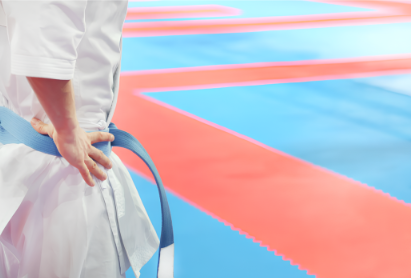
Martial Arts Gym Flooring: Tatami and Soft Surfaces
When it comes to martial arts training, few elements are as important as the type of flooring used. Choosing the right surface is not just a matter of aesthetics or structure: it is an essential component for ensuring safety, performance, and comfort for athletes, whether beginners or advanced practitioners. The right flooring can reduce the risk of injuries, improve the effectiveness of techniques, and make the training experience significantly more rewarding.
In this article, we will explore the various solutions available for those managing a dojo or a martial arts gym, with a focus on tatami flooring and the most suitable soft surfaces. We will examine technical features, materials, and the benefits of anti-slip systems, providing a comprehensive and up-to-date guide for anyone looking to offer a safe and professional training environment.
Why flooring is essential in dojos
Impact on safety during training
In martial arts, the training surface is not just a logistical detail, but a key element for athlete safety. Falls, throws, and slips are part of daily practice and, if the flooring is not suitable, can become frequent causes of injury. For this reason, the use of specialized flooring such as tatami gym flooring has become an internationally recognized standard, especially in professional dojos.
A good surface must provide adequate impact absorption, minimizing joint and muscle injuries. It must also offer stability during the execution of techniques, particularly in disciplines that involve fast movements or barefoot transitions. Flooring selection is therefore an integral part of an injury prevention strategy.
Comfort and quality of martial practice
Beyond safety, well-designed flooring significantly enhances training quality. A surface that is too hard or too slippery can limit movement fluidity and cause fatigue, negatively affecting focus and technique. Martial arts tatami, thanks to its modular structure and balanced consistency, provides an optimal combination of grip and comfort.
Moreover, the comfort perceived by athletes also impacts retention: a dojo that invests in high-quality flooring communicates care and professionalism. Choosing a soft gym floor is therefore not just functional, but also a strong signal to members.
Tatami features: the ideal surface
Origin and spread of tatami in martial arts
The term “tatami” originates from Japan and has long referred to traditional flooring used in homes and dojos. In martial arts, tatami has become synonymous with ideal flooring for disciplines such as judo, aikido, karate, and jiu-jitsu, thanks to its ability to absorb impact without compromising stability. Today’s martial arts tatami are made from advanced technical materials while maintaining their original functional purpose.
The spread of tatami in Europe has grown alongside the expansion of Eastern disciplines. Today, it is used not only in traditional dojos but also in multi-purpose gyms that include areas for bodyweight or contact training. Its presence is now synonymous with professionalism and respect for martial tradition.
Types of tatami and differences between models
There are various types of tatami, each with specific characteristics related to thickness, density, and installation method. The most common are interlocking tatami made of EVA or similar materials, offering easy installation and long-term durability. Others prefer roll-out flooring, more suitable for covering large areas with continuity.
Interlocking tiles and roll tatami meet different needs: the former are ideal for flexible spaces, the latter for fixed high-use areas. Thickness varies from 2 cm for lighter disciplines to 4–5 cm for those involving frequent throws. Density affects impact response: too rigid does not absorb well, too soft compromises balance. The choice should be based on discipline and user level.
Soft surfaces for contact training
Shock absorption and injury prevention
Soft surfaces are essential for martial arts involving falls, joint locks, or ground work. The use of soft gym flooring significantly reduces impact on the body, helping preserve athletes’ physical integrity, especially for children, beginners, or older practitioners. Controlled cushioning is key to making training effective without being harmful.
In modern gyms, soft flooring is no longer optional but a quality standard. It creates an environment where technical learning can take place with greater confidence. Common materials include high-density foam, EVA, and certified polyurethane.
Mats and padding: alternatives or additions?
Alongside traditional tatami, many facilities integrate additional surfaces such as mats or dojo training pads. These mobile elements allow increased thickness for specific exercises and adapt flexibly to daily needs.
They are especially useful during warm-ups, fall training, or demonstrations requiring extra protection. However, for regular training, a high-quality fixed flooring system is always recommended. Combining solutions can be beneficial, but must ensure stability and continuity to avoid uneven surfaces.
Anti-slip systems and safety on tatami
Preventing falls and slips
An often overlooked factor is the anti-slip capability of the flooring. During barefoot training, the surface must provide sufficient friction to prevent uncontrolled movements. An anti-slip gym floor allows dynamic techniques to be executed safely, reducing injuries and sprains.
Modern tatami include textured surfaces or special treatments to ensure grip without sacrificing comfort. These features must remain effective over time, even with sweat or moisture.
Standards and certifications
Safety is also a regulatory matter. High-quality flooring complies with European and international standards (such as UNI EN 1177 or EN 12503), ensuring proper shock absorption, resistance, and anti-slip performance.
Checking CE markings and technical documentation is essential. Certified flooring not only improves training quality but also reduces legal risks.
How to choose the right flooring for your gym
Factors to consider
Choosing the ideal dojo flooring requires analyzing several factors: discipline, training intensity, and user profile. Judo requires thicker, more cushioned surfaces, while karate or taekwondo require more responsive flooring.
User demographics also matter: children or beginners need softer, safer surfaces, while competitive environments require high-performance certified flooring.
Advice for dojos and multi-purpose gyms
For multi-use spaces, versatility is key. Modular tatami are ideal for flexibility, while hybrid systems can combine different surfaces. Some gyms use rubber or PVC underlayers for insulation.
Working with specialized suppliers ensures quality, durability, and compliance. Flooring is not just a surface, but a defining element of the training environment.
The value of tatami for a safe and professional dojo
A dojo is not just a place to train, but a space where discipline, respect, and body awareness are developed. Choosing the right flooring goes beyond technique: it reflects care for practitioners. The tatami, with its history and qualities, is the ideal foundation for a safe, functional, and inspiring environment.
If you manage a gym or are designing a martial arts space, carefully evaluate your options. Discover our tatami flooring and soft surface solutions: certified materials, technical support, and guaranteed quality. Request a free consultation now to receive a tailored project for your facility.
Comments (0)