







Trolley
You have no items in your shopping cart
 Budgets
 Dumbers
 Discs
Discs
 Benches
 Racks and Rigs
 Weights Holders
 Isotonic machines
 Calisthenics
 Cardio
 Kettlebells
 Flooring
 Gym Set
 Accessories
 Used Gym Equipment
 Combat
 ARTI MARZIALI
 Tug-Of-War
 CAMPI DA PADEL
 PILATES MACCHINARI
 GINNASTICA ARTISTICA
 Gift Card
 Informazioni
- Donatif
- Sports products
- 0 I like it
- 3 Views
- 0 comments
- stress reduction, improved self-esteem, physical and mental well-being, gym training

READING TIME: 5 MINUTES ➤➤
How to Choose the Perfect Flooring for Your Treadmill
When buying a treadmill to train at home, attention is almost always focused on the machine itself: motor power, maximum speed, and training programs. Much more rarely do people consider what happens to the floor underneath it. Yet this is where one of the most important factors for the longevity of the equipment, workout safety, and home protection lies.
An adequate support is not just an aesthetic accessory. A good treadmill mat can reduce vibrations, prevent floor damage, and improve the stability of the equipment. In other words, it is a small choice that can have a significant impact over time, especially in homes where parquet, laminate, and delicate flooring are very common.
- Why the mat under your treadmill is more important than it seems
- Floor protection: preventing damage to parquet, tiles, and laminate
- Reducing vibrations and noise during workouts
- Materials used in treadmill mats
- Mat size and compatibility
- The right mat under your treadmill
Why the mat under your treadmill is more important than it seems
A home treadmill can easily weigh between 60 and 120 kg. During running or brisk walking, the movement of the belt and the impact of each step generate a combination of static weight and dynamic loads that are transferred directly to the floor. Without proper protection, this constant pressure can eventually cause permanent marks, scratches, or small deformations, especially on surfaces such as parquet, vinyl, or laminate.
Installing a protective mat for treadmills helps distribute the equipment’s weight more evenly and creates a barrier between the machine and the floor. This simple element helps preserve the integrity of the home flooring while also improving the training experience by providing greater stability during use.
Floor protection: preventing damage to parquet, tiles, and laminate
How a treadmill can damage your home flooring
Many users discover too late that a treadmill can leave visible marks on the floor. The metal base of the equipment concentrates pressure in specific points, while the movement during workouts generates constant micro-vibrations. Over time, this can lead to scratches, dulling of surfaces, or even small deformations in softer flooring materials.
The risk increases especially in apartments where flooring is designed for traditional residential use rather than supporting sports equipment. In these situations, a home gym floor protection mat becomes an essential solution to prevent costly repairs.
The role of protective mats in distributing weight
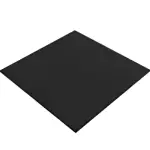
Fitness mats are designed with a very specific technical function: distributing the load across a larger surface area. This reduces the pressure applied at specific points and limits direct contact between metal components and the flooring. The result is effective protection even with frequent workouts.
A quality treadmill mat therefore acts as an invisible safety layer. It not only protects the floor but also helps keep the machine stable during running, reducing the risk of gradual equipment movement over time.
Reducing vibrations and noise during workouts
How vibrations spread through home flooring
When the treadmill is in use, every step generates vibrations that travel through the floor and surrounding structures. In a home environment this effect can be amplified, especially in apartments with lightweight floors or floating flooring systems. Vibrations do not remain only under the machine but can travel into adjacent rooms.
This becomes particularly important in apartment buildings, where the noise perceived by neighbors can become a daily issue. Reducing vibration impact therefore improves not only personal comfort but also coexistence in shared living spaces.
Sound-absorbing mats and vibration control
High-quality fitness mats are made with elastic and high-density materials designed to absorb part of the energy generated by foot impact. This process reduces vibration transmission to the floor and decreases the overall noise produced by the treadmill during workouts.
A sound-absorbing treadmill mat will not completely eliminate the sound of running, but it can significantly reduce the vibrations perceived in rooms below. For people training in apartments or shared spaces, this feature represents one of the most appreciated benefits.
Materials used in treadmill mats: what really makes the difference
High-density rubber and technical materials
Not all mats are the same. The most effective models are made from high-density rubber or technical materials specifically designed for fitness environments. These solutions provide better shock absorption and superior resistance to long-term compression.
Materials such as EVA foam or technical rubber are often used because of their elastic properties. In addition to protecting the floor, they help maintain equipment stability even during more intense workouts, preventing small movements that could compromise safety.
Thickness, grip, and equipment stability
One of the most important aspects when choosing a fitness mat is thickness. A mat that is too thin may not provide sufficient protection, while a thicker one can absorb vibrations and impacts more effectively. However, thickness must be balanced with material density to ensure stability.
At the same time, it is essential that the surface is non-slip. Good grip prevents the treadmill from moving during workouts and keeps the equipment correctly positioned even after many training sessions.
Mat size and compatibility: choosing the right mat for your treadmill
How to calculate the ideal size
The size of the mat is often underestimated. A mat that is too small may leave parts of the equipment uncovered, reducing the effectiveness of the protection. For this reason, it is always recommended to choose a support that is slightly larger than the base of the treadmill.
The ideal solution is to opt for a fitness mat of adequate size that completely covers the machine’s footprint. This creates a protected area that distributes weight and vibrations evenly.
Equipment stability and safety during use
Beyond protecting the floor, the correct size also contributes to the overall stability of the treadmill. A properly sized mat prevents the machine’s feet from coming into direct contact with the floor and reduces the risk of unwanted movement during workouts.
This aspect becomes particularly important when using running programs or more intense training sessions. A stable support allows you to train with greater safety and makes the overall workout experience far more comfortable.
The right mat truly makes a difference under your treadmill
When setting up a home fitness area, it is easy to focus exclusively on the main equipment. However, the support on which the treadmill rests plays a fundamental role in protecting your home and improving your workouts. A good mat reduces vibrations, prevents floor damage, and contributes to the stability of the equipment.
Choosing the right treadmill flooring solution therefore means investing in the longevity of your equipment and the quality of your training experience. A simple and often inexpensive solution that can make a difference every single day beneath your feet.
Comments (0)