
Trolley
You have no items in your shopping cart

 Budgets
 Dumbers
 Discs
Discs
 Benches
 Racks and Rigs
 Weights Holders
 Isotonic machines
 Calisthenics
 Cardio
 Kettlebells
 Flooring
 Gym Set
 Accessories
 Combat
 ARTI MARZIALI
 CONTAINER GYM
 Tug-Of-War
 Used Gym Equipment
 PILATES MACCHINARI
 GINNASTICA ARTISTICA
 CAMPI DA PADEL
 Prodotti in Pronta Consegna
 Informazioni
 IRONMAN
 Gift Card
- Donatif
- Training and exercises
- 0 I like it
- 3615 Views
- 0 comments
READING TIME: 10 MINUTES ➤➤
In a world that moves fast, even the moments dedicated to physical activity often become just another item on the to-do list. But what if we transformed training into an opportunity to reconnect with the present moment? Mindfulness applied to movement invites us to do exactly that: not simply to move, but to move with awareness, attention, and presence. In this article, we explore how the combination of mindful movement, breathing, and mental presence can become a powerful tool for anyone who wants to return to the here and now — using the body as an anchor in the daily storm of the mind.
Below you will find the content index:
- The connection between body and mind: why mindful movement is essential
- Moving with presence: practical techniques and approaches
- Breath as a bridge between mind and body
- Strategies to integrate mindfulness into your workout routine
- Grounding yourself in the present: long-term benefits
The connection between body and mind: why mindful movement is essential
What mindfulness applied to the body really means
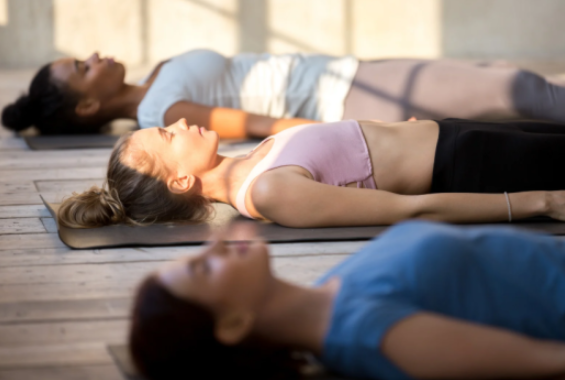
Mindfulness is the ability to bring full and intentional attention to the present moment without judgment. When applied to movement, it becomes a way to rediscover the body not as a tool for performance, but as a place of lived experience. Walking, stretching, lifting a weight, even breathing: every action can become a meditative act when experienced with mental presence. From this perspective, the body is not something to overcome, but a pathway back to the here and now.
In an era where many people feel disconnected from themselves, reconnecting with the body through awareness represents a return to authenticity. It is training not only for the muscles, but also for perception: a way of relearning how to feel. Practicing mindfulness through movement means becoming aware again of weight, tension, rhythm, and gravity — it means experiencing the body from the inside, moment by moment.
Psychophysical benefits of mindful movement
Numerous studies confirm that mindful movement provides tangible benefits for both mind and body. Reduced stress, improved sleep quality, increased concentration, and a stronger immune system are only some of the most well-known effects. Beyond the science, however, people who practice physical activity mindfully often describe a greater sense of grounding and clarity — a return to themselves.
The advantage of this approach is that it can be applied to any form of activity: there is no need to become a yogi or an expert meditator. Even a simple walk can become a transformative experience if approached with attention. This is why mindful movement becomes such a valuable resource for those who live with an “always-on” mind and feel the need to root themselves in the present.
Moving with presence: practical techniques and approaches
Awareness in everyday gestures
You do not need an extraordinary setting to train mental presence through movement. Often, it is precisely the simplest gestures — standing up from a chair, climbing stairs, or stretching in the morning — that offer perfect opportunities to cultivate mindfulness. The key lies in intentionality: performing every movement with deliberate attention, observing how the body moves, where tension appears, how the feet touch the ground, and where the gaze naturally goes.
This daily practice trains the brain to step out of autopilot mode. Even brief moments of body awareness interrupt the endless stream of thoughts and help us ground ourselves in the present. It is an exercise in humility and precision that restores value to the body as a companion in experience, rather than merely a machine to “optimize.”
Physical activities that encourage mental presence
Some forms of movement naturally lend themselves to mindful practice. Disciplines such as yoga, tai chi, mindful walking, or Pilates emphasize rhythm, alignment, and breathing. However, even weightlifting, running, or swimming can be practiced mindfully if guided by presence within the movement.
The point is not so much which activity you choose, but how you experience it. If during a run you remain aware of your feet touching the ground, your breathing, muscular sensations, and the emotions that emerge, then you are practicing mindfulness in motion. This transformation of physical practice into a ritual of deep listening is the true heart of integrated well-being.
Breath as a bridge between mind and body
Why breathing is central to mindfulness
Breath is the thread that connects body and mind: always present, always accessible. In mindfulness, breathing is the first tool for anchoring ourselves in the present moment. It is involuntary yet observable, automatic yet influenceable. Bringing attention to the breath means returning to the “here and now” with simplicity, establishing a rhythm that calms, grounds, and redirects attention.
During physical activity, conscious breathing helps regulate effort intensity, prevent excessive fatigue, and maintain constant contact with internal sensations. When breath becomes a guide, movement becomes more fluid, centered, and respectful of real personal limits. It is a powerful way to move away from the logic of performance and enter the logic of presence.
How to breathe consciously during physical activity
Training conscious breathing during exercise does not require complicated techniques. It begins simply by observing how you breathe: the rhythm, the depth, and the natural pauses. At a later stage, attention can shift toward coordinating breath with movement. Inhale during expansion, exhale during contraction, or simply allow the breath to flow naturally without forcing it.
The important thing is not to force control, but to cultivate awareness. Some people find it useful to count breaths, while others prefer visualizing the flow of air. What matters most is the quality of presence. Over time, conscious breathing becomes natural even outside of training, bringing tangible benefits for managing anxiety, stress, and emotional reactivity.
Strategies to integrate mindfulness into your workout routine
Guided mindful movement exercises
Integrating mindfulness into movement does not mean completely changing your routine, but making it more intentional. A first step could be following guided exercises that combine posture cues, rhythm, and breath. For example, walking slowly in silence while paying attention to each step, or performing a sequence of slow movements accompanied by deep and steady breathing.
Many apps and platforms offer targeted practices, but even a simple written reminder or a meditative playlist can help. The secret is to begin consistently, even for just a few minutes, in order to create a mental habit. The body responds extremely well to consistency: the more we train the mind to remain present during movement, the more natural that presence becomes.
Creating mental space before, during, and after training
Training mindfully also requires a specific kind of mental environment. Before starting physical activity, it can help to pause for a moment, take three deep breaths, bring attention to the body, and set the intention to remain present. During the workout, it is useful to occasionally “return” to the body, noticing whether the mind has become distracted, judgmental, or scattered.
After training, a brief moment of stillness helps settle the experience. This could be a short seated meditation, a mindful shower, or simply staying connected to bodily sensations. These small rituals of awareness before and after movement transform training into a complete experience that involves body, mind, and emotions.
Grounding yourself in the present: long-term benefits
The impact on stress management
Practicing mindfulness through movement has a profound impact on stress management. People who adopt mindful practices during physical activity report a greater ability to face complex situations with clarity, improved emotional balance, and reduced impulsive reactions. The body, trained to serve as an anchor in the present, becomes an immediate resource during critical moments.
Stress does not disappear, but it is experienced with more mental space, less identification, and greater resilience. This effect grows stronger over time, creating a virtuous cycle in which physical well-being supports psychological well-being and vice versa. For minds that are constantly active and exhausted, mindful movement offers a concrete, daily refuge that can be practiced anywhere.
From performance to integrated well-being
Finally, adopting a mindful approach to physical activity radically changes the relationship with the body. It shifts the focus from performance, measurement, and comparison toward a more relational and integrated dimension. The body is no longer something to overcome or fix, but an ally to listen to. Every workout becomes an act of care, every movement an expression of presence.
In this sense, mindfulness in movement is not simply a technique, but a philosophy of life. It allows us to discover that true training is not what shapes the outside, but what transforms the quality of our attention. And in an era where the mind is often elsewhere, returning to the body ultimately means returning home.
Comments (0)