
Trolley
You have no items in your shopping cart
 Budgets
 Dumbers
 Discs
Discs
 Benches
 Racks and Rigs
 Weights Holders
 Isotonic machines
 Calisthenics
 Cardio
 Kettlebells
 Flooring
 Gym Set
 Accessories
 Used Gym Equipment
 Combat
 ARTI MARZIALI
 Tug-Of-War
 CAMPI DA PADEL
 PILATES MACCHINARI
 GINNASTICA ARTISTICA
 CONTAINER GYM
 Gift Card
 Informazioni
 Prodotti in Pronta Consegna
- Donatif
- Training and exercises
- 0 I like it
- 1637 Views
- 0 comments
READING TIME: 7 MINUTES ➤➤
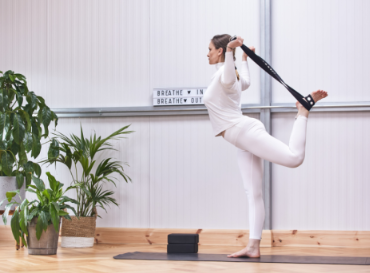
Integrating resistance bands into your Pilates routine opens up new possibilities for movement, control, and adaptation. Thanks to progressive resistance and ease of use, elastic bands amplify the effectiveness of muscular work, making every exercise more intense and precise. Whether for advanced beginners or home trainees, this tool proves to be a versatile, affordable, and immediate ally to transform every session into a complete training experience.
In this article, you will discover how to structure a full-body workout with resistance bands from a Pilates perspective, improving movement awareness, avoiding common mistakes, and tracking your progress in a tangible way. A guided journey through technique, body perception, and functionality, designed for those who want to train methodically—even within the walls of their own home.
- Why integrate resistance bands into Pilates practice
- Progressive resistance: the secret of effectiveness
- Full-body exercise set with resistance bands
- Common mistakes to avoid with resistance bands
- How to measure progress with resistance bands
Why integrate resistance bands into Pilates practice
The specific benefits of resistance bands
Resistance bands are an extremely functional tool for those who practice Pilates at home. In addition to their practicality, they introduce a form of dynamic resistance that accompanies movement in both the concentric and eccentric phases. This type of stimulus allows greater muscle engagement and more refined work on motor control.
Moreover, the band guides the body along safe trajectories, enhancing core stabilization and improving the mind–muscle connection. Unlike free weights, bands do not create inertia but instead demand precision and gradual control—elements perfectly aligned with the fundamental principles of Pilates.
Miniband, loop, and long band: which to choose
In a home training context, the most commonly used bands are the short-loop minibands and the linear long bands. The former are ideal for activating glutes and hips, while the latter offer greater versatility for upper-body training and more complex exercises. Depending on your level, it is useful to have bands with different resistance levels, usually identified by different colors.
Choosing the right band depends on your specific goal: lighter resistance works well for mobility and warm-up, while medium or strong bands are better suited for strength and stability training. This makes progression natural and measurable.
Progressive resistance: the secret of effectiveness
How resistance bands work
One of the main advantages of resistance-band training lies in its increasing resistance: as the band stretches, the required force increases. This allows you to modulate intensity simply by varying the range of motion or the initial tension. It is a principle perfectly aligned with muscle physiology, enabling intelligent stimulation of muscle tissue without risky overload.
The band does not impose a fixed trajectory; instead, it forces the body to create stability and control independently. This makes it a perfect tool for training stabilizing muscles and improving neuromotor balance.
Gradual progressions and neuromuscular adaptation
Consistent and strategic use of bands allows you to build personalized progressions, gradually increasing exercise difficulty. Training often begins with bodyweight movements supported by the band and evolves into more complex and challenging sequences that involve multiple muscle groups simultaneously.
This progressive approach promotes adaptation of the nervous system, improving coordination, movement precision, and controlled strength. The goal is not only to tone the body but also to educate it to move better—more consciously and functionally.
Full-body exercise set with resistance bands
Warm-up and activation
Every session should begin with a targeted activation phase. Using minibands to activate glutes, abductors, and the core is an excellent way to prepare the body for training. Exercises such as banded bridges or side steps increase muscular responsiveness and improve joint alignment.
The shoulders and upper body should also be activated with simple but precise movements: band shoulder retractions, scapular openings, and light pulls stimulate proprioception and postural control.
Core and posture under control
Pilates with resistance bands becomes particularly effective when applied to core stabilization exercises. Planks with resistance, assisted roll-ups, and banded dead bugs engage the transverse abdominis, pelvic floor, and spinal muscles in intense yet controlled work.
The band adds an additional challenge: maintaining proper posture while managing external tension. This deeply trains the muscle chains responsible for trunk control and body alignment.
Lower body: strength and stability
For legs and glutes, resistance bands allow work on functional strength and stability. Band squats, resisted lunges, and single-leg supported abductions are highly effective exercises that also stimulate postural muscles.
The variety of movements and angles helps prevent imbalances and injuries, creating three-dimensional work that goes beyond simple strengthening.
Upper body: control and endurance
Arm exercises with resistance bands must be performed carefully to avoid compensating with the torso. Standing rows, forward presses, lateral openings, and external rotations improve muscle tone and scapular control.
Thanks to the adjustable resistance, both intensity and movement angle can be easily adapted, making every exercise suitable for your level of experience.
Cool-down and return to calm
Ending the session with band-assisted stretching helps release tension and improve flexibility. Gentle stretches, deep breathing, and fluid movements restore balance between activation and relaxation.
This phase is essential to absorb the work performed and maintain good joint mobility in the long term.
Common mistakes to avoid with resistance bands
Unbalanced or poorly adjusted tension
One of the most common mistakes is using bands that are too strong or too weak, compromising the effectiveness of the exercise. Excessive tension can lead to joint compensation, while insufficient resistance does not adequately stimulate the muscles.
It is also important to check the symmetry of tension during bilateral exercises to avoid muscular imbalances. Careful control of the band’s starting position and the movement trajectory is essential.
Lack of control in the motor gesture
Working with resistance bands requires precision. Movements that are too fast or uncontrolled cancel the benefit of continuous resistance and increase the risk of overload. Pilates teaches movement with fluidity and intention—principles that must be respected in every repetition.
It is better to reduce intensity while maintaining control than to force a poorly executed movement. Attention to movement quality matters more than quantity.
How to measure progress with resistance bands
Subjective and objective parameters
Measuring improvement in a Pilates with bands program does not only mean counting repetitions or increasing resistance. Subjective parameters—such as the perception of control, stability, and fluidity in movement—are just as important.
Objective parameters can include the number of controlled repetitions, the duration of holding positions, and progression toward more complex exercises. Recording these variables helps maintain motivation and provides concrete feedback.
Training journal and body feedback
Keeping a weekly training journal allows you to observe the evolution of your journey. Writing down physical sensations, difficulties encountered, and perceived improvements is a useful way to listen to your body and adapt the program to your needs.
Body feedback is the first monitoring tool: greater control, fewer compensations, and improved posture are signs that resistance-band training is working. Recognizing these changes increases self-efficacy and strengthens commitment to the program.
Comments (0)