
Trolley
You have no items in your shopping cart

 Budgets
 Dumbers
 Discs
Discs
 Benches
 Racks and Rigs
 Weights Holders
 Isotonic machines
 Calisthenics
 Cardio
 Kettlebells
 Flooring
 Gym Set
 Accessories
 Combat
 ARTI MARZIALI
 CONTAINER GYM
 Tug-Of-War
 Used Gym Equipment
 PILATES MACCHINARI
 GINNASTICA ARTISTICA
 CAMPI DA PADEL
 Prodotti in Pronta Consegna
 Informazioni
 IRONMAN
 Gift Card
- Donatif
- Training and exercises
- 0 I like it
- 3163 Views
- 0 comments
READING TIME: 7 MINUTES ➤➤
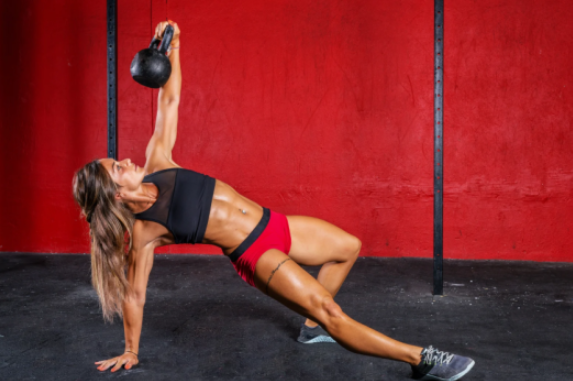
The kettlebell is one of the most versatile tools for anyone looking to start a functional training journey safely and effectively. Thanks to its unique shape and the wide variety of movements it enables, it represents an ideal solution for beginners who want to improve strength, coordination, and endurance. In this article, you will discover the 10 fundamental kettlebell exercises, designed to guide you step by step through your first approach to the world of functional fitness.
- Why choose the kettlebell to start
- Safety first: how to approach the kettlebell
- The 10 essential kettlebell exercises
- Gradual progression and training effectiveness
- Conclusion: build your foundation with awareness
Why choose the kettlebell to start
Unique benefits for beginners
The kettlebell is particularly suitable for those who are new to weight training. Thanks to its compact structure and ergonomic handle, it allows for a wide range of natural and functional movements. Unlike traditional dumbbells, it enables dynamic exercises that engage multiple muscle groups simultaneously, improving coordination and posture from the very first sessions.
Another key advantage for beginners is the ability to progress safely by starting with light loads. This reduces the risk of injury and allows you to learn proper technique without performance anxiety. Additionally, results in terms of muscle tone and conditioning can be noticed within the first few weeks, helping to increase motivation.
One tool, endless possibilities
The kettlebell is not only a strength-training tool; it is also extremely effective for improving endurance, mobility, and stability. Thanks to its versatility, it can be used in small spaces without the need for a fully equipped gym. Just a few square meters and a suitable program are enough to begin building a solid foundation for functional training.
Moreover, the possibility of alternating static and dynamic exercises makes it perfect for circuit training, HIIT sessions, or even simple daily physical activity. With a single tool, it is possible to develop a complete training program that accompanies beginners in their athletic evolution.
Safety first: how to approach the kettlebell
Proper posture and movement control
When starting kettlebell training, the absolute priority must be technical accuracy. Proper posture protects the spine, joints, and promotes efficient exercise execution. It is essential to keep the core engaged, the shoulders stable, and the weight evenly distributed between the heels and the forefoot.
Each exercise must be performed carefully, avoiding sudden movements or imbalances. Due to its nature, the kettlebell creates a lever and inertia effect that, if poorly managed, can cause joint stress. For this reason, it is recommended to start with lighter weights and focus on control rather than speed or the number of repetitions.
The most common mistakes to avoid
Among the most frequent mistakes beginners make are lifting with the back instead of the legs, gripping the handle too tightly, and losing proper body alignment. These elements, if neglected, can compromise training quality and lead to unwanted discomfort or tension.
Another common mistake is trying to replicate movements seen online without proper guidance. The best approach is to follow a structured path, possibly with the support of a trainer or reliable tutorials, that teaches technique step by step and offers simplified variations when necessary.
The 10 essential kettlebell exercises
1. Kettlebell Deadlift
Perfect for learning the mechanics of lifting from the ground, the kettlebell deadlift targets the glutes, hamstrings, and core. It is the ideal exercise to develop lower-body strength in a controlled and safe way.
Focus on hip activation, keep your back straight, and lift with your legs rather than your back. Clean technique in this exercise forms the foundation for all other movements that follow.
2. Kettlebell Swing
The iconic kettlebell exercise, it stimulates the cardiovascular system while strengthening the glutes and hamstrings. The movement should be explosive but controlled, driven by the hips rather than the arms.
It is important to load the hips properly and avoid turning the movement into a squat with a swing. Starting with two-handed swings makes learning easier.
3. Goblet Squat
An excellent variation of the traditional squat that allows you to keep the torso more upright, making it easier for beginners to perform correctly. It is great for the quadriceps, glutes, and core.
Holding the kettlebell at chest height helps maintain stable posture and promotes core activation during both the descent and ascent phases.
4. Shoulder Press
A fundamental exercise for developing strength in the shoulders and upper body. It can be performed with one arm or alternated between sides.
It is important to maintain a neutral wrist and engage the core to avoid lower-back hyperextension. This movement is excellent for building strength and stability in the deltoids.
5. Single-Arm Row
This exercise improves back strength and scapular stability. It is performed with one kettlebell per side while supporting yourself on a stable surface.
Keep your back parallel to the ground and focus the movement on the arm only, avoiding compensation from the torso.
6. Russian Twist
A classic core exercise that helps improve torso rotation and stability. It is perfect for introducing controlled rotational movement into your workout.
Keeping the torso slightly inclined and lifting the feet increases the difficulty and effectiveness. The movement should remain fluid and symmetrical.
7. Farmer’s Walk
Simple yet extremely effective, this exercise improves grip strength, posture, and overall endurance. It consists of walking while holding a kettlebell in each hand while maintaining proper posture.
It is excellent for general conditioning and strengthening the forearms. It can also be included as an active recovery exercise within a training circuit.
8. Kettlebell Clean
A technical movement that allows you to bring the kettlebell into the rack position. It requires coordination and precision.
At the beginning, it should be performed slowly to learn the correct kettlebell path and prevent impact on the forearm. It is also useful as a transition toward other exercises.
9. Kettlebell Snatch (simplified)
A simplified version of the classic snatch suitable for beginners. It involves the entire body in a single explosive sequence.
It is important to divide the movement into phases: swing, lift, and lockout. This makes it ideal for training both explosiveness and control.
10. Turkish Get-Up
A complex but fundamental exercise for stability, mobility, and coordination. It begins on the ground and ends standing up with the kettlebell held overhead.
It should be learned carefully, even starting without weight during the early stages. Each phase requires awareness and precise technique.
Gradual progression and training effectiveness
How to organize a weekly routine
To achieve visible and lasting results, it is essential to structure kettlebell training in a balanced way. Starting with 2–3 weekly sessions is ideal to allow the body to adapt without excessive stress. Each session should include a warm-up, 4–6 fundamental exercises, and a short cooldown.
Alternating movements that involve the lower body, upper body, and core ensures balanced development and helps prevent overload. Workouts can be organized as full-body sessions or focused on specific areas depending on your level and goals.
When and how to increase the load
Once you gain technical mastery and build some endurance, you can progress by increasing the kettlebell weight or extending session duration. The increase should always be gradual and conscious to avoid harmful compensations or a decline in execution quality.
Tracking your progress can help keep motivation high: improving the number of repetitions, the fluidity of movement, or breathing control are all clear signs of progress in your training journey.
Conclusion: build your foundation with awareness
The first step toward functional training
Starting with kettlebells is a smart choice for anyone who wants to approach functional training using simple yet powerful tools. The 10 exercises presented here provide a solid foundation on which to build competence, safety, and visible results.
With the right approach, each session can become an opportunity to improve both your body and your movement awareness. The key is to respect your pace, listen to your body, and prioritize technique.
Consistency, technique, and visible results
The kettlebell is a powerful ally, but consistency and dedication make the real difference. Approach every exercise as an opportunity to learn, improve, and grow. Results will come—visible and tangible—if you build your journey step by step.
Start today with curiosity and respect for your body. Your first kettlebell is just the beginning of a new awareness of movement.
Comments (0)