
Trolley
You have no items in your shopping cart

 Budgets
 Dumbers
 Discs
Discs
 Benches
 Racks and Rigs
 Weights Holders
 Isotonic machines
 Calisthenics
 Cardio
 Kettlebells
 Flooring
 Gym Set
 Accessories
 Combat
 ARTI MARZIALI
 CONTAINER GYM
 Tug-Of-War
 Used Gym Equipment
 PILATES MACCHINARI
 GINNASTICA ARTISTICA
 CAMPI DA PADEL
 Prodotti in Pronta Consegna
 Informazioni
 IRONMAN
 Gift Card
- Donatif
- Training and exercises
- 0 I like it
- 4125 Views
- 0 comments
- sports, training, kettlebell, kettlebell exercises
READING TIME: 8 MINUTES ➤➤

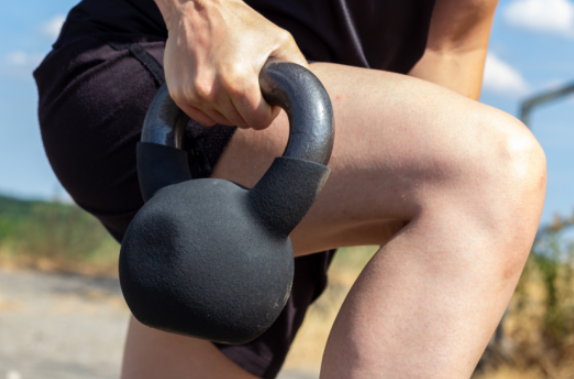
Kettlebell training is one of the most versatile and effective training methods for those who want to start a complete and progressive fitness journey. Thanks to its apparent simplicity and the variety of exercises it allows, the kettlebell is an ideal tool for motivated but inexperienced beginners. In this guide, you'll discover everything you need to get started—from choosing the right equipment to the basic exercises that improve strength, coordination, and safety.
The goal of this article is to guide you step by step in your first approach to kettlebell training, offering a clear explanation of exercises, tips for weekly workouts, and strategies to avoid the most common mistakes. All explained in accessible language, designed for those at the beginning of their training journey.
- Why choose kettlebell training to get started
- How to choose the right kettlebell for you
- Training preparation: technique, posture, and safety
- The 10 basic kettlebell exercises for beginners
- Recommended weekly program for beginners
- Common kettlebell mistakes to avoid
- Final tips for effective and safe training
Why choose kettlebell training to get started
The kettlebell is one of the most effective tools for anyone approaching the world of fitness in a functional and safe way. Thanks to its unique shape and offset center of gravity, it allows you to train not only strength but also coordination, balance, and muscular endurance. For beginners, it offers a simple yet powerful way to get comfortable with fundamental body movements.
Another advantage of the kettlebell is its accessibility: it’s affordable, compact, and can be used anywhere—even at home. This makes it ideal for those who want to start training but don't feel ready to go to the gym. With the right approach, you can achieve real results even with light weights and low-impact movements.
How to choose the right kettlebell for you
Choosing the right kettlebell is crucial to avoid injuries and ensure a progressive learning path. Common models range from 4 kg to over 30 kg, but beginners are advised to start with a weight between 8–12 kg for men and 4–8 kg for women. The goal is not to lift heavy weights but to perform movements correctly and with control.
Opt for cast iron kettlebells with a smooth surface and a wide grip. Avoid plastic or water-filled models, as they don’t offer the same stability or movement feedback. Good equipment makes each exercise safer and improves your training experience.
Training preparation: technique, posture, and safety
Before starting any kettlebell exercise, it's essential to know and follow a few basic rules. Proper posture, core engagement, and mindful breathing are key to avoiding back pain or joint strain. Always dedicate a few minutes to a specific warm-up that includes mobility and muscle activation exercises.
Another important aspect is progression. Don’t try to learn everything at once—each movement should be learned gradually. Start with static or low-impact exercises and only move on to more dynamic ones when you feel confident. This gradual approach helps build confidence in your abilities and lowers the risk of quitting early.
The 10 basic kettlebell exercises for beginners
1. Kettlebell Swing
The Kettlebell Swing is a foundational exercise for developing power and movement control. It involves forcefully driving the hips forward to swing the kettlebell between the legs and up to chest level. This dynamic move engages glutes, core, and back.
Beginners should start with a controlled range of motion and gradually increase speed. Don’t use the arms to lift the weight—the power should come from the hips and legs.
2. Kettlebell Deadlift
The kettlebell deadlift is a great starting point for learning safe lifting techniques. It strengthens the hamstrings, glutes, and lower back. As a static exercise, it helps you understand proper spinal alignment and muscle activation.
Keep your back straight and the kettlebell close to your body. Avoid jerky movements or shifting your balance. Technique is more important than the amount of weight lifted.
3. Goblet Squat
The Goblet Squat involves squatting with the kettlebell held close to your chest. It improves leg strength, hip mobility, and core stability. It’s ideal for those who struggle to maintain good posture during a regular squat.
Keep your heels flat on the ground, chest up, and kettlebell steady. This move also helps you practice breathing under tension and maintaining control while rising from the squat.
4. Kettlebell Press
The Kettlebell Press strengthens the shoulders and arms while improving torso stability. You press the kettlebell overhead, keeping control throughout the movement.
Avoid arching your back or twisting your torso. If you feel neck strain or struggle with the weight, reduce the load or use both hands.
5. Kettlebell Row
The row is essential for strengthening the upper back and improving posture. It balances out the pushing movements and prevents muscular imbalances.
Keep your back parallel to the floor and pull the kettlebell toward your hip, not your chest. This better targets the lats and reduces shoulder strain.
6. Kettlebell Clean
The Clean is a technical move where the kettlebell moves from the low position to the rack position (at the chest) in one fluid motion. It's a key transition for more advanced exercises like the snatch or press.
The kettlebell should rotate around your wrist, not slam into it. Start with light weights and focus on fluidity over speed.
7. Kettlebell Snatch
The Kettlebell Snatch is one of the most complete yet advanced exercises. It moves the kettlebell from the low position directly overhead in one continuous motion.
Beginners should first master the swing and clean before attempting the snatch. Once learned, it’s an excellent exercise for power and coordination.
8. High Pull
The High Pull bridges the swing and the snatch. It builds explosive power and prepares your body for more athletic moves. It also enhances coordination between lower and upper body.
Aim to bring the kettlebell to chest height with the elbow moving diagonally upward. Avoid jerky movements—it should be smooth and driven by the hips.
9. Kettlebell Lunges
Kettlebell lunges train the legs asymmetrically, boosting balance and stability. You can hold the weight on one side (unilateral) or both sides for symmetrical work.
Keep your torso upright and the back knee close to the floor. The kettlebell increases intensity without making the move overly complex.
10. Turkish Get-Up
The Turkish Get-Up is a technical exercise that develops stability, mobility, and strength. It involves rising from lying down to standing while holding the kettlebell overhead.
Although it seems complex at first, it’s one of the most valuable moves for shoulder health and body awareness. Start without weight and add a light kettlebell as you gain control.
Recommended weekly program for beginners
A good program to start with kettlebell training should be based on gradual progression, consistency, and listening to your body. In the beginning, train 2–3 times per week, always allowing at least one rest day between sessions.
A possible weekly structure might be:
- Day 1: Deadlift, Goblet Squat, Row
- Day 3: Swing, Press, Lunges
- Day 5: High Pull, Clean, Turkish Get-Up
Each session should include 3 sets of 8–12 reps per exercise, with 60–90 seconds of rest between sets. Focus on movement quality, not maximum intensity.
Common kettlebell mistakes to avoid
One of the most frequent beginner mistakes is trying to learn too many exercises too quickly. Kettlebell training requires coordination and technique, so it's best to focus on a few movements and master them calmly. Using weights that are too heavy can also hinder learning and increase injury risk.
Another common mistake is neglecting posture. Especially during swings or deadlifts, many tend to round the back or over-bend the knees. Spend time on mobility exercises and use mirrors or reliable video tutorials to correct your technique.
Final tips for effective and safe training
Starting out with kettlebell training may feel challenging, but with the right approach, it becomes a highly rewarding experience. The key is to progress step by step, listen to your body, and not rush through the learning curve. Every small improvement builds confidence and skill.
Remember, the main goal isn’t to perform perfect movements or lift heavy loads, but to feel stronger, more stable, and more confident in your body. If possible, supplement your workouts with video tutorials, follow qualified instructors, and consider keeping a progress journal. Consistency is key: even a few well-done minutes a day can transform your relationship with movement.
Comments (0)