
Trolley
You have no items in your shopping cart

 Budgets
 Dumbers
 Discs
Discs
 Benches
 Racks and Rigs
 Weights Holders
 Isotonic machines
 Calisthenics
 Cardio
 Kettlebells
 Flooring
 Gym Set
 Accessories
 Combat
 ARTI MARZIALI
 CONTAINER GYM
 Tug-Of-War
 Used Gym Equipment
 PILATES MACCHINARI
 GINNASTICA ARTISTICA
 CAMPI DA PADEL
 Prodotti in Pronta Consegna
 Informazioni
 IRONMAN
 Gift Card
- Donatif
- Training and exercises
- 0 I like it
- 4668 Views
- 0 comments
READING TIME: 10 MINUTES ➤➤
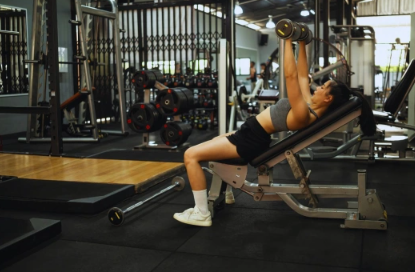
The training bench is one of the most important elements of any gym, whether it is a home gym or a professional facility. However, choosing the right bench is not a detail to underestimate: every model has technical, functional, and ergonomic features that directly affect the quality of your workout. If you want to improve your performance, increase safety, and adapt your routine to the real needs of your body, it is essential to understand which type of bench is truly right for you. In this guide, we will walk you step by step through the process of choosing the ideal bench.
- Why choosing the right bench makes a difference
- Understanding bench types: a practical guide
- Home gym or professional gym? How to choose based on context
- Ergonomics and measurements: when the bench works with your body
- Common mistakes to avoid when choosing a bench
- How to integrate the bench into your training routine
- How much to invest in a bench: quality and value
- Browse our catalog and find the perfect bench for you
Why choosing the right bench makes a difference
Adapting the bench to your training goals
Choosing a bench strategically allows you to build an efficient training program suited to your needs. Not all benches are the same: each model offers different levels of stability, comfort, and range of movement. Selecting a bench based on your training style—strength, hypertrophy, or toning—helps achieve better results and reduces the risk of technical mistakes.
Performance and posture: not all benches are equal
A bench that is too high, unstable, or poorly shaped can compromise exercise execution. On the other hand, a well-designed bench enhances every movement, supports your back in the right places, and allows you to train more intensely and safely. Performance and posture always go hand in hand, and the bench should be a technical ally, not just a support.
Understanding bench types: a practical guide
Flat, incline, and decline benches: what they are used for
The main bench types differ in the angle of the backrest. The flat bench is ideal for fundamental exercises such as the barbell or dumbbell bench press. The incline bench helps target the upper chest, while the decline bench is suitable for abdominal exercises or for focusing on the lower chest. Adjustable angles expand your training options and make workouts more complete.
Adjustable, multifunction, and rack-supported benches
Adjustable benches offer maximum versatility: a backrest that moves from decline to vertical covers almost the entire range of possible exercises. Multifunction benches may include additional accessories for legs, biceps, or barbell supports. Some models also include attachments for resistance bands or cables, perfect for more functional training.
Other specialized bench types
There are also benches designed for specific exercises. The Scott bench is intended for isolating the biceps. Abdominal benches feature inclined designs with locking rollers, ideal for core training. Olympic benches are wider and sturdier, designed for competitive weightlifting. If your training focuses on a specific muscle group, these models may make a significant difference.
Home gym or professional gym? How to choose based on context
Benches for home use: compact and versatile
Home gym benches must meet practical needs: they should be lightweight, foldable, easy to move, and compatible with shared spaces. A good home bench is versatile but not bulky. The best models offer quick adjustments and durable materials even without industrial-level supports.
Professional benches: structure, capacity, and intensity
For those training multiple people or managing a gym, durability is essential. Professional models must support heavy loads, be non-slip, easy to sanitize, and guarantee long-lasting performance. Load capacity, certifications, and stability become essential factors when purchasing.
Ergonomics and measurements: when the bench works with your body
Ideal dimensions and proportions
The width of the backrest, the height from the ground, and the length of the bench are all details that directly impact ergonomics. A bench that is too wide can limit scapular movement, while one that is too narrow does not provide enough support. Seat height also affects stability during pressing movements.
Lumbar support and padding comfort
Proper lumbar support helps maintain the natural curvature of the spine and prevents harmful compensations. Padding should be firm enough and made of materials resistant to sweat and wear. These are details you may not notice immediately, but you feel them in every repetition.
Common mistakes to avoid when choosing a bench
Trusting price alone
A very cheap bench may seem like a bargain, but it often results in instability, low-quality materials, and poor durability. Real savings come from choosing quality proportional to the intended use. Always evaluate the technical specifications before purchasing.
Ignoring compatibility with other equipment
A bench that does not fit your power rack or that has an incompatible height for your barbell may limit your training. Always ensure that the bench integrates well with the rest of your equipment, especially in professional environments.
How to integrate the bench into your training routine
Building a complete routine around the bench
The bench can become the core of your weekly training. You can use it during upper-body sessions, full-body circuits, or active recovery workouts. Combined with dumbbells, barbells, resistance bands, or kettlebells, it allows you to create an almost endless variety of training programs.
Example split with a bench-focused routine
- Monday: chest and triceps (flat bench press, incline bench press, dips)
• Wednesday: back and biceps (bench-supported rows, Scott curls)
• Friday: full-body circuits using an adjustable bench
Integrating the bench intelligently allows you to fully exploit its potential without falling into monotony.
How much to invest in a bench: quality and value
Price ranges and what to expect
Entry-level benches start around €100, semi-professional models range from €250–€400, while professional benches exceed €500–€600 with features designed for heavy loads and high usage frequency. The most expensive option is not always the best, but the cheapest rarely lasts long.
When it is worth choosing an adjustable bench
If you are looking for variety, progressive improvement, and long-term savings, an adjustable bench is almost always the smartest solution. It covers many functions and supports your training over time without needing replacement.
Browse our catalog and find the perfect bench for you
Solutions for individuals and fitness centers
In our catalog you will find flat benches, adjustable benches, multifunction benches, and professional models, selected for quality, ergonomics, and technical performance. Whether you are building a home gym or upgrading a weight room, we help you choose wisely.
Support in choosing and customizing your setup
Browse our catalog and contact us for a personalized evaluation: we will guide you in choosing the bench best suited to your space, your goals, and your type of users.
Comments (0)