
Trolley
You have no items in your shopping cart

 Budgets
 Dumbers
 Discs
Discs
 Benches
 Racks and Rigs
 Weights Holders
 Isotonic machines
 Calisthenics
 Cardio
 Kettlebells
 Flooring
 Gym Set
 Accessories
 Combat
 ARTI MARZIALI
 CONTAINER GYM
 Tug-Of-War
 Used Gym Equipment
 PILATES MACCHINARI
 GINNASTICA ARTISTICA
 CAMPI DA PADEL
 Prodotti in Pronta Consegna
 Informazioni
 IRONMAN
 Gift Card
- Donatif
- Training and exercises
- 0 I like it
- 2917 Views
- 0 comments
READING TIME: 9 MINUTES ➤➤
How to Build Strength Without Equipment: The Complete Bodyweight Training Guide
Training without equipment does not mean giving up real results. On the contrary, by using only your body weight, it is possible to develop functional, balanced, and long-lasting strength. In this article, you will discover how to build an effective routine suitable for every experience level, helping you improve strength wherever you are – at home, in the park, or while traveling.
- Why choose bodyweight training
- Bodyweight workout fundamentals
- Beginner routines and progressions
- How to build strength without equipment
- Training anywhere: practicality and motivation
Why choose bodyweight training
Physical and functional benefits of equipment-free training
Bodyweight training allows you to develop strength, coordination, and motor control in a synergistic way. Unlike gym machines, which isolate muscles, bodyweight exercises engage entire muscular chains while also improving balance and posture. The result? A type of strength that is useful in everyday life, not just in athletic performance.
In addition, removing the need for equipment allows you to focus on dynamic and natural movements, reducing the risk of injury while improving proprioception. This functional approach is especially valuable for people who want to enhance overall movement quality without becoming dependent on machines.
Suitable for everyone: from beginners to experienced athletes
One of the greatest strengths of bodyweight training is its accessibility. Whether you are a beginner or an advanced athlete, there is always a progression suited to your level. Beginners can start with simple exercises such as squats, planks, and knee push-ups, while more advanced individuals can focus on complex and isometric variations like pistol squats or planche holds.
The absence of equipment does not limit results, but it does require greater awareness and control. For this reason, bodyweight training is often included in athletic preparation programs and rehabilitation protocols.
Bodyweight workout fundamentals
What is bodyweight training?
Bodyweight training is a workout system that uses body weight as the only form of resistance. It is an ancient form of movement rooted in martial traditions and physical culture, now experiencing renewed popularity because of its effectiveness and simplicity. The main exercises include push-ups, squats, lunges, pull-ups, planks, and more dynamic movements such as burpees and mountain climbers.
The key is to train in a structured and progressive way, focusing on proper form, movement control, and breathing. Even without external weights, it is possible to create enough training stimulus to promote hypertrophy and neuromuscular adaptation.
The basic principles of calisthenics
Calisthenics represents the most advanced form of bodyweight training. This discipline is based on complex movements requiring strength, control, and mobility, such as pull-ups, dips, front lever holds, and muscle-ups. Calisthenics teaches you how to master your body in space, transforming every exercise into a challenge of technique and precision.
You do not need to be an athlete to begin: calisthenics includes a wide range of scalable exercises that allow anyone to improve over time. The goal is not only to become stronger, but also to move better and with greater body awareness.
Beginner routines and progressions
Essential bodyweight exercises
People starting from scratch should begin with fundamental exercises that engage multiple muscle groups at the same time. Push-ups, bodyweight squats, crunches, planks, and lunges are excellent choices for building a strong foundation. The simplicity of these movements allows for quick learning and reduces the risk of technical mistakes.
Focusing on proper execution is more important than quantity. Every exercise can be adapted according to individual ability: push-ups can be performed against a wall or on an elevated surface, while squats can begin with support before progressing to the free-standing version.
How to structure an effective workout
A balanced routine should include a warm-up phase, a circuit of compound exercises, and a short final section dedicated to stretching or mobility work. A simple yet effective example may include 3 rounds of 5–10 repetitions for each exercise: squats, push-ups, planks, and alternating lunges.
The initial goal should not be intensity, but rather consistency and quality. It is far better to train for 20 minutes a day with good control than to push the body through overly intense and disorganized sessions. Over time, it becomes possible to increase workload and complexity while remaining within your own capabilities.
How to build strength without equipment
Exercise progression strategies
To develop strength, it is essential to progress gradually by increasing exercise difficulty through leverage, angles, or tempo variations. For example, you can move from knee push-ups to full push-ups, then progress to explosive versions or slower tempo repetitions with increased time under tension.
The key is to continuously provide the muscles with a new challenge. By changing repetition ranges, movement speed, or body positioning, you can increase intensity even without external weights. The goal is to challenge the body intelligently and progressively.
Working on stability, control, and muscular tension
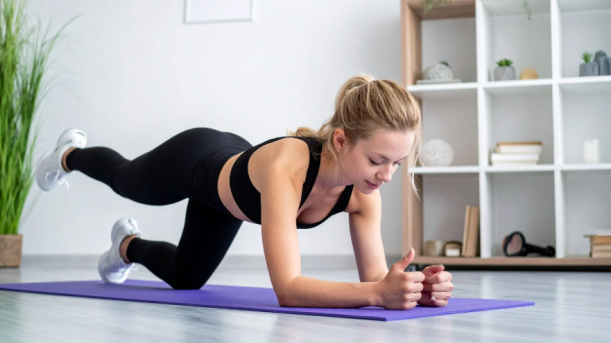
Building strength without equipment means learning how to create internal muscular tension and control the body during every phase of movement. Isometric exercises such as planks or hollow holds help develop this ability, while dynamic exercises like dips require explosive strength and joint stability.
Strength training should always include core control, since the core is the body’s functional center. Strengthening the core improves every other movement, reduces injury risk, and makes the entire muscular system more efficient.
Training anywhere: practicality and motivation
How to organize workouts at home or outdoors
One of the main advantages of bodyweight training is its logistical flexibility. No machines, large spaces, or gym memberships are required: just a few square meters and the willingness to move. You can train in your living room, garden, at the park, or even while traveling.
The ideal approach is to create a motivating environment, even through small details: a comfortable mat, energizing music, and a simple but stimulating weekly plan. Consistency grows from a sustainable and personal routine.
Consistency and simplicity: the keys to staying committed
Many people quit training because they perceive it as complicated or exhausting. Bodyweight training changes this perspective: it simplifies instead of complicating. No waiting lines at the gym, no machine queues, and no expensive memberships. Just you, your body, and the determination to improve.
The key is to start with small daily habits: even 10 minutes a day can make a difference. What matters most is keeping motivation alive through realistic goals, measurable progressions, and the satisfaction of feeling stronger every day – without equipment, but with determination.
Comments (0)