
Trolley
You have no items in your shopping cart

 Budgets
 Dumbers
 Discs
Discs
 Benches
 Racks and Rigs
 Weights Holders
 Isotonic machines
 Calisthenics
 Cardio
 Kettlebells
 Flooring
 Gym Set
 Accessories
 Combat
 ARTI MARZIALI
 CONTAINER GYM
 Tug-Of-War
 Used Gym Equipment
 PILATES MACCHINARI
 GINNASTICA ARTISTICA
 CAMPI DA PADEL
 Prodotti in Pronta Consegna
 Informazioni
 IRONMAN
 Gift Card
- Donatif
- Training and exercises
- 0 I like it
- 1611 Views
- 0 comments
- gym flooring, safety flooring, gym safety, shock-absorbing materials
READING TIME: 5 MINUTES ➤➤
Pull-Ups for Absolute Beginners: Preparatory Exercises to Build Strength from Scratch
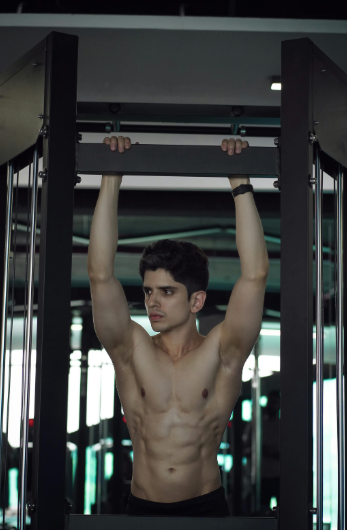
Pull-ups are one of the most sought-after exercises for people starting their fitness journey, but they are also among the most intimidating. Many individuals stand in front of a pull-up bar, attempt to lift themselves, and quickly realize they cannot even begin the movement. This situation is far more common than most people think and does not mean you are unfit or incapable of performing the exercise.
The good news is that there are several pull-up preparation exercises that can help you gradually build the strength required. Through a simple and sustainable progression, it is possible to develop the necessary muscles, improve coordination, and gain confidence, turning what seems like an impossible goal into a realistic and achievable milestone.
Why many people cannot do their first pull-up
The most common beginner mistakes
The initial difficulty is rarely caused by a lack of determination. Pull-ups require a combination of back strength, shoulder stability, core control, and motor coordination. People who have never performed pulling exercises often do not yet possess these foundations and expect immediate results from a relatively complex movement.
Another common mistake is attempting the full version of the exercise without any intermediate steps. This approach often leads to frustration, especially when progress is slow. Building a solid foundation through simpler exercises allows you to gradually develop the necessary abilities while reducing the risk of giving up after only a few weeks.
The Most Effective Preparatory Exercises to Get Started
Australian Rows: The First Step
Australian rows are probably the most useful exercise for complete beginners. By using a lower bar or a pair of gymnastic rings, your body remains inclined while part of your weight is supported by your feet. This allows you to train the same muscle groups involved in pull-ups without immediately having to manage your entire body weight.
The progression is very straightforward. Initially, you can work with a more upright body position and gradually increase the difficulty by moving closer to a horizontal position. Over time, your back, biceps, and grip strength improve, creating the ideal foundation for more demanding exercises.
Alongside Australian rows, it is helpful to include complementary exercises such as scapular pulls, resistance band rows, and simple dead hangs from the bar. These movements improve body awareness and teach you how to properly engage the muscles of the upper body.
The key is maintaining a manageable level of difficulty. A beginner should finish each set feeling capable of performing a few more repetitions, avoiding overly intense workouts that could negatively affect motivation and recovery.
How to Use Negatives and Isometric Holds to Speed Up Progress
Negative Pull-Ups: Learning to Control the Movement
Negative pull-ups focus on the lowering phase of the exercise. You start in the top position using a box or support and then slowly lower yourself while maintaining as much control as possible. This method allows you to build strength effectively even when the upward phase remains impossible.
To gain the greatest benefit, it is recommended to perform slow descents lasting several seconds while maintaining proper posture throughout the movement. As time goes on, control improves and the body begins adapting to the specific demands of a full pull-up.
Isometric Holds on the Bar: Building Specific Strength
Isometric holds involve maintaining a static position for several seconds. In the context of pull-ups, they can be performed at the top position, halfway through the movement, or with the arms slightly bent. This type of training helps develop strength at the most challenging points of the exercise.
One major advantage of static holds is their simplicity. Even people with limited time can easily incorporate them into their training routine. Just a few minutes can provide an effective stimulus and gradually improve the ability to support body weight on the bar.
Resistance Bands and Support Tools: When They Can Help
How to Choose the Right Level of Assistance
Resistance bands for pull-ups are a valuable tool for reducing the initial load and making the movement more accessible. The band supports part of your body weight, allowing you to practice the full movement even when your current strength is not sufficient for an unassisted pull-up.
However, it is important to choose the appropriate level of assistance. Too much support can alter the movement pattern and slow progress, while too little assistance may lead to renewed frustration. The goal should be to use assistance as a temporary aid and gradually reduce it over time.
For many beginners, a simple home pull-up bar and a set of resistance bands are more than enough to get started. The investment is relatively small and allows for consistent training from the comfort of home.
Consistency remains more important than equipment. Even the best support tools cannot replace a well-structured progression and regular training throughout the week.
A Progressive Path to Your First Full Pull-Up
How Long Does It Take to See Results?
There is no universal timeline. Some people achieve their first pull-up within a few weeks, while others may require several months. Factors such as body weight, starting fitness level, training frequency, and lifestyle all influence the speed of progress.
An effective progression may begin with Australian rows, continue with dead hangs from the bar, gradually introduce negative pull-ups and isometric holds, and eventually incorporate band-assisted pull-ups. Each stage develops specific skills that make the next step easier to achieve.
It is essential to focus on small improvements. Holding an isometric position for a few extra seconds, controlling a descent more effectively, or completing an additional repetition are all concrete signs that your body is becoming stronger. These seemingly minor achievements form the foundation of your future full pull-up.
Those who approach the process with patience and consistency often discover that the real transformation goes beyond physical strength. Achieving your first pull-up means developing greater self-confidence, overcoming the initial feeling of inadequacy, and realizing that the most meaningful results are almost always built through small, repeated efforts over time.
Comments (0)