
Trolley
You have no items in your shopping cart

 Budgets
 Dumbers
 Discs
Discs
 Benches
 Racks and Rigs
 Weights Holders
 Isotonic machines
 Calisthenics
 Cardio
 Kettlebells
 Flooring
 Gym Set
 Accessories
 Combat
 ARTI MARZIALI
 CONTAINER GYM
 Tug-Of-War
 Used Gym Equipment
 PILATES MACCHINARI
 GINNASTICA ARTISTICA
 CAMPI DA PADEL
 Prodotti in Pronta Consegna
 Informazioni
 IRONMAN
 Gift Card
- Donatif
- General information
- 0 I like it
- 9 Views
- 0 comments
- gym flooring, safety flooring, gym safety, shock-absorbing materials
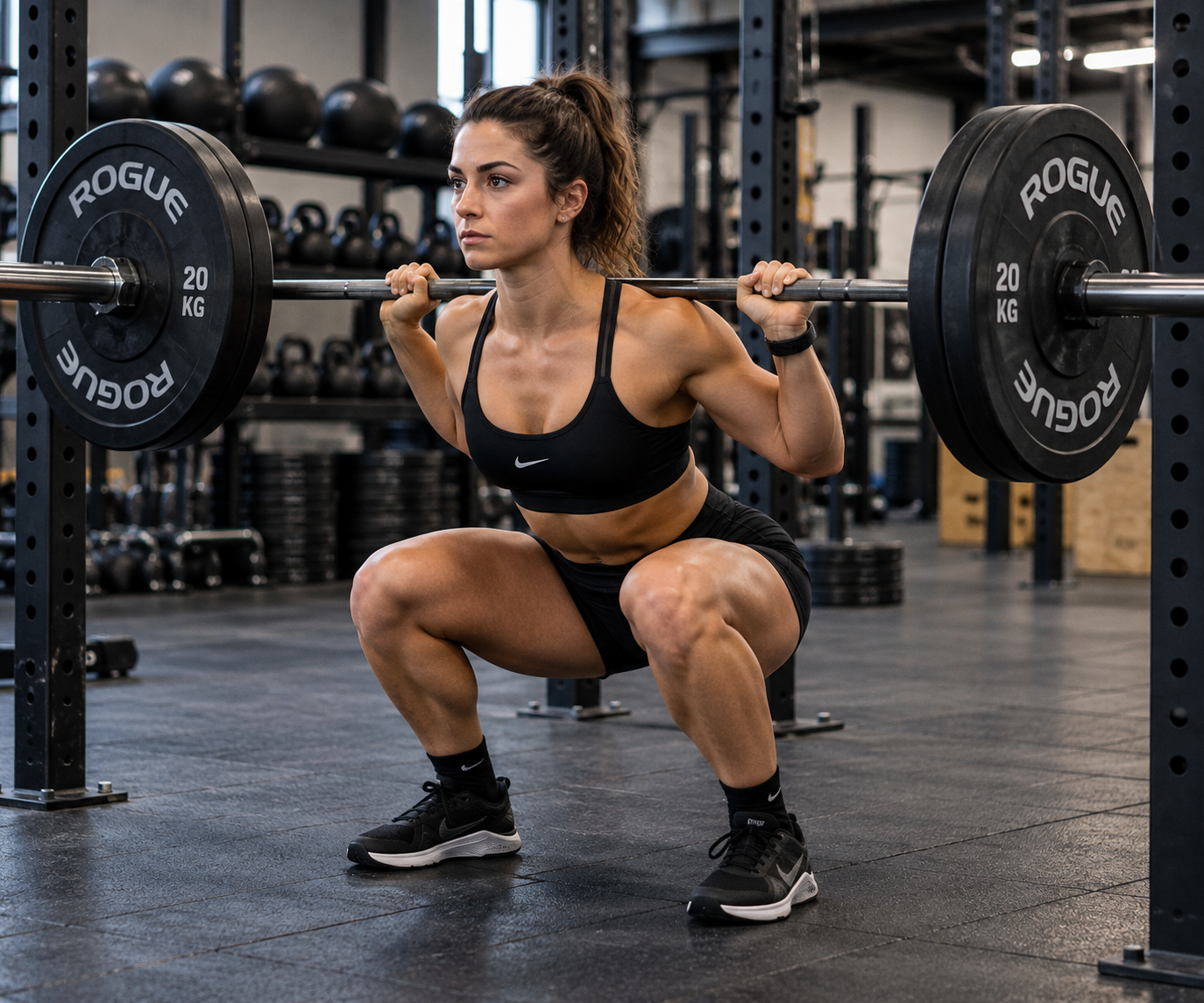
Belt squat vs barbell squat: differences, advantages and selection criteria
The comparison between belt squat and barbell squat involves two different ways of training the lower limbs. Both exercises aim to develop strength and movement control, but they distribute the load differently and require specific technical characteristics. Understanding these differences allows you to choose the most suitable tool according to your training goals and the athlete's characteristics.
The belt squat uses a belt connected to a mechanical system that transfers the load to the pelvis, while in the barbell squat the weight is supported directly through the barbell positioned on the shoulders. This difference changes how the load is managed during the movement and can influence training programming.
For athletes, personal trainers, and gym managers, it is therefore useful to compare the two solutions through verifiable criteria, avoiding considering one machine or exercise as universally better than the other. The choice should always be consistent with the user's technical level, preparation goals, and the characteristics of the training environment.
- Quick answer
- What are the main differences
- How the two exercises work
- How to choose between belt squat and barbell squat
- Comparison table
- Errors to avoid and safety
- How to evaluate the most suitable solution
Belt squat or barbell squat: which one to choose
The choice between belt squat and barbell squat depends on training goals, equipment availability, user experience, and technical programming. Both solutions can be included in a preparation path as long as they are used with correct technique and according to the manufacturer's and instructor's instructions.
These are not interchangeable exercises in every situation. Each has specific characteristics that may be more suitable for certain training programs.
The evaluation should be based on practical criteria such as movement quality, space availability, machine versatility, and the type of users who will use the equipment.
Decision-making criteria
The main criteria concern the load application methods, training goals, athlete's technical experience, space availability, ease of adjustment, and the possibility of integrating the exercise into the programming.
Technical references
For both solutions, it is advisable to follow the equipment manufacturers' instructions and refer to the standards applicable to fitness equipment, such as the EN ISO 20957 series when relevant.
What are the main differences
The most obvious difference concerns how the load is transmitted to the body. In the belt squat, the weight is connected to a belt positioned on the pelvis through a lever or cable system, while in the barbell squat, the load is supported directly by the barbell resting on the shoulders.
This characteristic modifies the distribution of forces during the movement and makes the technical organization of the exercise different. The level of adjustment required before use also varies between the two solutions.
Both exercises require correct technical execution, consistent load progression, and compliance with the safety instructions provided for the equipment used.
Load distribution
The way the load is applied represents the main distinguishing element between the two solutions and constitutes one of the first aspects to evaluate in the choice.
Required equipment
The barbell squat generally requires a rack, barbell, and plates, while the belt squat requires a dedicated machine with a belt and load transmission system.
How the two exercises work
In the belt squat, the user wears a belt connected to the machine and performs the squat movement while keeping the load applied through the mechanical system. The barbell squat, on the other hand, involves positioning the barbell on the shoulders before executing the exercise.
Both exercises can be included in programs dedicated to strength development, athletic preparation, and physical conditioning. The choice depends on the training planning and the athlete's needs.
Correct adjustment of the machine or the rack represents the first step to perform the movement under appropriate conditions.
Using the belt squat
The machine requires adjustment of the belt, the attachment system, and any load before starting the exercise.
Using the barbell
The barbell squat requires particular attention to the positioning of the barbell, the height of the supports, and load management.
How to choose between belt squat and barbell squat
The choice should be consistent with training goals and the context of use. A commercial gym might favor equipment that is simple to use and easily adjustable, while a center dedicated to athletic preparation might integrate both solutions.
Available space and the expected number of users also affect the decision. A dedicated machine actually requires different layout planning compared to a station with a rack and barbell.
The manufacturing quality of the equipment, ease of maintenance, and availability of spare parts are additional elements to consider before purchase.
Commercial gym
Simplicity of use, robustness, and speed of adjustments are particularly important features in facilities open to the public.
Athletic preparation
Integrating both training modalities can broaden programming possibilities when the technical project requires it.
Comparison table
| Feature | Belt squat | Barbell squat |
|---|---|---|
| Load application | Belt connected to the machine | Barbell on the shoulders |
| Equipment | Dedicated machine | Rack, barbell, and plates |
| Adjustments | Belt and load system | Rack height and load |
| Space | Depends on the installed machine | Depends on the area dedicated to the rack |
| Maintenance | Check of cables, pins, and components | Check of barbell, rack, and accessories |
| Versatility | Depends on available accessories | Depends on the station configuration |
How to interpret the comparison
The table allows you to compare the two solutions using technical criteria without assigning an absolute value to either of them.
Defining priorities
Each facility should identify the most relevant features based on its training project.
Errors to avoid and safety
One of the most frequent errors is considering the belt squat and barbell squat as perfectly equivalent without evaluating structural differences, usage methods, and programming characteristics.
It is also important to avoid sudden load increases, neglecting equipment maintenance, or using improperly adjusted machines.
The quality of the surface on which the equipment is installed also contributes to the stability of the training area. A suitable shock-absorbing flooring protects both the floor and the equipment. To learn more about available solutions, you can consult gym shock-absorbing flooring.
Choice based only on price
The evaluation should consider manufacturing quality, usage goals, and gym organization in addition to the initial cost.
Uncontrolled technique
Correct movement execution and consistent load progression represent fundamental elements for both solutions.
How to evaluate the most suitable solution
The choice between belt squat and barbell squat should be included in an overall evaluation that considers available space, user type, training programs, and expected frequency of use.
For some facilities, it may be advantageous to integrate both solutions so as to offer different training possibilities and expand the weight room's versatility.
Analyzing the technical specifications of the equipment, verifying manufacturing quality, correctly planning the layout, and following the manufacturers' instructions allows you to make an informed choice consistent with the goals of the facility or the athlete.
Comments (0)