
Trolley
You have no items in your shopping cart

 Budgets
 Dumbers
 Discs
Discs
 Benches
 Racks and Rigs
 Weights Holders
 Isotonic machines
 Calisthenics
 Cardio
 Kettlebells
 Flooring
 Gym Set
 Accessories
 Combat
 ARTI MARZIALI
 CONTAINER GYM
 Tug-Of-War
 Used Gym Equipment
 PILATES MACCHINARI
 GINNASTICA ARTISTICA
 CAMPI DA PADEL
 Prodotti in Pronta Consegna
 Informazioni
 IRONMAN
 Gift Card
- Donatif
- General information
- 0 I like it
- 434 Views
- 0 comments
- gym flooring, safety flooring, gym safety, shock-absorbing materials
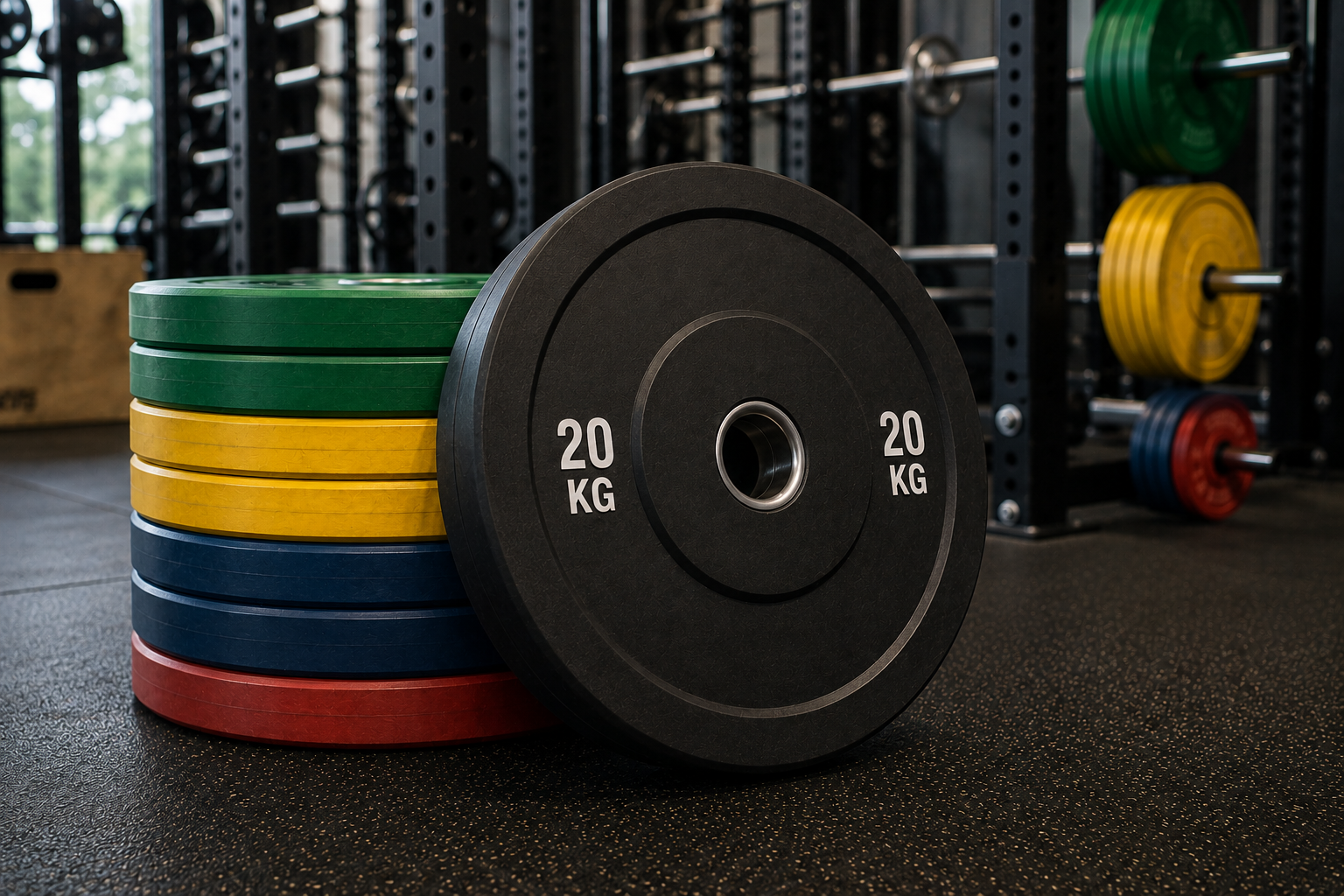
Bumper Plates vs. Cast Iron Plates: When to Invest in Cross Training Weights
The choice of plates is one of the most important aspects when designing a home gym or a professional gym. Those who practice traditional training often consider cast iron plates the ideal solution, while Cross Training and Olympic lifting enthusiasts are increasingly turning toward bumper plates. The difference, however, is not just about the material used.
Choosing between bumper or cast iron plates means evaluating the type of exercises performed, training frequency, load levels, the need for controlled drops, and floor protection. Each solution offers specific advantages, and knowing the characteristics of both allows you to avoid investments that are not well-suited to your needs.
Before buying new plates, it is therefore essential to analyze not only the price but also durability, noise, bounce, safety, and compatibility with your training program. A comprehensive evaluation allows you to build a more efficient gym designed to last over time.
- Differences between bumper plates and cast iron plates
- Why bumpers are ideal for Cross Training
- When to choose cast iron plates
- Bounce, noise, and safety
- Durability and maintenance
- Long-term cost analysis
- How to choose the best solution
- Investing in the right equipment
Differences between bumper plates and cast iron plates
Bumper plates are made primarily of high-density rubber with a steel center insert. They are designed to withstand repeated drops without undergoing significant deformation and without damaging the floor or the barbell.
Cast iron plates, on the other hand, prioritize compactness and the weight-to-size ratio. For the same load, they take up less space on the barbell and are particularly suitable for exercises where the weight is always controlled during the descent phase.
Both types can offer excellent performance, but they cater to very different training needs.
Materials and construction
The solid rubber of bumper plates absorbs part of the impact energy, reducing stress on the floor, barbell, and building structure. Cast iron, conversely, is extremely rigid and offers no shock-absorbing effect.
This characteristic directly influences safety during certain technical exercises.
Size differences
Bumper plates generally maintain a constant outer diameter regardless of weight, varying in thickness instead. Cast iron plates, however, have different diameters depending on the weight.
This configuration makes bumpers particularly suitable for Olympic movements performed from the ground.
Why bumpers are ideal for Cross Training
Cross Training includes explosive exercises such as Cleans, Jerks, Snatches, and numerous variations where the barbell may be dropped at the end of the repetition. In these cases, using plates designed to absorb impact becomes essential.
Bumper plates allow you to train with greater safety, preserving the floor, barbell, and plates even during particularly intense sessions.
For boxes and gyms dedicated to functional training, they have become the reference standard.
Drop management
One of the main advantages is the ability to perform controlled drops without compromising the integrity of the equipment.
This feature allows you to focus on technique while reducing the risk of damaging the training environment.
High-intensity workouts
WODs often involve numerous repetitions and changes in pace. Using cross training weights designed for this type of use improves training efficiency and extends the life of the equipment.
The robustness of bumper plates makes them particularly suitable for daily high-intensity sessions.
When to choose cast iron plates
Cast iron plates still represent an excellent choice for many contexts today. Those who practice bodybuilding, powerlifting, or traditional strength training rarely need to drop the barbell at the end of an exercise.
In these disciplines, the compactness of the plates allows you to load more weight onto the barbell while maintaining sufficient space on the sleeves.
The initial cost can also be attractive for those who already have adequate flooring.
Traditional training
During exercises like bench press, guided squats, rows, and military press, cast iron plates offer excellent performance and a small footprint.
Their simple structure also guarantees a long lifespan if used correctly.
Powerlifting and strength
For those seeking the maximum possible load on the barbell, the smaller width of cast iron plates is a concrete advantage.
This allows for handling very heavy weights without saturating the sleeves.
Bounce, noise, and safety
One of the elements that most distinguishes the two types is their behavior during impact with the floor. Bumper plates are designed to absorb part of the energy, while cast iron transfers the blow almost completely to the surface below.
This difference affects acoustic comfort, safety, and the durability of surrounding equipment.
Evaluating the type of environment in which you train is essential before purchasing.
The role of rubberized plate bounce
Bumper plates are designed to offer a controlled bounce that protects the barbell without compromising the athlete's safety.
The quality of the rubber and the construction of the plate directly influence this behavior.
Noise reduction
Rubber helps to significantly attenuate the noise produced during workouts compared to cast iron.
This is an important advantage for home gyms located in apartments or condominiums.
Durability and maintenance
Both bumper and cast iron plates can offer a long service life if used correctly. However, usage conditions significantly affect their durability.
Bumpers are designed to withstand repeated drops, while cast iron maintains high performance when not subjected to violent impacts.
Proper maintenance helps to preserve both solutions over time.
Bumper maintenance
Periodic cleaning of the rubber surface and storage away from heat sources help keep the material in optimal condition.
Periodically checking the center insert also allows you to identify any signs of wear.
Cast iron maintenance
Cast iron plates benefit from storage in dry environments and regular cleaning to prevent oxidation.
Proper care significantly increases their lifespan.
Long-term cost analysis
The initial price is only one of the elements to consider. It is important to also evaluate the type of training, frequency of use, and indirect costs related to floor and equipment protection.
For those practicing intense Cross Training, the investment in bumper plates can significantly reduce maintenance costs in the long run.
Conversely, those who perform exclusively traditional training might not derive sufficient benefits from this solution.
Total cost of ownership
Equipment suited to your training style requires fewer replacements and ensures greater reliability.
Analyzing the overall cost over time allows you to make more informed decisions.
Investing in quality
Products built with superior quality materials generally offer greater durability and better performance, reducing the average cost per year of use.
The choice should always consider the entire lifecycle of the equipment.
How to choose the best solution
The decision depends mainly on the exercises performed. Those who practice Olympic lifting or Cross Training should lean toward bumper plates, while bodybuilding and traditional strength enthusiasts may find cast iron to be a perfectly adequate solution.
The available flooring, acceptable noise level, and gym space also influence the final choice.
Evaluating all these elements allows you to purchase the equipment that is truly best suited to your needs.
Home gym
In home gyms located in shared environments, noise reduction and floor protection can make bumper plates a particularly advantageous choice.
This solution improves comfort without limiting the quality of the workout.
Professional gyms and boxes
Facilities dedicated to Cross Training use almost exclusively bumper plates to ensure safety, operational continuity, and long equipment life.
A choice consistent with the type of activity performed also improves the user experience.
Investing in the right equipment
The choice between bumper plates and cast iron plates should always start with the training program and long-term goals. Considering only the initial price risks leading to an investment that is not well-suited to the actual needs of the gym.
Evaluating reliable products designed for their intended use allows for better performance and greater durability. To compare different solutions dedicated to strength and functional training, you can consult the range of Donatif bumper plates, designed to meet the needs of both home gyms and professional facilities.
Carefully analyzing materials, bounce, noise, durability, and type of exercises allows you to build a more efficient, safe gym ready to accompany every stage of your athletic growth.
Comments (0)