
Trolley
You have no items in your shopping cart

 Budgets
 Dumbers
 Discs
Discs
 Benches
 Racks and Rigs
 Weights Holders
 Isotonic machines
 Calisthenics
 Cardio
 Kettlebells
 Flooring
 Gym Set
 Accessories
 Combat
 ARTI MARZIALI
 CONTAINER GYM
 Tug-Of-War
 Used Gym Equipment
 PILATES MACCHINARI
 GINNASTICA ARTISTICA
 CAMPI DA PADEL
 Prodotti in Pronta Consegna
 Informazioni
 IRONMAN
 Gift Card
- Donatif
- General information
- 0 I like it
- 559 Views
- 0 comments
- gym flooring, safety flooring, gym safety, shock-absorbing materials
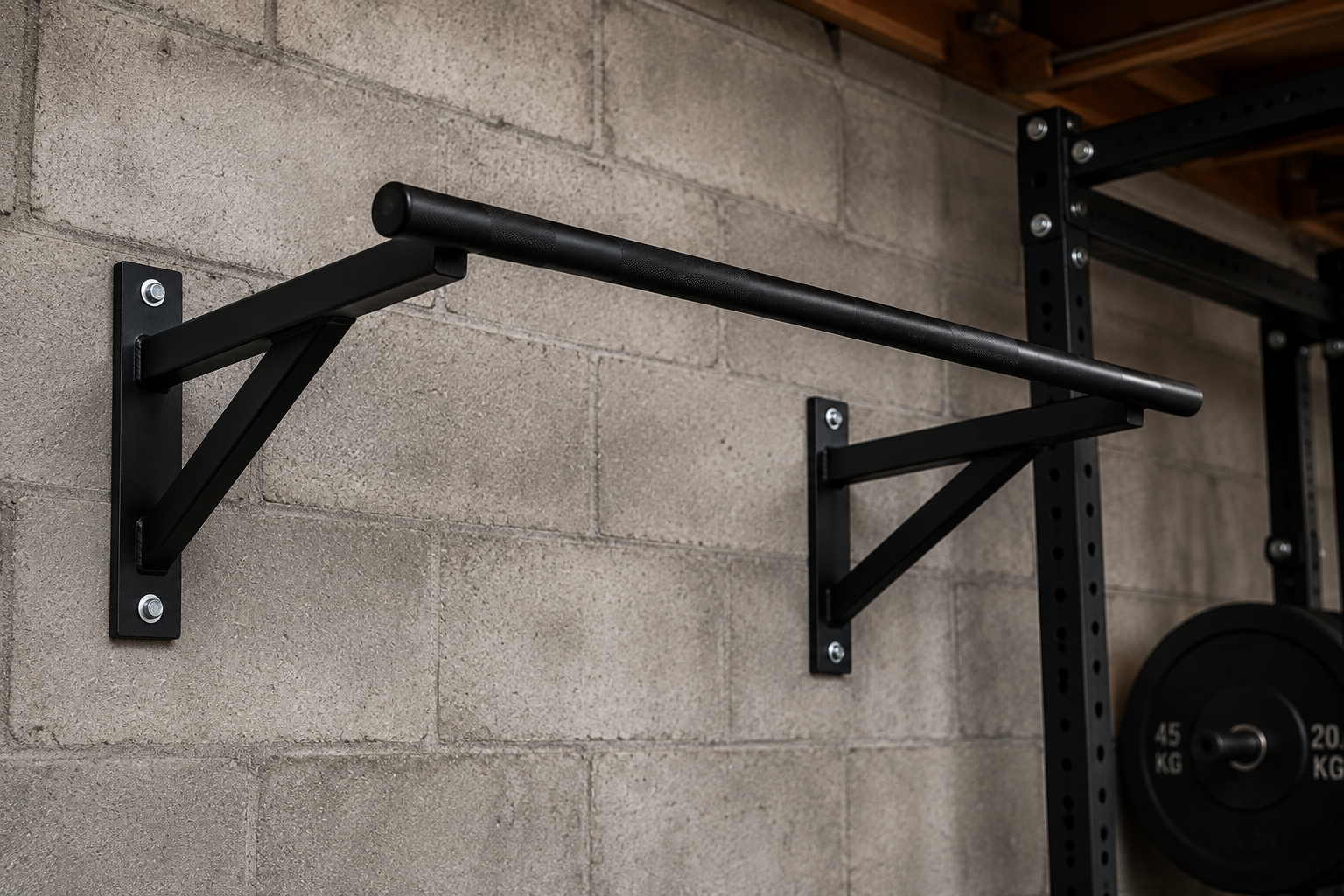
Best Pull-Up Bar 2026: Ranking and Buying Guide
Choosing the best pull-up bar does not simply mean buying the most expensive model or the one with the highest weight capacity. The ideal choice depends on the available space, training level, personal goals, and frequency of use. A beginner who wants to improve their physical fitness has very different needs compared to a calisthenics athlete or someone looking to set up a professional home gym.
In recent years, the market has evolved significantly, offering increasingly specialized solutions: wall-mounted bars, ceiling models, multifunctional racks, freestanding structures, and complete stations capable of integrating numerous exercises into a single piece of equipment. This variety is an advantage, but it also makes the choice more complex.
In this guide, we analyze the main categories of pull-up bars, comparing their advantages, limitations, intended uses, and price ranges. The goal is not to identify an absolute winner, but to help you choose the model best suited to your needs, because the best bar is always the one that integrates perfectly with your training.
- How to choose the best pull-up bar
- Ranking of the main types
- When to choose a professional bar
- Prices and value for money
- Which model to choose based on space
- Choosing based on training level
- Mistakes to avoid when buying
- How to turn your purchase into an investment
How to choose the best pull-up bar
Before comparing different models, it is important to define the context of use. The available space, the type of training, and the number of people who will use the equipment are the main criteria for a correct choice.
A bar intended for occasional use may have different characteristics than one designed for daily, high-intensity workouts. The user's weight, the presence of dynamic exercises, and the possibility of installation also influence the type of structure to prefer.
Evaluating these aspects before purchasing allows you to avoid compromises that could limit your training experience in the long run.
Defining goals
General training, athletic preparation, calisthenics, and strength development require different technical characteristics and can guide you toward different product categories.
Considering frequency of use
The higher the intensity of use, the higher the build quality of the structure, welds, and fastening systems must be.
Ranking of the main types of bars
There is no universal ranking valid for all users, but it is possible to order the main solutions based on their intended use.
Wall-mounted bars represent one of the most versatile choices for most home gyms, offering stability and an excellent balance between footprint and functionality. Ceiling bars, on the other hand, allow for maximum freedom of movement and are ideal when walls are not available.
Multifunctional racks are the most complete solution for those who want to integrate pull-ups, squats, bench press, dips, and numerous other exercises into a single structure. Freestanding stations are particularly interesting when permanent installations are not possible.
Wall-mounted bars
They represent the best compromise between stability, cost, and ease of installation for most users.
Multifunctional racks
They allow you to create a complete gym, offering maximum versatility for strength and athletic preparation programs.
When to choose a professional structure
Professional pull-up bar prices are generally higher than entry-level models, but the difference is justified by more resistant materials, greater structural rigidity, and a significantly longer lifespan.
A professional construction limits oscillations and vibrations, improves grip quality, and ensures greater safety during dynamic exercises or with heavy loads.
For those who train frequently, investing in a professional structure means obtaining consistent performance even after years of intensive use.
Quality of materials
Structural steels, certified welds, and resistant surface treatments contribute to the solidity of the equipment.
Greater durability
A structure designed for professional use maintains high performance even with daily workouts.
Prices and value for money
The price of a bar varies significantly depending on the type, materials, and construction features.
Cheaper solutions may be adequate for occasional use, while more demanding users benefit from products designed to support heavy loads and continuous use.
Evaluating only the initial cost can be misleading. A more robust structure generally requires less maintenance and ensures greater durability, reducing the overall cost over time.
Entry level
Ideal for those approaching pull-ups and wanting to start with a modest investment.
Premium range
Recommended for advanced athletes, personal trainers, and professional home gyms that require the best in terms of reliability.
Which bar to choose based on available space
Space is one of the most important criteria when choosing equipment.
In small environments, wall-mounted bars allow you to effectively utilize vertical surfaces without taking up floor space. When the ceiling offers adequate height, a suspended bar allows for wider and more dynamic movements.
Those who have a dedicated room can instead consider a multifunctional rack capable of replacing numerous separate pieces of equipment.
Compact home gyms
A wall or ceiling bar allows you to achieve the best result with the smallest footprint.
Complete home gyms
Racks and power stations offer greater versatility when space is not a limitation.
Which pull-up bar to choose based on level
The question which pull-up bar to choose is answered by analyzing the user's experience.
Beginners benefit from simple and stable structures that allow them to focus on technique. Intermediate athletes often look for more versatility, while those practicing advanced calisthenics need equipment capable of supporting explosive movements and complex skills.
Choosing a model consistent with your level allows you to progress more safely without buying oversized or limiting equipment.
For beginners
Stability, simplicity, and ease of installation are the priority elements for learning the technical movement correctly.
For expert athletes
Rigidity, high load capacity, and compatibility with accessories are essential features.
The most common mistakes when buying
Many users consult a pull-up bar ranking without considering their own context of use. A model that is excellent for a professional gym might be poorly suited for a small home gym.
Another mistake is to focus exclusively on the declared weight capacity, neglecting aspects such as rigidity, weld quality, grip ergonomics, and ease of installation.
Finally, choosing solely based on price can lead to buying a structure that will not meet future needs, making a new investment necessary after a short time.
Looking only at the price
The best value for money is obtained by evaluating the durability, safety, and overall performance of the structure.
Neglecting assembly
Proper installation is essential to fully utilize the features of the chosen equipment.
How to turn your purchase into an investment
Choosing the best pull-up bar means identifying the solution best suited to your space, technical level, and training goals. There is no perfect model for everyone, but there is equipment designed to effectively meet specific needs.
A quality structure offers greater safety, a better user experience, and superior durability, allowing you to face years of training without compromising on performance.
To compare professional solutions designed for home gyms, personal training studios, and fitness centers, you can consult the range of best pull-up bars available in the Donatif catalog, where each model is designed to offer the best balance between build quality, reliability, and long-term performance.
Comments (0)