
Trolley
You have no items in your shopping cart

 Budgets
 Dumbers
 Discs
Discs
 Benches
 Racks and Rigs
 Weights Holders
 Isotonic machines
 Calisthenics
 Cardio
 Kettlebells
 Flooring
 Gym Set
 Accessories
 Combat
 ARTI MARZIALI
 CONTAINER GYM
 Tug-Of-War
 Used Gym Equipment
 PILATES MACCHINARI
 GINNASTICA ARTISTICA
 CAMPI DA PADEL
 Prodotti in Pronta Consegna
 Informazioni
 IRONMAN
 Gift Card
- Donatif
- General information
- 0 I like it
- 1863 Views
- 0 comments
- gym flooring, safety flooring, gym safety, shock-absorbing materials
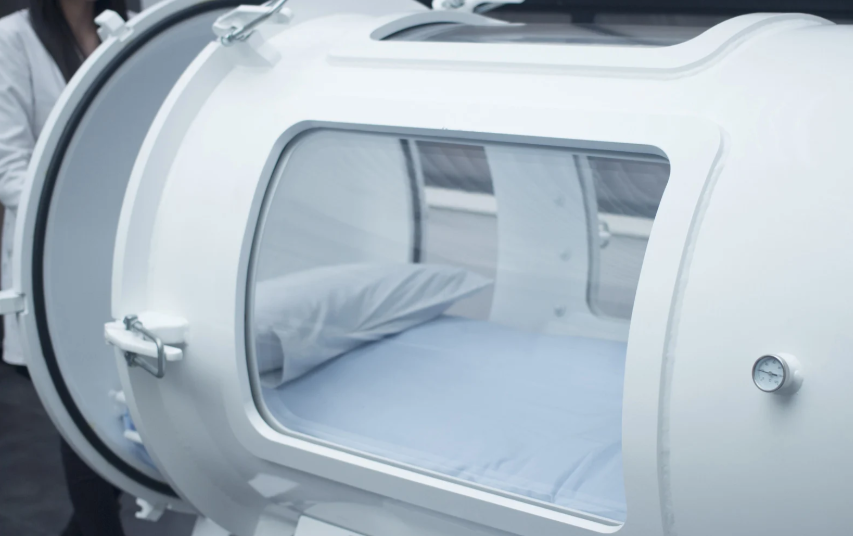
Hypoxic Chamber: What It Is, How It Works and Why It Is Revolutionizing Training
In recent years, the hypoxic chamber has evolved from being a technology reserved for research centers and elite athletes into an increasingly common solution in sports centers, advanced gyms, and facilities dedicated to athletic performance. Growing interest in this technology stems from its ability to recreate the physiological effects of high altitude in a controlled environment, without requiring extended stays in the mountains.
Understanding what a hypoxic chamber is and how it works means gaining insight into the scientific principles behind normobaric hypoxic training, the body's physiological adaptation mechanisms, and the benefits that can result from professional use. The objective is not simply to reduce oxygen availability, but to trigger specific physiological responses capable of improving cardiovascular and respiratory efficiency.
- What Is a Hypoxic Chamber?
- How Does a Hypoxic Chamber Work?
- The Body's Physiological Responses
- The Benefits of Hypoxic Training
- Applications in Fitness Centers and Advanced Home Gyms
- How to Choose a Professional Hypoxic Chamber
What Is a Hypoxic Chamber?
A hypoxic chamber is a controlled environment specifically designed to simulate the atmospheric conditions found at high altitude. Contrary to what many people believe, the atmospheric pressure is not altered. Instead, the percentage of oxygen in the air is reduced. This technology is known as normobaric hypoxia, because the atmospheric pressure remains constant while the concentration of breathable oxygen decreases.
Altitude simulation makes it possible to reproduce conditions equivalent to elevations ranging from approximately 1,500 to more than 6,000 meters, depending on the system configuration. The body immediately interprets this reduction in oxygen as a need to adapt, triggering a series of physiological processes that improve oxygen transport and utilization throughout the tissues.
The Meaning of Normobaric Hypoxia
The term hypoxia refers to a reduced availability of oxygen for the body. In the case of normobaric hypoxia, this condition is achieved without changing atmospheric pressure, but through advanced systems that lower the oxygen concentration within the environment.
Today, this methodology represents one of the safest and most controllable ways to study altitude adaptation and to develop highly personalized training programs while minimizing the environmental variables associated with real high-altitude conditions.
Why Simulate High Altitude?
Altitude exposure has been a well-established component of elite athletic preparation for decades. However, relocating an entire team or individual athlete to mountain environments requires significant financial investment, time, and logistical planning.
Hypoxic chambers make it possible to achieve a comparable physiological stimulus directly within a sports facility, allowing coaches and athletes to perform highly precise and repeatable training sessions throughout the year.
How Does a Hypoxic Chamber Work?
The operating principle is based on hypoxia generators that modify the composition of the air. Through selective membranes or molecular filtration systems, part of the oxygen is separated from the surrounding air, producing a breathable gas mixture with an oxygen concentration lower than the normal 20.9%.
Modern professional systems allow operators to regulate oxygen concentration with exceptional precision, simulating different altitude levels according to the planned training protocol. The entire process is continuously monitored by sensors that ensure stability and safety throughout every training session.
Controlling Oxygen Concentration
The key parameter is the oxygen percentage. The lower this value becomes, the higher the simulated altitude. The system automatically maintains the selected oxygen level, compensating for variations caused by door openings or the presence of users inside the chamber.
This level of precision enables coaches and strength and conditioning professionals to design highly accurate training protocols, progressively adjusting the physiological stimulus according to each athlete's objectives.
Environmental Management Systems
Professional hypoxic chambers integrate ventilation, air filtration, humidity control, and temperature regulation systems to maintain stable environmental conditions throughout each training session.
The quality of the indoor environment is essential not only for user comfort but also for ensuring that the hypoxic stimulus remains stable, consistent, and scientifically reproducible.
Parameter Monitoring
Professional installations include continuous monitoring systems for oxygen concentration, air quality, and environmental parameters.
This automated management allows operators to respond immediately to any anomalies while ensuring high reliability standards, particularly in facilities that accommodate multiple athletes throughout the day.
```html
The Body's Physiological Responses
When the body detects a reduction in oxygen availability, it activates a series of compensatory mechanisms. Among the earliest responses are an increase in breathing rate and greater cardiovascular activity, both aimed at improving oxygen delivery to the body's tissues.
With repeated exposure and properly designed training protocols, the body develops deeper physiological adaptations involving red blood cell production, mitochondrial efficiency, and the muscles' ability to utilize available oxygen more effectively.
Cardiovascular and Respiratory Adaptations
Over time, the cardiovascular and respiratory systems become more efficient, improving oxygen distribution during physical activity. This adaptation enables athletes to sustain prolonged exercise and higher training intensities with greater efficiency.
Respiratory control also evolves, allowing the body to maximize the effectiveness of each breath during exercise. These adaptations contribute to enhanced endurance and improved performance across a wide range of sports.
Erythropoietin Production and Improved Oxygen Transport
One of the most extensively studied adaptations is the stimulation of erythropoietin (EPO) production, the hormone responsible for promoting the formation of red blood cells. An increase in red blood cell mass enhances the body's ability to transport oxygen to muscles and vital organs.
The magnitude of this response depends on several factors, including the duration of exposure, the degree of hypoxia, and the athlete's individual characteristics. For this reason, hypoxic training protocols should always be developed and supervised by qualified professionals.
The Benefits of Hypoxic Training
Training inside a hypoxic chamber can be an extremely effective component of a comprehensive athletic development program. The benefits are not derived solely from hypoxic exposure itself, but from the careful integration of training, recovery, and workload management.
When implemented professionally, this technology can improve aerobic capacity, metabolic efficiency, and resistance to fatigue, providing a significant advantage in many sports disciplines.
Improved Aerobic Endurance
Endurance sports are among those that benefit most from hypoxic training. Enhanced oxygen utilization allows athletes to sustain prolonged efforts more efficiently while improving overall aerobic performance.
Runners, cyclists, triathletes, cross-country skiers, and other endurance athletes frequently incorporate hypoxic training into their preparation programs to optimize performance.
Enhanced Athletic Performance
The physiological adaptations achieved through hypoxic exposure can translate into measurable improvements in both competition and high-intensity training sessions. Greater metabolic efficiency enables muscles to produce and utilize energy more effectively during demanding physical efforts.
As with any advanced training methodology, results depend on the quality of the overall training program and on how effectively hypoxic sessions are integrated with strength training, endurance work, recovery, and nutrition.
Recovery and Competition Preparation
Many strength and conditioning coaches also use hypoxic exposure during specific phases of the competitive season, adjusting both intensity and duration according to the athlete's performance objectives.
The ability to precisely control the simulated altitude makes hypoxic chambers an extremely flexible tool for managing different stages of annual athletic preparation, from preseason conditioning to competition tapering.
Applications in Fitness Centers and Advanced Home Gyms
Today, hypoxic chambers are used not only in Olympic training centers but also in premium fitness clubs, personal training studios, sports performance clinics, and facilities specializing in sports medicine. Continuous technological advancements have made these systems increasingly accessible to private organizations and high-end fitness businesses.
For gym owners and sports facility managers, a hypoxic chamber represents a premium service capable of differentiating their offering, attracting athletes, and providing innovative training solutions supported by scientific research.
When Is It a Strategic Investment?
Installing a hypoxic chamber is particularly valuable for facilities specializing in athletic performance, functional recovery, elite personal training, and sports conditioning.
Beyond the technical specifications, it is essential to evaluate operating costs, maintenance requirements, technical support, and staff training to ensure the system delivers long-term value and reliable performance.
```html id="8pz4kn"
Who Is This Technology Designed For?
Hypoxic chambers are particularly well suited for competitive athletes, sports teams, strength and conditioning coaches, exercise physiologists, and fitness centers focused on innovation and high-performance training.
Advanced fitness enthusiasts seeking to incorporate cutting-edge technologies into their training routines can also benefit from hypoxic environments, provided that every session is performed according to professionally designed protocols and under qualified supervision.
How to Choose a Professional Hypoxic Chamber
Choosing a hypoxic chamber should not be based solely on commercial features or price. Instead, it is essential to evaluate the quality of the technology, the precision of the control systems, the reliability of the equipment, and the level of after-sales technical support provided by the manufacturer.
A professionally designed system ensures stable altitude simulation, greater operational safety, and consistent performance over time. These factors are especially important for sports facilities that rely on the equipment daily and require maximum reliability.
Build Quality
The construction materials, insulation quality, and efficiency of the hypoxia generators play a crucial role in maintaining a stable oxygen concentration while minimizing operating costs.
A robust, well-engineered structure is capable of withstanding intensive daily use typical of professional sports facilities without compromising performance or long-term reliability.
Reliability of the Control Systems
High-precision sensors and advanced software continuously monitor oxygen concentration and all environmental parameters, ensuring that the selected simulated altitude remains accurate throughout every training session.
The ability to create, save, and manage multiple training protocols represents a significant advantage for sports scientists, coaches, and performance professionals working with athletes who have different goals and conditioning levels.
Safety and Technical Support
Every professional installation should include redundant safety systems, automatic monitoring functions, and scheduled maintenance plans. These features help guarantee safe operation while reducing downtime and maintaining consistent performance throughout the equipment's lifespan.
Equally important is access to qualified technical support capable of providing prompt assistance, routine maintenance, software updates, and specialized advice whenever necessary.
The hypoxic chamber is now considered one of the most advanced technologies available for high-altitude simulation and athletic performance optimization. By precisely controlling oxygen concentration and allowing fully customized training protocols, it has become an invaluable tool for advanced fitness centers, strength and conditioning professionals, sports performance facilities, and athletes seeking scientifically supported methods to maximize endurance, improve aerobic efficiency, and elevate overall performance.
Comments (0)