
Trolley
You have no items in your shopping cart

 Budgets
 Dumbers
 Discs
Discs
 Benches
 Racks and Rigs
 Weights Holders
 Isotonic machines
 Calisthenics
 Cardio
 Kettlebells
 Flooring
 Gym Set
 Accessories
 Combat
 ARTI MARZIALI
 CONTAINER GYM
 Tug-Of-War
 Used Gym Equipment
 PILATES MACCHINARI
 GINNASTICA ARTISTICA
 CAMPI DA PADEL
 Prodotti in Pronta Consegna
 Informazioni
 IRONMAN
 Gift Card
- Donatif
- General information
- 0 I like it
- 965 Views
- 0 comments
- gym flooring, safety flooring, gym safety, shock-absorbing materials
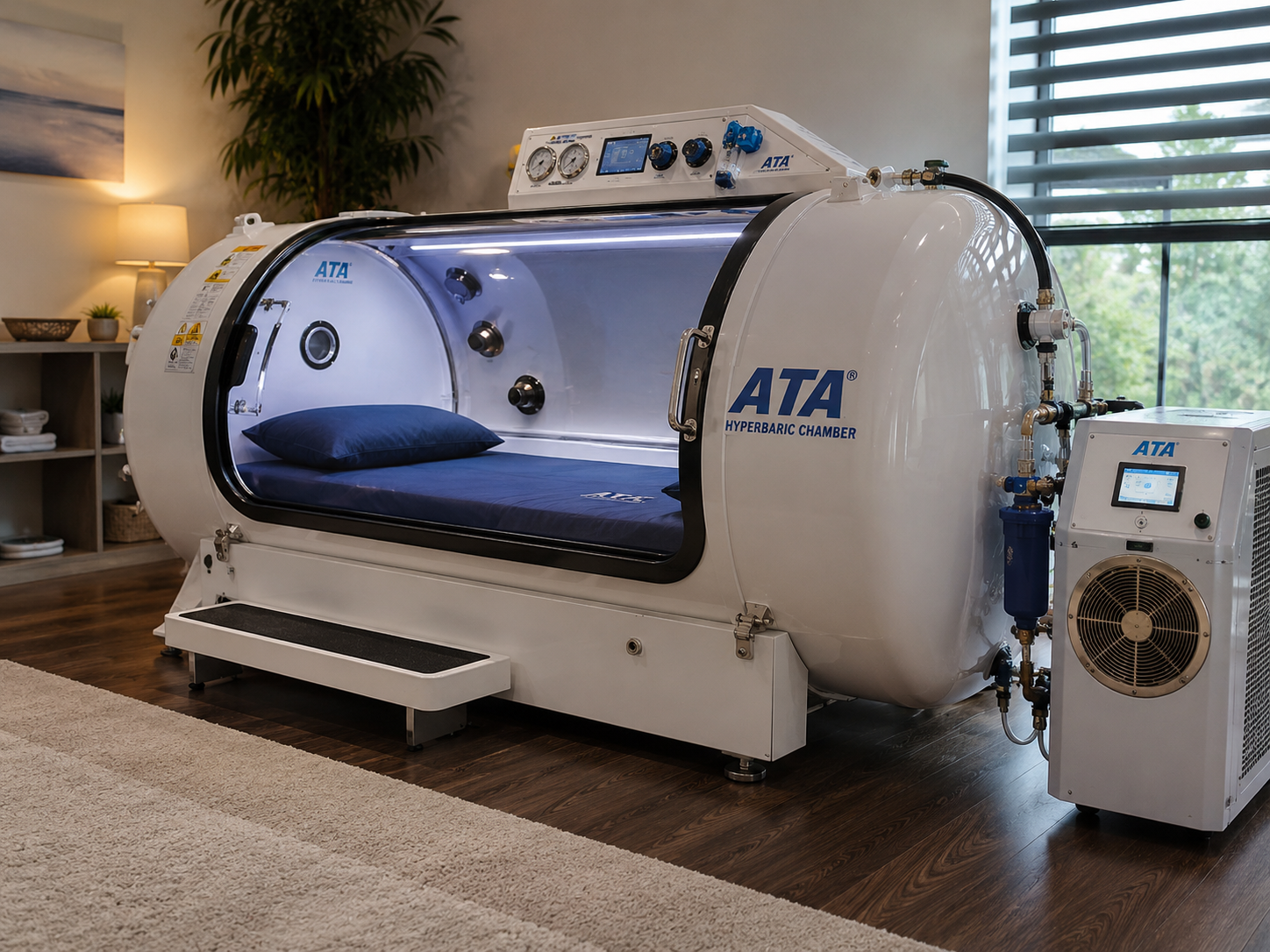
ATA hyperbaric chamber pressure: understanding values to choose the most suitable technology
When discussing hyperbaric chambers, one of the most frequently cited parameters in technical datasheets and commercial communications is the operating pressure expressed in ATA. However, behind these numbers lies a technical aspect that is often oversimplified: understanding what values like 1.3 ATA, 1.5 ATA, or 2.0 ATA truly mean is essential to properly evaluate a technology and determine which solution aligns best with the user's goals.
For a performance-oriented athlete, pressure represents one of the elements to be analyzed within a broader framework that includes build quality, usage protocols, comfort, and system reliability. The numerical value alone does not tell the whole story: it is the way the chamber manages that pressure, stability during the session, and integration with the user's path that determines the real value of the investment.
Knowing the meaning of ATA hyperbaric chamber pressure therefore allows you to look beyond marketing and evaluate the characteristics of a device with greater awareness. In this in-depth analysis, we examine what ATAs represent, the differences between the main pressure levels, and what aspects to consider when choosing a professional hyperbaric chamber.
- What ATA means in a hyperbaric chamber
- Why operating pressure is a fundamental parameter
- Difference between 1.3 ATA and 1.5 ATA
- Hyperbaric pressure levels and athletic use
- How to evaluate the effectiveness of a hyperbaric chamber
- Hyperbaric pressure for athletes and performance recovery
- Choosing the hyperbaric chamber based on goals
- Understanding ATAs for an informed investment
What ATA means in a hyperbaric chamber
ATA stands for Atmosphere Absolute, or absolute atmosphere. This value indicates the total pressure present inside the chamber compared to standard atmospheric pressure at sea level. In simple terms, 1 ATA represents normal atmospheric pressure, while higher values indicate an environment in which the pressure has been increased.
When a chamber is brought to 1.5 ATA, it means the internal environment reaches a pressure equal to one and a half times atmospheric pressure. Similarly, a 2.0 ATA configuration represents double the pressure of normal atmospheric conditions.
This measurement is important because it allows different technologies to be compared using a common parameter. However, the ATA value must always be interpreted alongside the other characteristics of the chamber and the context of use.
ATA and real ambient pressure
The pressure indicated in ATA describes the condition reached inside the chamber during the session. It does not merely represent a commercial number, but a technical parameter that defines the operational characteristics of the system.
The ability to maintain stable pressure over time is an element just as important as the declared maximum value.
Why numbers must be interpreted
A comparison basedsolely on the highest number may be incomplete. A chamber with a given pressure value must be evaluated by considering design, safety, parameter control, and overall system quality.
The correct choice stems from the combination of technical characteristics and user goals.
Why operating pressure is a fundamental parameter
Operating pressure represents one of the central elements in the design of a hyperbaric chamber because it determines the internal conditions under which the session takes place. For this reason, it is one of the first aspects analyzed by athletes, professionals, and facilities wanting to integrate this technology into their services.
A professional chamber must be able to reach the expected pressure level and maintain it stably for the entire duration of use. Control precision affects the overall quality of the experience and the perceived reliability of the system.
Pressure is therefore a technical parameter that must be considered alongside other factors such as ergonomics, internal environment management, and component quality.
Pressure stability during the session
Reaching a certain value is only part of the process. An advanced technology must maintain constant conditions throughout the user's entire stay.
Stability helps make each session more predictable and consistent.
The role of technical design
The quality of the structure, control systems, and components directly influences pressure management.
Careful design allows for reliable performance over time.
Difference between 1.3 ATA and 1.5 ATA
One of the most frequent comparisons concerns the difference between 1.3 ATA and 1.5 ATA. These values represent two different pressure levels and are often compared when analyzing solutions intended for wellness, recovery, and performance.
The numerical difference may seem small, but even seemingly minor variations must be evaluated considering the overall design of the chamber and the intended type of use.
For this reason, it is not correct to choose a model based solely on the highest ATA value, but it is necessary to understand which configuration best meets your needs.
Evaluating the context of use
A solution intended for a home user may have different goals compared to a technology used by professional athletes or specialized centers.
The pressure level must be consistent with the path in which the chamber is integrated.
Beyond the number on the technical datasheet
The ATA value is important, but it is not the only indicator of a chamber's quality.
Reliability, control, and design are elements that contribute to the final result.
Hyperbaric pressure levels and athletic use
In the sports sector, the choice of pressure is often linked to recovery and performance management goals. Athletes and professionals working with them evaluate technology within broader protocols, where each element must be organized coherently.
Hyperbaric pressure for athletes therefore represents a parameter to be analyzed alongside session frequency, sports scheduling, and the specific needs of the user.
Technology suitable for the world of performance must offer precision, continuity, and simple management even in contexts characterized by intense use.
Needs of modern athletes
Professional athletes look for solutions that can integrate into their routine without creating operational complications.
The technology must be reliable and consistent with high training rhythms.
Recovery and performance scheduling
Recovery has become a fundamental component of modern athletic preparation.
The choice of technological tools must fit into an organized strategy.
How to evaluate the effectiveness of a hyperbaric chamber
The effectiveness of a hyperbaric chamber cannot be determined exclusively by the maximum achievable pressure level. A truly valid system must combine several elements: control precision, build quality, user comfort, and the ability to maintain stable operating conditions.
Correct evaluation therefore requires a more comprehensive approach than simply comparing numbers in technical specifications.
Hyperbaric chamber effectiveness depends on the interaction between technology and methods of use.
System quality and experience quality
Good technology must be designed to offer a consistent and reliable experience.
The user perceives value through the entire functioning of the solution.
The value of precision
Properly controlling parameters allows for more professional session management.
Precision is one of the distinguishing aspects of advanced systems.
Hyperbaric pressure for athletes and performance recovery
Performance-oriented athletes evaluate every technology based on its ability to support their path. The hyperbaric chamber is therefore considered part of a broader system that includes training, nutrition, rest, and recovery strategies.
The choice of pressure level must be made considering individual goals and the context of use.
A professional approach avoids oversimplifications and truly highlights the characteristics of the technology.
Technology and scientific approach
Tools dedicated to performance must be evaluated with method and competence.
Technology offers value when integrated into a structured path.
Path personalization
Every athlete presents different needs and requires tailored strategies.
The flexibility of the technology represents an important element.
Choosing the hyperbaric chamber based on goals
The choice of a hyperbaric chamber should start from the user's goals and not just the most visible technical values. An athlete, a sports center, and a private user may have different needs.
Analyzing pressure, comfort, reliability, and system characteristics allows you to identify the most suitable solution.
An informed choice protects the investment and increases the likelihood of obtaining a satisfactory long-term experience.
Questions to ask before purchasing
Before choosing, it is important to evaluate frequency of use, personal goals, and the desired level of performance.
These elements help guide the final decision.
The value of an informed choice
Understanding technical parameters helps avoid decisions based solely on marketing.
Knowledge becomes a tool for choosing better.
Understanding ATAs for an informed investment
ATA values represent a fundamental parameter for understanding how a hyperbaric chamber works, but they must be interpreted within a broader technical framework. Operating pressure is important, but the quality of the technology also depends on the system's ability to control, maintain, and manage these conditions.
For an athlete or a performance-oriented facility, choosing a chamber means evaluating a set of characteristics that contribute to the overall value of the investment.
Knowing the difference between different pressure levels allows you to go beyond simple numerical comparison and choose a solution truly consistent with your recovery, wellness, and performance goals.
Comments (0)