
Trolley
You have no items in your shopping cart

 Budgets
 Dumbers
 Discs
Discs
 Benches
 Racks and Rigs
 Weights Holders
 Isotonic machines
 Calisthenics
 Cardio
 Kettlebells
 Flooring
 Gym Set
 Accessories
 Combat
 ARTI MARZIALI
 CONTAINER GYM
 Tug-Of-War
 Used Gym Equipment
 PILATES MACCHINARI
 GINNASTICA ARTISTICA
 CAMPI DA PADEL
 Prodotti in Pronta Consegna
 Informazioni
 IRONMAN
 Gift Card
- Donatif
- General information
- 0 I like it
- 453 Views
- 0 comments
- gym flooring, safety flooring, gym safety, shock-absorbing materials
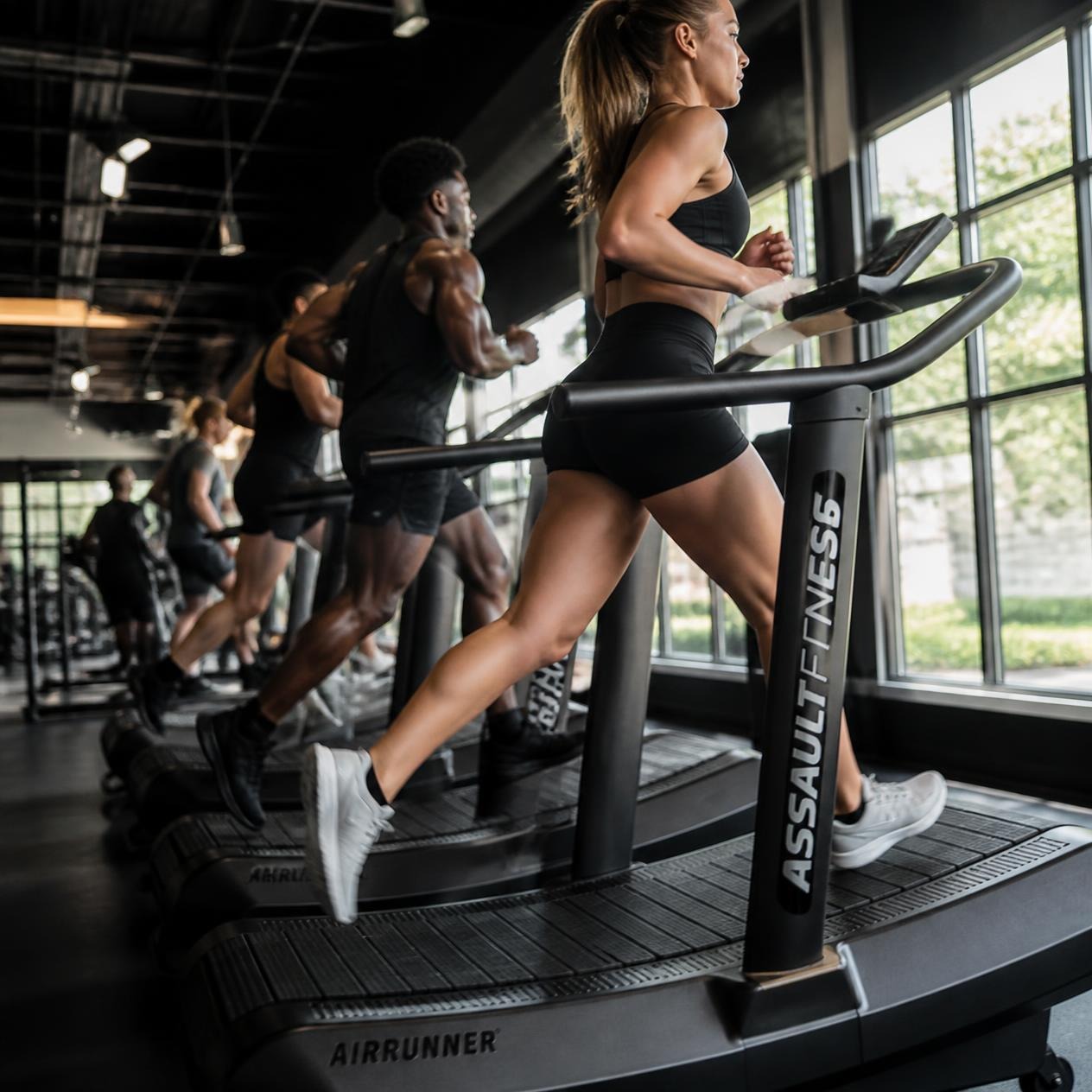
Curved vs. Electric Treadmill: Which to Choose for Maximum Performance?
In recent years, the fitness market has seen a rapid evolution in technologies dedicated to indoor running. Alongside traditional motorized treadmills, self-powered curved models have appeared, which are conquering Cross Training boxes, athletic training centers, professional gyms, and athletes looking for superior performance. The choice between a traditional model and a curved treadmill does not depend only on the available budget, but above all on training goals, the type of users, and the level of intensity required.
Both technologies offer specific advantages. Electric treadmills guarantee automated programs, precise speed control, and high versatility for any level of preparation. Curved models, on the other hand, completely eliminate the motor and leverage the force applied by the user, offering a much more natural and engaging run from a biomechanical point of view.
In this guide, we will analyze in detail how the two technologies work, the differences in running biomechanics, caloric expenditure, operating costs, and the contexts in which each solution represents the best choice, helping you make a truly informed decision.
- How a curved treadmill works
- Differences compared to the electric model
- Running biomechanics
- Caloric expenditure and intensity
- When to choose a curved model
- Advantages and limitations of the two technologies
- Maintenance and operating costs
- How to choose the most suitable treadmill
How a curved treadmill works
The curved treadmill is immediately distinguished by the particular arched shape of the running surface. Unlike traditional models, it does not have an electric motor that drives the belt. It is, in fact, the runner themselves who sets the running surface in motion through the push exerted with every step.
This technology makes training completely self-regulated. Accelerating simply means increasing the force applied to the belt, while slowing down only requires a decrease in thrust. The result is a sensation very similar to outdoor running, with an immediate response to changes in pace.
The absence of a motor also eliminates numerous mechanical components subject to wear, reducing energy consumption and the need for maintenance. Precisely for this reason, curved treadmills are increasingly present in facilities dedicated to functional training and athletic performance.
A completely self-powered technology
Movement depends exclusively on the force developed by the user. There are no preset speeds or limits imposed by the motor: every variation occurs naturally and immediately.
Why the surface is curved
The arched shape promotes a more dynamic foot strike and allows the belt to move fluidly by leveraging body weight and forward thrust.
Differences compared to the electric model
The electric treadmill uses a motor that keeps the set speed constant. This feature makes it ideal for programmed workouts, rehabilitation, brisk walking, and continuous running at a controlled pace.
The curved model, on the other hand, forces the athlete to constantly produce energy to maintain the movement of the belt. This active involvement radically changes the running experience and increases muscular effort.
From a practical point of view, the electric treadmill is generally more suitable for beginner users or those who wish to follow automatic programs, while the curved model is often preferred by advanced athletes and conditioning professionals.
Speed control
In electric models, the speed is set via the console, while on the curved treadmill, it is the runner who determines it moment by moment.
Running experience
The immediate response of the self-powered belt offers a sensation closer to natural running compared to the constant traction typical of motorized models.
Running biomechanics
One of the most interesting aspects concerns the biomechanics of movement. On the curved treadmill, the body generally assumes a slightly forward-leaning posture, favoring a more natural foot strike and greater activation of the posterior muscle chain.
The absence of mechanical traction forces the athlete to develop propulsive force with every step, involving the glutes, hamstrings, calves, and core stabilizing muscles to a greater extent.
Motorized models, on the other hand, allow for a more relaxed and controlled run, making them particularly suitable for long-duration workouts, active recovery, and traditional aerobic preparation.
Greater muscle engagement
The main curved treadmill benefits concern the increase in muscle activation during running and high-intensity sprints.
Technique improvement
Many athletic trainers use the curved treadmill to work on running mechanics and the efficiency of the athletic gesture.
Caloric expenditure and intensity
One of the most discussed topics concerns energy expenditure. Several studies indicate that running on a curved treadmill can require more effort than a motorized model at the same perceived speed, precisely because it is the user who generates the movement of the belt.
This greater effort often translates into an increase in cardiovascular work and muscular demand, making the curved treadmill particularly effective for HIIT workouts, sprints, and metabolic sessions.
It is important to remember that curved treadmill caloric expenditure still depends on numerous factors, including body weight, intensity, duration of the workout, level of preparation, and running technique.
Ideal for high-intensity workouts
Immediate acceleration allows you to quickly transition from a walk to a sprint without waiting for a motor to reach the desired speed.
Greater energy demand
Continuous muscle activation makes workouts extremely effective for conditioning and athletic preparation.
When to choose a curved model
Curved treadmills find their ideal environment in Cross Training boxes, performance centers, gyms dedicated to athletic preparation, and personal training studios oriented toward functional training.
The robust construction, the ability to support repeated sprints, and total independence from electrical power represent features highly appreciated in professional facilities with high usage intensity.
A modern professional magnetic treadmill also allows you to offer different workouts compared to traditional motorized treadmills, expanding the gym's offering and differentiating it from the competition.
Perfect for Cross Training
Sprints, interval work, and functional exercises integrate perfectly with the characteristics of the curved treadmill.
Advanced athletic preparation
Professional athletes and trainers appreciate the possibility of developing strength, speed, and coordination in a single solution.
Advantages and limitations of the two technologies
The electric treadmill remains the most versatile solution for a wide audience. It allows you to easily customize speed, incline, and programs, making it suitable for both beginners and expert users.
The curved model, on the other hand, offers a much more intense and engaging experience, but requires greater physical preparation. For those approaching running for the first time, it might initially be more demanding.
The best choice therefore depends on the context of use, the type of clientele, and training goals, without considering one technology necessarily superior to the other in an absolute sense.
When the curved is the ideal choice
Performance, sprints, metabolic workouts, and athletic preparation represent the contexts in which the curved treadmill expresses its maximum potential.
When to choose the motorized one
Walking, rehabilitation, continuous running, automatic programs, and use by very different users make the electric treadmill extremely versatile.
Maintenance and operating costs
The absence of a motor constitutes one of the main advantages of curved treadmills also in terms of maintenance. Since there are no electrical components dedicated to traction, the risks of breakdowns related to the motorized system are reduced.
Periodic cleaning, checking the bearings, verifying the correct sliding of the belt, and following the manufacturer's instructions remain fundamental.
Electric treadmills, on the other hand, require more attention to lubrication, the motor, and electronic systems, while offering advanced features that are difficult to replicate in self-powered models.
Operating costs
A curved treadmill completely eliminates energy consumption during use, helping to reduce operating expenses in professional facilities.
Reliability over time
Build quality remains the determining factor in ensuring high performance and long life regardless of the technology chosen.
How to choose the most suitable treadmill
The final decision should start from a concrete analysis of goals. Those who wish to offer high-intensity workouts, sprints, and athletic preparation will find the curved treadmill an extremely effective solution. Conversely, those who focus on maximum versatility, ease of use, and guided programs will continue to benefit from the advantages of the electric model.
Before purchasing, it is advisable to also evaluate the available space, the number of expected users, the level of preparation of the users, and the budget allocated for the investment. Considering only the price without analyzing the context of use can lead to a choice that is not well-suited to real needs.
To compare the different professional solutions available and delve into the technical characteristics of models dedicated to fitness and athletic preparation, you can consult the professional magnetic treadmill options in the Donatif catalog, identifying the most suitable solution to offer high performance, reliability, and a truly innovative running experience.
Comments (0)