
Trolley
You have no items in your shopping cart

 Budgets
 Dumbers
 Discs
Discs
 Benches
 Racks and Rigs
 Weights Holders
 Isotonic machines
 Calisthenics
 Cardio
 Kettlebells
 Flooring
 Gym Set
 Accessories
 Combat
 ARTI MARZIALI
 CONTAINER GYM
 Tug-Of-War
 Used Gym Equipment
 PILATES MACCHINARI
 GINNASTICA ARTISTICA
 CAMPI DA PADEL
 Prodotti in Pronta Consegna
 Informazioni
 IRONMAN
 Gift Card
- Donatif
- General information
- 0 I like it
- 521 Views
- 0 comments
- gym flooring, safety flooring, gym safety, shock-absorbing materials
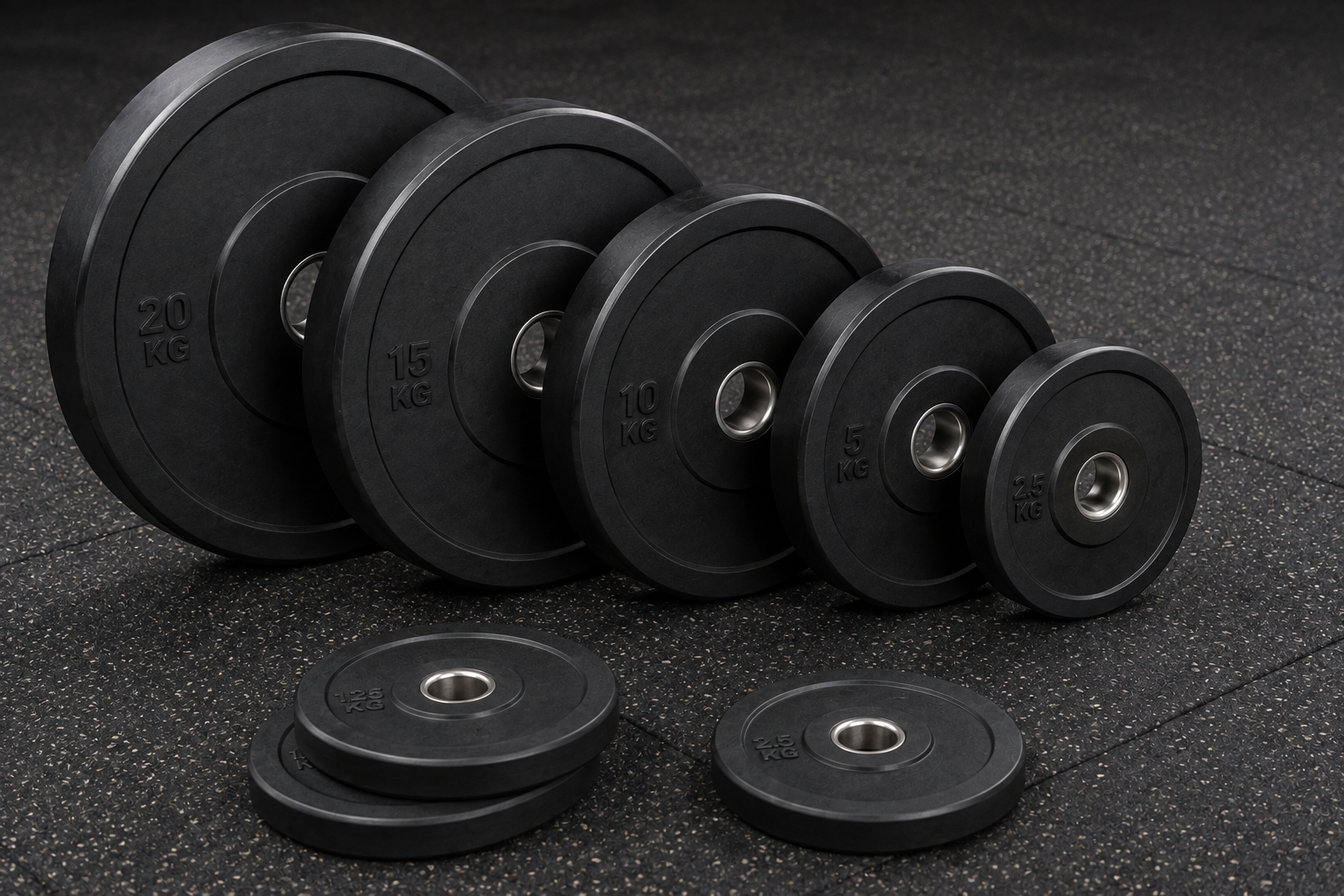
Cast Iron vs. Rubber Coated Plates: Which ruins the floor (and your ears) less?
The choice between cast iron vs. rubber coated plates is one of the most frequent doubts for those setting up a Home Gym. At first glance, the difference seems to concern only aesthetics or price, but in reality, the material of the plates influences numerous aspects of the training experience: noise, vibrations, floor protection, equipment durability, and comfort during daily use.
Those who train in an apartment or a shared room know the problem well. Every time the barbell is set down, every change of plates, and every movement can generate noise that propagates through floors and walls. At the same time, the constant contact between metal and home surfaces can cause scratches, dents, or damage that is difficult to repair.
In this guide, we analyze in detail the advantages and disadvantages of cast iron plates and versions coated in rubber or polyurethane, helping you choose the solution best suited to your training environment, your budget, and your goals, without neglecting acoustic comfort and the protection of your home.
- The main differences between cast iron and rubber
- Noise and vibrations during training
- Home floor protection
- Durability and maintenance
- Performance during use
- How to choose the right plate
- Designing a quiet Home Gym
- Evaluating the best investment
The main differences between cast iron and rubber
Cast iron plates represent the traditional solution used for decades in gyms and Home Gyms. They are robust, compact, and generally cheaper than coated models. Their all-metal structure makes them extremely resistant to wear, but it also entails greater noise during use.
Rubber coated plates, on the other hand, add a protective coating that absorbs part of the impact and limits direct contact between the metal and the floor. This significantly improves comfort during home workouts, especially when changing loads frequently or setting the barbell down between sets.
There are also models coated in polyurethane that offer an even more abrasion and wear-resistant finish, being particularly appreciated in professional facilities with high usage.
The strengths of cast iron
Cast iron plates are generally thinner for the same weight, a feature that allows you to load a greater quantity of plates onto the barbell.
The simple construction also helps to keep the price competitive and ensures high durability over time.
Why choose rubber coated plates
Protective coatings reduce noise, vibrations, and the likelihood of damaging floors and equipment during daily use.
This feature makes rubber coated plates particularly suitable for home environments.
Noise and vibrations during training
One of the main advantages of coated plates concerns acoustic comfort. The rubber coating dampens the noise generated during barbell loading, setting the weights down, and accidental contact between two plates.
In an apartment or a condominium, even a moderate reduction in noise can make a significant difference, especially for those who train early in the morning or late at night.
It should be remembered, however, that no plate can completely eliminate noise. Even the type of flooring, the mat used, and the training technique significantly affect the final result.
Which plates make less noise
Those looking for quiet gym plates should lean towards rubber coated or polyurethane coated models, possibly combining them with high-density technical rubber flooring.
The combination of these elements helps to reduce vibrations and noise transmitted to the building's structure.
Reducing vibrations
Vibrations do not depend only on the weight used but also on the speed with which the barbell is placed on the ground.
Controlled execution of exercises represents one of the most effective methods to improve acoustic comfort.
Home floor protection
The floor represents one of the most exposed elements during training. Tiles, parquet, and laminate surfaces can be damaged if subjected to repeated impacts or direct contact with metal components.
Rubber coated plates offer a first level of protection, but they do not replace technical flooring designed specifically for weight training.
The combination of rubber coating and high-density mats generally represents the most effective solution for preserving home surfaces.
How to protect the floor
Those who wish to protect their home gym floor should evaluate not only the type of plate but also the thickness and quality of the flooring used under the equipment.
Distributing the load correctly reduces the risk of localized damage and improves the stability of the entire training area.
The importance of technical flooring
Specific mats absorb part of the energy produced by impacts and help reduce the propagation of vibrations.
This solution also increases comfort during exercises performed on the floor.
Durability and maintenance
Both cast iron and rubber coated plates can offer long durability if used correctly. However, the wear patterns are different.
Cast iron can show surface scratches or oxidation phenomena if exposed to humidity for long periods, while the rubber coating tends to maintain a more uniform appearance even after years of use.
Regular maintenance, with periodic cleaning and proper storage, helps to preserve both types of plates.
Resistance over time
The quality of the material and workmanship directly influences the durability of the equipment.
Products made with high construction standards maintain performance and aesthetic appearance longer.
Routine maintenance
Removing dust and chalk residue helps preserve the coating and improve grip when loading the plates.
Storing the equipment in dry environments also reduces the risk of deterioration.
Performance during use
From a training point of view, both types allow for excellent results. The differences emerge mainly in the user experience and daily practicality.
Cast iron plates are generally more compact, a useful feature when using heavy loads and you want to make the most of the loadable length of the barbell.
Rubber coated models instead prioritize comfort, silence, and protection of the surrounding environment, making them particularly suitable for Home Gyms.
Compatibility with the barbell
Before purchasing, it is essential to check the diameter of the center hole. 28mm rubber coated plates, for example, are designed for barbells compatible with that specific measurement.
Checking the technical specifications avoids assembly problems and ensures correct use of the equipment.
Greater training comfort
A reduction in noise and vibrations improves the overall experience, especially during frequent workouts in shared environments.
This can also contribute to greater consistency in using the Home Gym.
How to choose the right plate
The choice depends mainly on the context of use. Those who train in a garage or a dedicated space might prefer cast iron plates for their excellent price-quality ratio.
Those who instead use a room in the house or live in a condominium might benefit more from coated plates that reduce noise and offer better protection of surfaces.
The available budget and training frequency are also important factors in the final evaluation.
Evaluating the price-quality ratio
The initial cost should be compared with the durability, comfort, and protection offered by the equipment.
An apparently more expensive choice can prove to be more cost-effective in the long run.
Thinking about your environment
The characteristics of the house, the flooring, and the training times directly influence the most suitable solution.
A realistic assessment of your needs generally leads to the best choice.
Designing a quiet Home Gym
Reducing noise does not mean intervening exclusively on the plates. A well-designed Home Gym combines technical flooring, stable supports, quality equipment, and proper organization of spaces.
The use of high-density mats, weight racks, and controlled execution techniques contributes significantly to improving the comfort of the environment.
This attention to detail makes training more pleasant both for those who train and for the people living in the surrounding rooms.
Organizing spaces correctly
Arranging equipment in an orderly manner reduces accidental impacts and facilitates weight management during every session.
A well-organized gym is also safer and more functional.
A complete solution for the Home Gym
To compare different types of plates and find the configuration best suited to your needs, you can consult the range of plates and barbells available on Donatif, designed to offer construction quality, compatibility, and solutions dedicated to both home and professional environments.
An informed choice allows you to improve training comfort and preserve both the equipment and the home spaces over time.
Evaluating the best investment
The comparison between cast iron plates and rubber coated plates does not have a one-size-fits-all answer. The ideal choice depends on the type of environment, the frequency of use, and the importance attributed to silence, floor protection, and daily practicality.
For those who train in an apartment or wish to limit noise and vibrations, coated plates often represent the most balanced solution. Those who instead prioritize the best price-quality ratio and have a dedicated space can find in cast iron a reliable and long-lasting choice.
Considering not only the initial cost but also the comfort, durability, and protection of the home environment allows you to make a more informed investment and build a functional, quiet Home Gym ready to accompany many years of training.
Comments (0)