
Trolley
You have no items in your shopping cart

 Budgets
 Dumbers
 Discs
Discs
 Benches
 Racks and Rigs
 Weights Holders
 Isotonic machines
 Calisthenics
 Cardio
 Kettlebells
 Flooring
 Gym Set
 Accessories
 Combat
 ARTI MARZIALI
 CONTAINER GYM
 Tug-Of-War
 Used Gym Equipment
 PILATES MACCHINARI
 GINNASTICA ARTISTICA
 CAMPI DA PADEL
 Prodotti in Pronta Consegna
 Informazioni
 IRONMAN
 Gift Card
- Donatif
- General information
- 0 I like it
- 2754 Views
- 0 comments
READING TIME: 5 MINUTES ➤➤
Squat Posture Mistakes That Stress Your Back (And How to Fix Them)
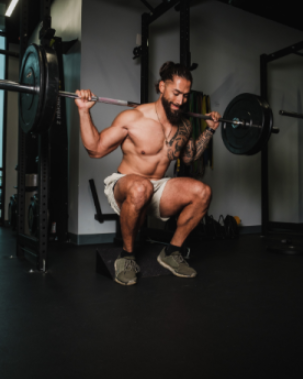
The squat is one of the fundamental exercises in strength training, but it is often performed with technical mistakes that compromise posture and place excessive stress on the lower back. Understanding where and why alignment is lost—whether at the knees, pelvis, or torso—is the first step toward improving movement quality, preventing injuries, and enhancing performance.
In this article, we'll examine the most common postural mistakes in the free squat (including front and back squats), using a practical, step-by-step approach to correction. You'll learn how to recognize the most common signs of misalignment and discover strategies to perform every repetition with greater control, efficiency, and safety.
- Why posture is essential in the squat
- The most common squat posture mistakes
- Lower back pain from squats: warning signs you shouldn't ignore
- Correction and regression techniques
Why Posture Is Essential in the Squat
The Role of the Kinetic Chain in the Squat
The squat engages the entire posterior kinetic chain, from the feet to the cervical spine. A dysfunction in just one segment—such as knees collapsing inward or the pelvis tilting backward—can compromise the stability of the entire movement. This domino effect often leads to compensatory patterns that place excessive stress on structures like the lower back or the knees themselves.
Proper squat posture ensures efficient force transfer while protecting the joints and maximizing muscle activation. The key is maintaining consistent functional alignment throughout every phase of the movement, adapting it to the specific squat variation being performed (front squat, back squat, or overhead squat).
Differences Between the Free Squat, Front Squat, and Back Squat
Each squat variation places different postural demands on the body. In the front squat, the forward center of gravity requires a more upright torso and greater ankle and hip mobility. The back squat, on the other hand, allows for a greater forward lean but demands significantly more lumbar and scapular stability.
Understanding these differences is essential to avoid technical errors caused by applying the wrong movement pattern. A common mistake is trying to maintain the same posture across biomechanically different squat variations, leading to unnoticed losses of alignment.
The Most Common Squat Posture Mistakes
Knees Collapsing Inward: What Happens and How to Fix It
Knees collapsing inward (dynamic knee valgus) is one of the most common squat errors. It usually occurs due to poor control of hip abduction and external rotation, leading to excessive stress on the knee joint and reduced force production during the ascent.
Correcting this issue begins with strengthening the gluteus medius and gluteus minimus, which are responsible for lateral hip stability, along with improving foot proprioception. Consciously activating the hips during the descent can also help maintain proper alignment, as can using mini bands or visual cues during the early stages of correction.
Posterior Pelvic Tilt at the Bottom of the Squat
Posterior pelvic tilt—commonly known as "butt wink"—occurs when the pelvis rotates excessively at the bottom of the squat, causing the lumbar spine to flex. This can increase compression on the intervertebral discs and raise the risk of acute or chronic lower back pain.
The main causes include limited hip mobility, stiffness in the lower back, or poor depth management. Effective correction strategies include reducing squat depth temporarily, improving hip and ankle mobility, and using heel elevation to optimize lower-body mechanics.
Rounded Back: When the Torso Loses Stability
Excessive rounding of the torso, particularly in the thoracic or lumbar spine, indicates insufficient intra-abdominal pressure or an inability to maintain a neutral spine. The result is a loss of control, increased injury risk, and reduced movement efficiency.
Correcting this issue requires strengthening the deep core muscles—including the transverse abdominis, multifidus, and pelvic floor—while improving diaphragmatic bracing and maintaining proper scapular positioning throughout the lift. Video feedback from both the front and side can also be extremely valuable.
Lower Back Pain From Squats: Warning Signs You Shouldn't Ignore
Poor Load Management and Faulty Posture: A Risky Combination
Lower back pain during squats is almost always the result of a combination of postural errors and improper load management. Even technically sound form can lead to discomfort if excessive weight is placed on an unstable or poorly developed movement pattern.
Post-squat lower back pain should never be ignored—it isn't enough to simply switch to the leg press. Instead, the movement should be analyzed frame by frame, paying attention to eccentric control, recovery between sets, and whether the load matches the individual's current technical ability.
Prevention Strategies to Protect the Lower Back
Effective injury prevention starts with movement quality: the load should follow good technique—not the other way around. Prioritize technical execution, even if it means reducing intensity. Targeted mobility exercises and isometric pauses can also improve postural awareness and control.
Finally, proper recovery between training sessions, adequate hydration, and a well-designed core strengthening program are all essential for protecting the lower back from both gradual overload and acute injury.
Correction and Regression Techniques
How to Use Video to Correct Your Technique
Recording your workouts is one of the most powerful self-coaching tools available. Watching your squats from different angles makes it possible to identify mistakes that are impossible to notice while lifting. Slow-motion playback helps pinpoint exactly where alignment is lost and when compensations begin.
A useful strategy is to compare your videos with technically correct squat demonstrations, analyzing each phase of the movement separately. This increases body awareness and supports steady, evidence-based improvements through targeted corrections.
Technical Regressions to Rebuild Proper Movement
If a movement error persists, it's essential to regress the exercise and address the underlying issue. Effective regressions include box squats, kettlebell goblet squats, and using supports to limit squat depth while maintaining proper control.
Exercise regressions are not a step backward—they're an intelligent way to rebuild technique and reinforce proper positioning. Incorporating these variations periodically into your training program helps maintain movement quality, even as you return to heavier loads.
Comments (0)