
Trolley
You have no items in your shopping cart

 Budgets
 Dumbers
 Discs
Discs
 Benches
 Racks and Rigs
 Weights Holders
 Isotonic machines
 Calisthenics
 Cardio
 Kettlebells
 Flooring
 Gym Set
 Accessories
 Combat
 ARTI MARZIALI
 CONTAINER GYM
 Tug-Of-War
 Used Gym Equipment
 PILATES MACCHINARI
 GINNASTICA ARTISTICA
 CAMPI DA PADEL
 Prodotti in Pronta Consegna
 Informazioni
 IRONMAN
 Gift Card
- Donatif
- General information
- 0 I like it
- 755 Views
- 0 comments
- gym flooring, safety flooring, gym safety, shock-absorbing materials
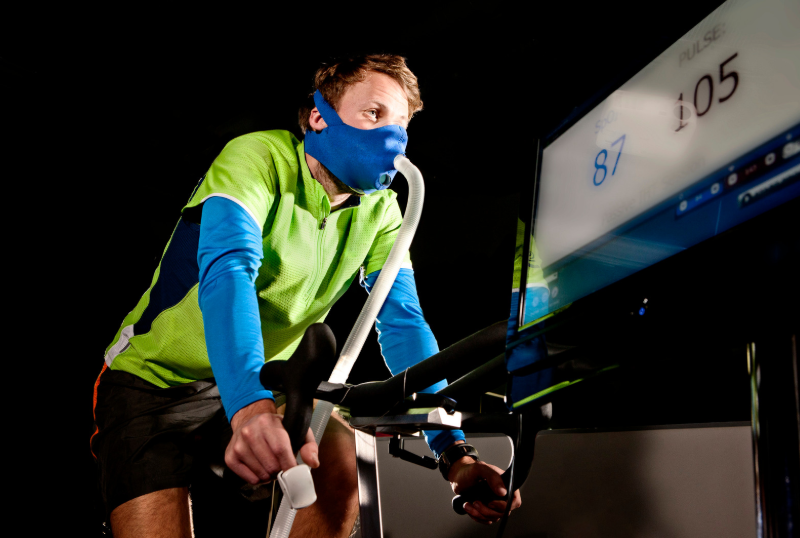
Integrated Monitoring Systems: The Brain of Your Hypoxic Chamber
A modern hypoxic chamber is much more than an enclosed environment where oxygen concentration is reduced. Behind its stable, precise, and safe operation is a network of sensors, algorithms, and automation systems that continuously monitor every environmental parameter. For gym owners, fitness centers, and facilities specializing in simulated altitude training, understanding the value of these systems means investing in reliability, operational continuity, and safety.
The most advanced integrated monitoring systems in hypoxic chambers automatically regulate oxygen, carbon dioxide, temperature, and humidity, responding in real time whenever a parameter moves outside its predefined limits. This continuous supervision is what distinguishes a professional solution from a simple hypoxia generation system.
Why Integrated Monitoring Is Essential in a Modern Hypoxic Chamber
Every variation in the internal environment directly affects user experience, safety, and system reliability. An integrated monitoring system continuously collects data from sensors, compares it with predefined values, and automatically corrects any deviations without requiring manual intervention. This approach minimizes the margin for error while ensuring extremely stable conditions, even during extended training sessions.
For B2B facilities, automation also delivers significant operational advantages. Staff can focus on assisting clients while the system performs thousands of checks every day, records operational events, and keeps every critical environmental parameter under constant control.
How an Automatic Control System Works
Continuous Oxygen Monitoring
Dedicated sensors constantly measure the oxygen concentration inside the chamber. Whenever the value deviates from the programmed target, the control software automatically adjusts the nitrogen generator or other relevant equipment. This ensures that the desired hypoxic conditions remain stable throughout the entire training session.
Accurate oxygen control enhances the user experience while enabling fitness centers to provide consistent and repeatable training sessions, an essential feature for athletes and performance professionals.
CO₂ Control: The Most Critical Parameter
Many operators focus primarily on reducing oxygen levels, but the most important parameter to monitor is actually CO₂. During occupancy, carbon dioxide produced through respiration can gradually accumulate if ventilation is not properly managed.
For this reason, CO₂ control in a hypoxic chamber represents the core of the entire safety system. High-precision sensors immediately detect abnormal increases, automatically activating ventilation, fresh-air exchange, and built-in safety procedures.
Automatic Temperature and Humidity Management
Temperature and humidity also play a key role in user comfort and the proper operation of electronic equipment. Advanced systems integrate these parameters into the same monitoring platform, maintaining stable environmental conditions regardless of occupancy levels or session duration.
This coordinated management prevents sudden environmental fluctuations and helps preserve the long-term reliability of the entire installation.
Sensors That Ensure Precision and Reliability
Detection Technologies
Modern hypoxic environment sensors use highly accurate technologies to continuously measure gas concentration, temperature, humidity, and pressure. The quality of these components directly impacts measurement accuracy and the speed of automatic corrections.
A distributed network of sensors also ensures that environmental conditions remain uniform throughout the chamber, eliminating inconsistencies between different areas.
Redundancy and Safety Systems
Professional installations often include redundant sensors and self-diagnostic systems that continuously verify proper equipment operation. If anomalies are detected, immediate alerts are generated and, when necessary, automatic safety procedures are activated.
This additional level of protection minimizes operational risks while maximizing uptime, an essential consideration for facilities serving clients every day.
Automation and Remote Control for Modern Fitness Centers
Smart Automation and Remote Supervision
The most advanced platforms incorporate building automation for hypoxia systems, allowing facility managers to supervise operations remotely. Dedicated interfaces make it possible to monitor chamber status, adjust authorized settings, and receive real-time notifications from virtually anywhere.
For organizations managing multiple locations, centralized supervision provides a significant operational advantage by enabling several hypoxic chambers to be monitored from a single platform.
Reporting and Preventive Maintenance
Operational data are continuously recorded and converted into reports that help evaluate long-term system performance. Historical analysis also makes it possible to identify abnormal trends before they develop into equipment failures.
Preventive maintenance minimizes downtime, improves chamber availability, and contributes to reducing operating costs over the long term.
Why CO₂ Control Is More Important Than Oxygen Supply Alone
Although the quality of hypoxic training depends on maintaining the correct oxygen concentration, from a safety perspective, CO₂ management is even more critical. A system capable of continuously monitoring carbon dioxide protects both users and operators from undesirable conditions that could gradually develop during use.
For this reason, leading manufacturers place particular emphasis on CO₂ detection systems, integrating intelligent control algorithms, automatic ventilation, and advanced alarm functions. Simply generating hypoxic air is not sufficient without comprehensive monitoring of the entire environment.
How to Evaluate an Integrated Monitoring System Before Purchasing
When selecting a professional hypoxic chamber, it is important to evaluate not only the hypoxia generator but also the complete monitoring architecture. Sensor accuracy, software quality, automatic alarm management, remote monitoring capabilities, and reliable technical support are all key factors in ensuring long-term performance.
A comprehensive monitoring system allows facilities to provide a safer service, reduce operational risks, and simplify day-to-day management. For fitness centers committed to delivering premium experiences, an integrated monitoring system truly serves as the brain of the entire installation and one of the most valuable components of the investment.
Comments (0)