
Trolley
You have no items in your shopping cart

 Budgets
 Dumbers
 Discs
Discs
 Benches
 Racks and Rigs
 Weights Holders
 Isotonic machines
 Calisthenics
 Cardio
 Kettlebells
 Flooring
 Gym Set
 Accessories
 Combat
 ARTI MARZIALI
 CONTAINER GYM
 Tug-Of-War
 Used Gym Equipment
 PILATES MACCHINARI
 GINNASTICA ARTISTICA
 CAMPI DA PADEL
 Prodotti in Pronta Consegna
 Informazioni
 IRONMAN
 Gift Card
- Donatif
- General information
- 0 I like it
- 10 Views
- 0 comments
- gym flooring, safety flooring, gym safety, shock-absorbing materials
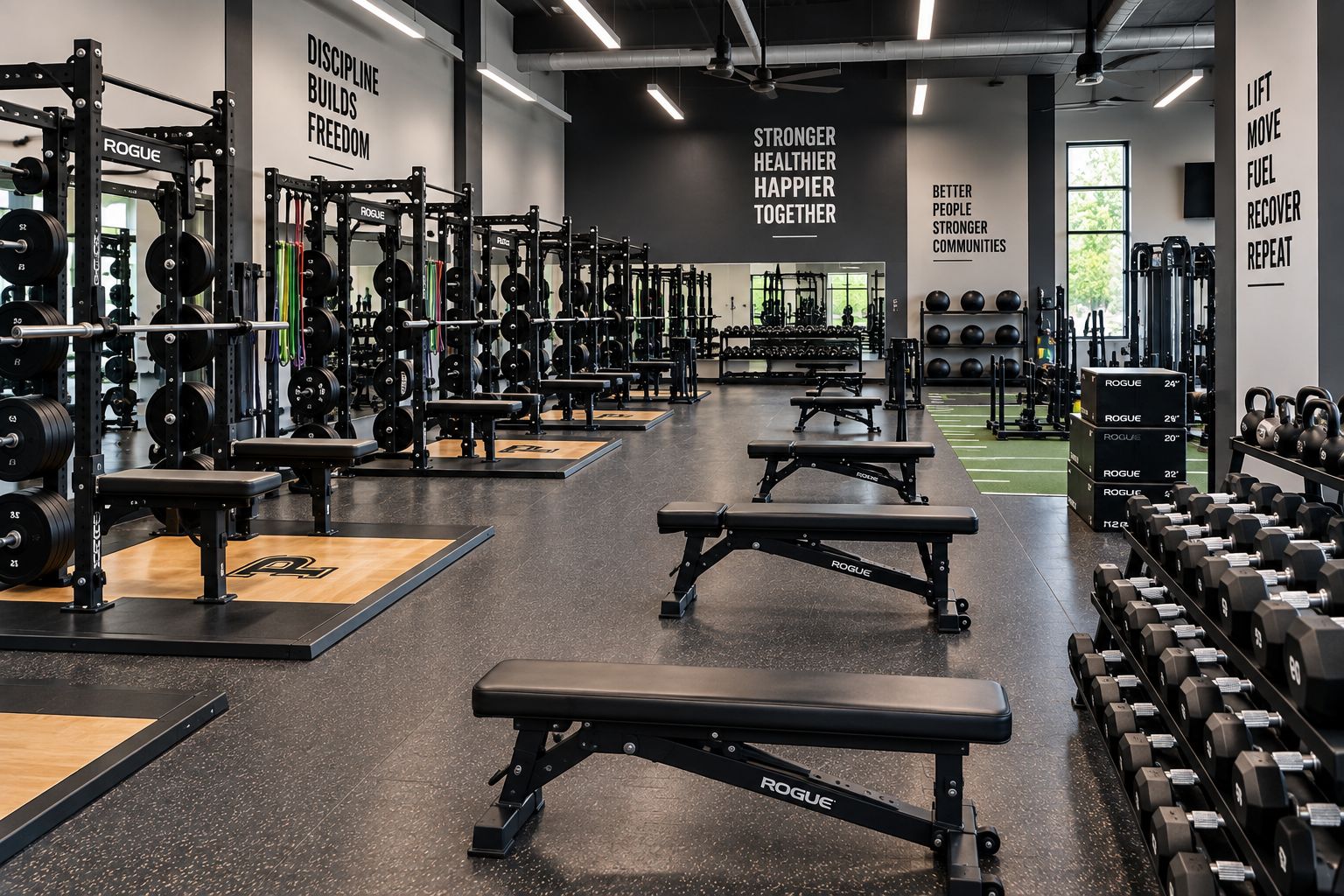
Isotonic room vs weight room: differences and which one to choose
Isotonic room and weight room represent two areas with complementary purposes within a gym. The first is dedicated mainly to weight-guided machines, while the second focuses on training with free weights and equipment that require greater motor control. The choice between the two does not depend on which one is absolutely better, but on the facility's goals, user profile, and available space.
For a gym manager, understanding the operational differences between these two configurations allows for better investment planning, organization of effective training paths, and improvement of the customer experience. In many cases, the most functional solution consists of integrating both areas, assigning a specific role to each.
This guide compares the isotonic room and the weight room through practical criteria, illustrating characteristics, advantages, limits, usage scenarios, and design errors to avoid in order to make more informed decisions.
- What are the main differences
- When to choose an isotonic room
- When to choose a weight room
- Operational comparison
- How to organize spaces
- Errors to avoid
- Why integrate the two areas
- How to make the decision
What are the main differences
The isotonic room predominantly uses machines that guide movement along pre-established trajectories. The user adjusts the load, and the equipment accompanies the execution of the exercise by reducing technical complexity.
The weight room, on the other hand, is mainly composed of barbells, dumbbells, benches, racks, and other equipment that require greater participation of stabilizing muscles and complete control of movement.
Both areas allow for the development of strength and muscle mass, but they do so through different modalities that influence learning, space management, and training organization.
Guided movement
Isotonic machines facilitate exercise repeatability and allow for rapid load adjustments, making them particularly useful during the learning of technique.
Free movement
Free weights allow for greater freedom of execution but require accurate technique and superior motor control to maintain stability during movement.
When to choose an isotonic room
An isotonic room represents an effective solution when the gym welcomes users with very different levels of experience or wishes to offer easily replicable training programs.
Guided machines simplify the work of instructors during the initial learning phases and allow for rapid load changes from one user to another.
This configuration can also promote orderly flow management during peak hours thanks to easily organizable training paths.
Suitable for beginners
Those approaching overload training for the first time generally find guided machines to be an environment that is easier to understand and use.
Structured training
Isotonic stations allow for the construction of orderly circuits that are easily supervised by technical staff.
When to choose a weight room
The weight room offers greater versatility in the choice of exercises and allows for the use of numerous movement variants without being bound to machine trajectories.
This configuration is often appreciated by users who possess good technical experience and wish to customize their training.
Many athletic preparations also involve significant use of free weights to develop coordination and motor control.
Greater variety
Barbells, dumbbells, and benches allow for numerous exercises to be performed using the same equipment with different configurations.
Requires skills
The correct use of free weights presupposes good knowledge of technique and an adequate progression of loads.
Operational comparison
From a management perspective, the differences concern space organization, user supervision, maintenance, and daily usage modalities.
Isotonic machines occupy dedicated stations, whereas the weight room requires more flexible areas to allow for the execution of different exercises.
Both solutions must be designed following the instructions contained in the manufacturers' manuals and by providing adequate operational spaces around the equipment.
Flow management
Isotonic rooms favor orderly paths between stations, while weight rooms require planning that takes into account the simultaneous use of different equipment.
Maintenance
Guided machines and free weights require different checks, but both need periodic verifications according to the manufacturer's instructions.
How to organize spaces
Design must start with the analysis of the available surface area, the expected number of users, and the type of training the facility intends to offer.
In isotonic areas, it is important to leave sufficient space for machine adjustments and user movements. In the weight room, areas necessary for the execution of exercises with free loads must also be considered.
An adequate anti-shock flooring helps protect the subfloor and equipment while improving the comfort and durability of the training area.
Internal paths
Passageways must be clear and easily traversable, avoiding interference between exercising users and people in transit.
Equipment layout
Equipment should be distributed logically, maintaining homogeneous functional groups and facilitating staff supervision.
Errors to avoid
One of the most frequent errors consists in considering the isotonic room and weight room as alternative solutions in every situation. In most professional projects, the two areas perform complementary functions.
Another critical issue concerns the overcrowding of space with an excessive number of stations, reducing operational comfort and ease of movement.
Neglecting scheduled maintenance or failing to follow the instructions in the equipment manuals can also compromise the functionality of the room over time.
Incorrect sizing
Inserting more equipment than the space can actually accommodate limits the quality of the user experience and makes cleaning and maintenance more difficult.
Inconsistent choice
Purchasing machines or free weights without an overall vision of the project often leads to functional duplications and inefficient use of available surfaces.
Why integrate the two areas
Many gyms choose to combine the isotonic room and weight room to offer a complete path capable of satisfying different needs.
Guided machines can be used during the initial phases of learning or as a complement to free-weight exercises, allowing for more flexible programming.
To learn about the various available solutions dedicated to weight-guided areas, you can consult the isotonic machines category.
Organizational benefits
A facility that integrates both areas can more easily adapt training programs to the characteristics of different users.
Training continuity
The ability to transition from machines to free weights allows for the construction of articulated programs while maintaining a coherent progression.
How to make the decision
The choice between an isotonic room and a weight room should be based on the clientele profile, available surface area, gym service model, and the facility's growth prospects.
Prior to investment, it is useful to evaluate the expected number of simultaneous users, ease of management, maintenance costs, and the possibility of expanding the area in the future without radically altering the layout.
A balanced design that considers these aspects makes it possible to create functional environments that are easily manageable and capable of responding to the operational needs of the gym in the long term.
Comments (0)