
Trolley
You have no items in your shopping cart

 Budgets
 Dumbers
 Discs
Discs
 Benches
 Racks and Rigs
 Weights Holders
 Isotonic machines
 Calisthenics
 Cardio
 Kettlebells
 Flooring
 Gym Set
 Accessories
 Combat
 ARTI MARZIALI
 CONTAINER GYM
 Tug-Of-War
 Used Gym Equipment
 PILATES MACCHINARI
 GINNASTICA ARTISTICA
 CAMPI DA PADEL
 Prodotti in Pronta Consegna
 Informazioni
 IRONMAN
 Gift Card
- Donatif
- General information
- 0 I like it
- 712 Views
- 0 comments
- gym flooring, safety flooring, gym safety, shock-absorbing materials
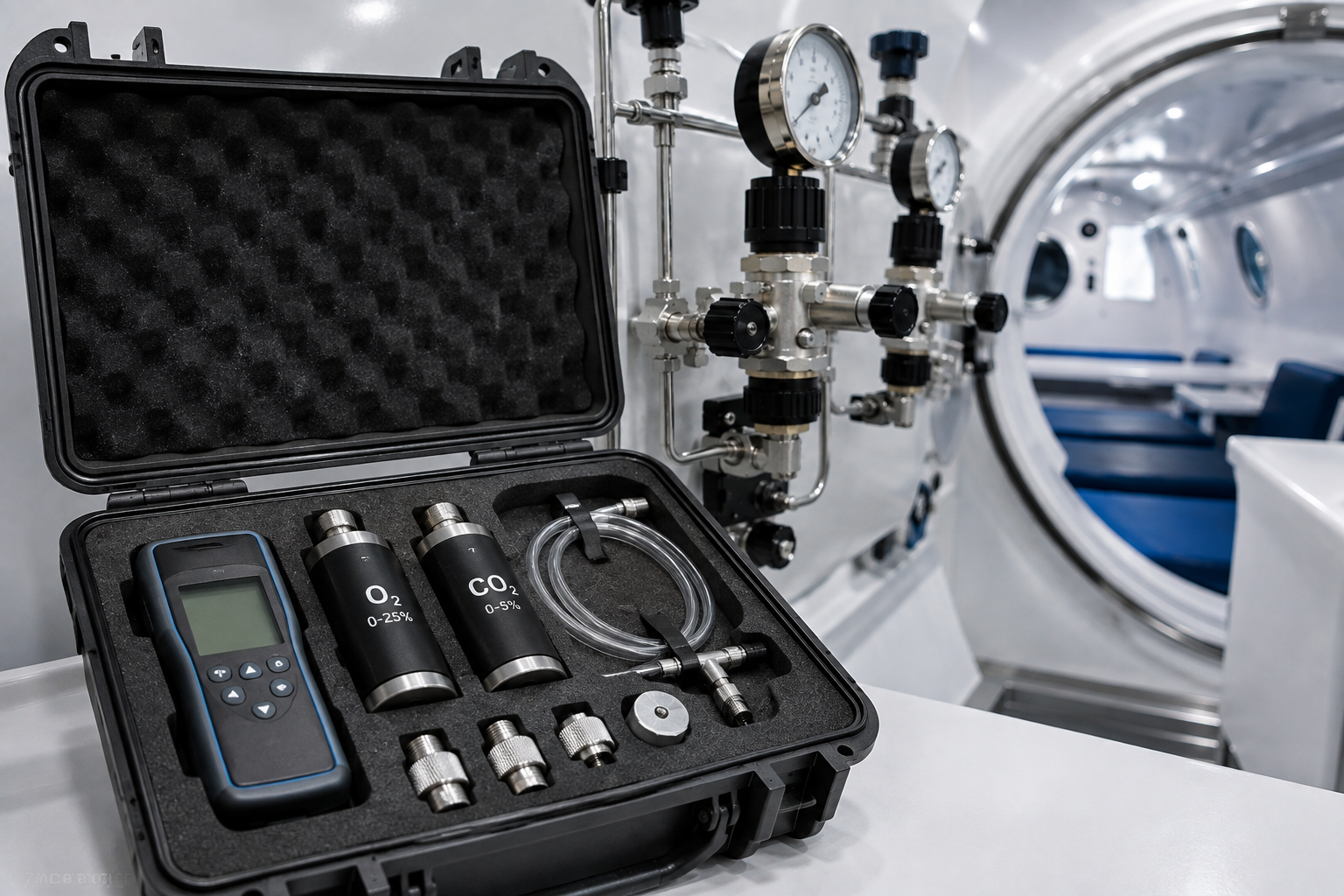
Calibration Kit: why precision is not optional
In a professional hypoxic chamber, every technical decision depends on the quality of the information collected by the monitoring systems. Oxygen concentration, pressure, and other environmental parameters are used to define training protocols, verify athlete response, and maintain consistent operating conditions. For this reason, sensor precision cannot be considered a secondary element.
Even the most advanced sensor can lose accuracy over time due to continuous use, environmental conditions, and the natural measurement drift process. A value displayed on the screen does not automatically represent reliable data: without periodic checks, the technology risks turning into a simple source of numbers devoid of real operational value.
Using a hypoxia sensor calibration kit allows you to keep detection instruments within the expected parameters and ensure that the collected data is consistent with the reality of the controlled environment. For sports centers, athletic trainers, and professionals working with hypoxia, calibration represents an essential part of the facility's technical management.
Why sensor calibration is essential
Calibration represents the process through which a sensor is compared with a known reference to verify and correct any measurement deviations. In a hypoxic environment, where small changes in parameters can modify the stimulus applied to the athlete, this procedure takes on strategic importance.
Simulated altitude training systems operate based on values that are set and monitored continuously. If the sensor detecting oxygen provides incorrect data, the control system may also react sub-optimally, creating a difference between the programmed condition and the one actually present in the chamber.
Periodic calibration therefore allows you to maintain a reliable connection between technology and the real environment. It is not just a technical procedure, but an element that directly influences safety, service quality, and the validity of the collected data.
The value of reliable data
An athlete following an advanced hypoxic protocol often bases their decisions on the analysis of data collected during sessions. Saturation, oxygen concentration, and environmental conditions must be reliable information in order to correctly evaluate individual response.
An uncalibrated system can create a false perception of operating conditions. This can lead to unnecessary program changes or an incorrect assessment of training effectiveness.
Precision and repeatability of sessions
The ability to repeat similar conditions over time is one of the main advantages of a controlled hypoxic environment. To achieve this result, however, the data used must be comparable between different sessions.
Proper calibration helps maintain measurement stability and allows coaches and professionals to work on more solid foundations.
How calibration kits work
A calibration kit is designed to provide the sensor with a known reference, allowing the system to verify the correspondence between the detected value and the real value. This process allows you to correct any differences and maintain high measurement reliability.
In the case of hypoxic chambers, kits are mainly used to verify sensors dedicated to oxygen detection and, in some systems, also parameters such as pressure or other controlled environmental values.
Correct use of the kit requires precise procedures and compliance with the manufacturer's technical instructions. A calibration performed in an approximate manner may not guarantee the desired result.
Components of a professional kit
Professional kits can include calibrated references, connection systems, control tools, and materials necessary to perform the procedure in a safe and repeatable manner.
The quality of the components used directly influences the reliability of the process. For this reason, it is important to choose tools compatible with the installed system.
Calibration frequency
The frequency with which to perform calibration depends on several factors, including intensity of use, sensor characteristics, and manufacturer instructions. A system used daily generally requires more frequent checks than an occasional installation.
Preventive planning allows you to avoid situations where the sensor operates outside expected parameters without the operator being aware of it.
Oxygen sensors and data precision
Sensors dedicated to oxygen measurement represent one of the most important elements of a hypoxic chamber. They are responsible for detecting the concentration present in the environment and provide the information used by control systems.
The precision of the data directly influences the ability of the generator and control unit to maintain the desired conditions. A sensor that presents reading errors can compromise the entire regulation process.
For this reason, oxygen sensor calibration must be considered an essential practice and not an occasional intervention to be performed only when a problem arises.
Sensor drift over time
Over time, every sensor can undergo a variation in its measurement characteristics. This phenomenon, known as drift, can gradually change the precision of the detected value.
Calibration allows you to compensate for these variations and keep the system aligned with the correct references.
Measurement quality and performance
Precise data allows you to better evaluate the effect of training and build more personalized protocols. Measurement quality therefore becomes a tool for improving performance.
Professional athletes and technicians who work with data-driven approaches need tools capable of providing constant and verifiable information.
Hypoxia sensor maintenance
Sensor maintenance represents a fundamental component of managing any professional hypoxic system. In addition to calibration, it is necessary to periodically verify the general state of the components and the correct functioning of the entire monitoring chain.
Scheduled maintenance reduces the risk of sudden malfunctions and allows the system to remain operational with greater continuity.
For a sports facility, maintenance is not just a technical issue, but also an element linked to the quality perceived by users and the professionalism of the service offered.
Periodic component checks
Checks must include verifying the correct functioning of sensors, connections, and data acquisition systems. Every component contributes to the reliability of the final result.
Organized management of checks allows for the timely identification of any anomalies.
Reduction of operational downtime
A well-maintained system reduces the probability of service interruptions. This aspect is particularly important for centers that use the hypoxic chamber as a commercial service.
Prevention allows you to protect the technological investment and ensure greater continuity for users.
Monitoring systems integrated into hypoxic chambers
Modern hypoxic chambers use complex systems in which sensors, software, and mechanical components work together to control the environment. The quality of monitoring depends on the correct integration of all these elements.
The monitoring systems integrated into hypoxic chambers allow for real-time data collection and support the automated management of environmental parameters.
Within this ecosystem, calibration plays a central role because it ensures that the information used by the system is correct.
Integration between sensors and software
The control software uses data from sensors to regulate system operation. If the initial information is not accurate, even management algorithms can produce sub-optimal results.
A reliable measurement chain therefore starts with the quality of the sensor and its correct calibration.
Operational safety control
Integrated systems also contribute to the overall safety of the hypoxic chamber. Constantly monitoring parameters allows for rapid intervention in case of unexpected variations.
Data precision therefore represents an essential component of responsible facility management.
How to choose a professional calibration kit
The choice of a calibration kit must be based on compatibility with the installed system and the operational needs of the facility. Not all tools are equivalent, and the quality of the reference used directly influences the result of the procedure.
A professional center should evaluate reliability, ease of use, availability of technical support, and the possibility of integrating the kit into existing maintenance procedures.
Choosing an adequate product means transforming calibration from a simple technical activity into a strategic element of facility management.
Technical support and training
The availability of qualified technical support represents added value in managing hypoxic systems. Correct procedures and trained personnel reduce the risk of errors during calibration operations.
Operator training also allows for maintaining high quality standards over time.
Kit compatibility and reliability
A kit must be designed to work correctly with the sensors present in the system. Compatibility ensures more precise results and simpler procedures.
Choosing reliable tools contributes to the longevity and stability of the entire system.
Investing in the precision of the hypoxic system
Sensor calibration represents one of the most important investments for maintaining the high quality of a hypoxic chamber. A technologically advanced system can offer reliable results only when the data underlying its operation is correct.
Using adequate tools, scheduling periodic checks, and relying on professional procedures allows you to protect the value of the facility and ensure a safer experience for users. Precision thus becomes a distinctive element of the service offered.
An uncalibrated sensor can turn an advanced system into a source of unreliable information. For this reason, the maintenance of detection devices must be considered an integral part of the technical strategy of every facility that uses hypoxia professionally.
Professionalism and data control
The professional management of a hypoxic chamber requires attention to detail. Every component, even if apparently secondary, contributes to the final quality of the service.
Calibration demonstrates an approach oriented toward precision and technical responsibility.
Accuracy as a competitive advantage
In a sector increasingly oriented toward measurement and personalization, data quality represents a concrete competitive advantage.
Investing in precision means offering more reliable protocols and building greater trust with athletes and clients.
Comments (0)