
Trolley
You have no items in your shopping cart

 Budgets
 Dumbers
 Discs
Discs
 Benches
 Racks and Rigs
 Weights Holders
 Isotonic machines
 Calisthenics
 Cardio
 Kettlebells
 Flooring
 Gym Set
 Accessories
 Combat
 ARTI MARZIALI
 CONTAINER GYM
 Tug-Of-War
 Used Gym Equipment
 PILATES MACCHINARI
 GINNASTICA ARTISTICA
 CAMPI DA PADEL
 Prodotti in Pronta Consegna
 Informazioni
 IRONMAN
 Gift Card
- Donatif
- General information
- 0 I like it
- 605 Views
- 0 comments
- gym flooring, safety flooring, gym safety, shock-absorbing materials
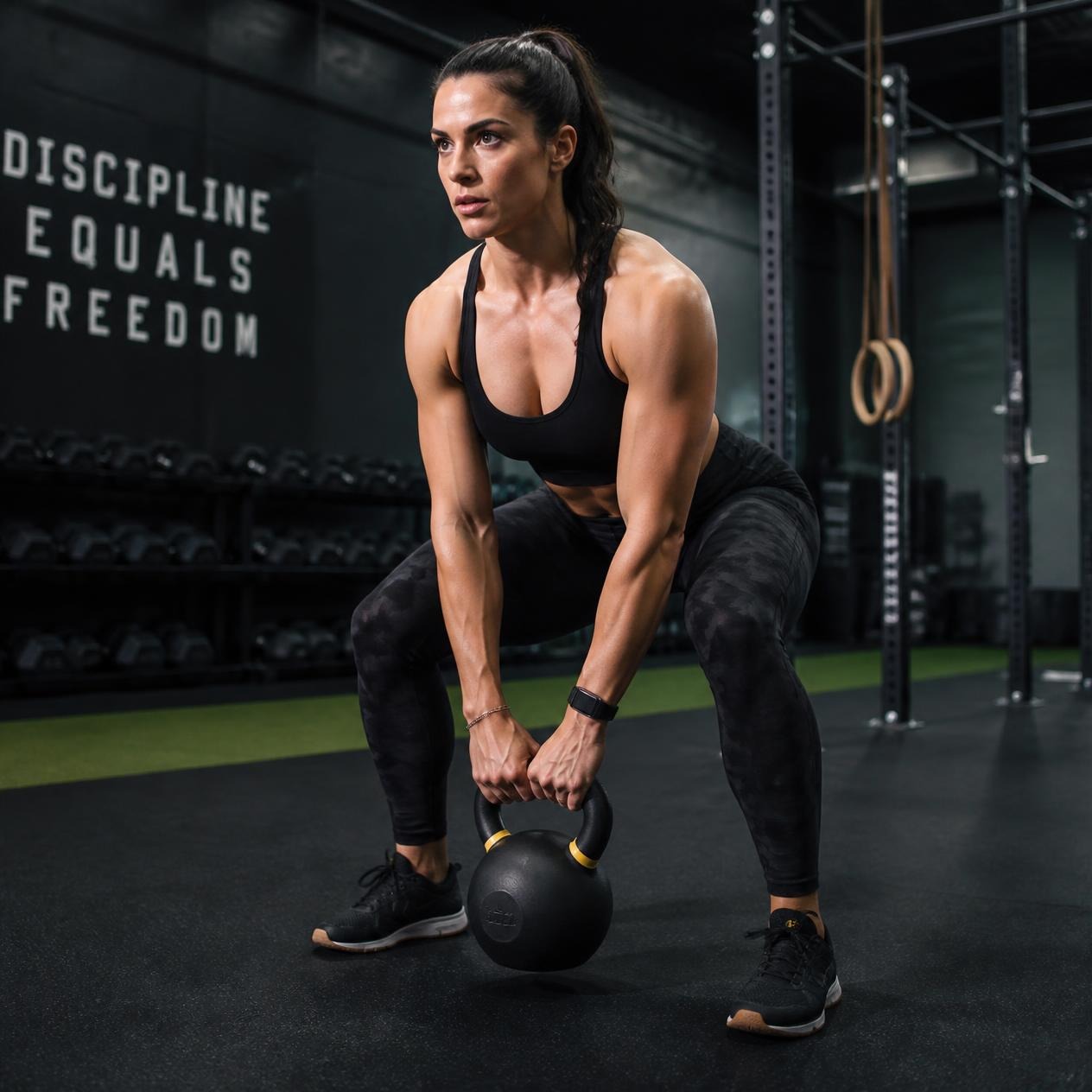
Kettlebell Training for Fighters: A Complete Guide to Boosting MMA, Boxing, and Combat Sports
In the world of combat sports, every detail of athletic preparation can make the difference between winning and losing. Technique, tactics, and strategy are fundamental elements, but without adequate physical preparation, it is difficult to maintain intensity, speed, and clarity throughout the entire match. For this reason, more and more professional fighters and strength coaches are including the kettlebell among the primary tools in their training programs.
The kettlebell for MMA is not just a tool for increasing strength. Thanks to its unique off-center center of gravity, it allows for the development of explosiveness, core stability, coordination, muscular endurance, and the ability to transfer force through the entire body—qualities that are essential in disciplines such as MMA, boxing, kickboxing, Muay Thai, grappling, and Brazilian Jiu-Jitsu.
This guide explores how to integrate the kettlebell into a fighter's athletic preparation, which exercises to prioritize, how to build an effective program, and why this tool has become one of the most used in the best gyms dedicated to combat sports.
- Why the kettlebell is ideal for fighters
- The benefits in athletic preparation
- Fundamental exercises
- Developing explosiveness and power
- Core, stability, and injury prevention
- How to integrate the kettlebell into workouts
- Why combat gyms choose it
- Investing in the right equipment
Why the kettlebell is ideal for fighters
Combat sports require explosive movements, sudden changes of direction, body control, and the ability to generate force from any position. The kettlebell perfectly mirrors these needs because it forces the neuromuscular system to work in an integrated way rather than isolating individual muscle groups.
Unlike many traditional machines, every exercise simultaneously involves the hips, torso, shoulders, and lower limbs. This improves the transfer of force along the kinetic chain, which is fundamental for increasing the effectiveness of punches, kicks, takedowns, and grappling phases.
The dynamic nature of the tool also requires maintaining constant control of the movement, developing balance, coordination, and joint stability even during complex gestures performed at high speed.
Movements close to the athletic gesture
The actions required during a match are multidirectional and involve the entire body. The kettlebell allows for training these characteristics in a much more specific way compared to numerous traditional exercises.
Better force transfer
Every effective strike stems from the ability to transfer energy from the ground up to the upper limbs. Working with kettlebells strengthens this very connection between the legs, pelvis, core, and shoulders.
The main benefits in athletic preparation
A well-structured kettlebell program simultaneously develops strength, muscular endurance, and cardiovascular capacity. This combination is one of the main reasons why numerous coaches include it in their athletes' preparation.
The ability to perform continuous, high-intensity movements also improves metabolic conditioning, allowing the fighter to sustain high rhythms during prolonged rounds without losing technical quality.
An additional advantage concerns mobility. Many exercises require a wide range of motion and contribute to keeping the hips, shoulders, and spine efficient, reducing stiffness and movement limitations.
Complete conditioning
Continuous work with the kettlebell improves the ability to produce force even under conditions of fatigue, a fundamental characteristic in combat sports.
Greater movement efficiency
Better mobility allows for performing techniques with greater precision, reducing compensations and joint limitations.
Fundamental exercises for a fighter
Not all kettlebell exercises have the same utility in preparing a combat athlete. Some movements offer particularly interesting benefits because they develop qualities that are directly transferable to the ring or the cage.
The swing is arguably the signature exercise. It strengthens the posterior chain, improves hip explosiveness, and increases the ability to produce force rapidly—elements essential for powerful strikes and quick level changes.
Cleans, presses, goblet squats, front squats, the Turkish Get Up, snatches, farmer's walks, and lunges complete a program capable of engaging the entire body and preparing the fighter for the demands of competition.
The swing as a key exercise
The swing develops explosive power, coordination, and endurance, making it one of the most used movements in the athletic preparation of professional fighters.
The value of the Turkish Get Up
This exercise improves stability, motor control, shoulder mobility, and the ability to coordinate the entire body during complex movements.
How to develop explosiveness and power
Execution speed is one of the determining factors in combat sports. An athlete capable of generating force rapidly has a significant advantage during exchanges, takedowns, and counterattacks.
The kettlebell allows for training speed through ballistic movements that require sudden accelerations and precise control during every phase of the exercise.
Progression must always be oriented toward the quality of movement rather than simply increasing the load. Technique and explosiveness must grow together.
Ballistic training
Kettlebell explosiveness exercises such as swings, cleans, and snatches improve the ability to produce force in very short times, an essential characteristic for every fighter.
Truly usable power
The strength developed through dynamic movements is more transferable to specific gestures compared to many isolated exercises.
Core, stability, and injury prevention
The core represents the link between the upper and lower body. Every punch, kick, or takedown depends on the ability to stabilize the torso and effectively transmit force.
Kettlebell exercises force the core to work constantly to control the off-center weight of the tool, improving balance and stability in dynamic conditions.
Better stability also reduces the risk of overloading the lower back and shoulders, two areas frequently stressed in combat sports.
Stability in every direction
Multidirectional work develops superior body control during rotations, pushes, and level changes.
Reducing the risk of injury
More efficient stabilizing musculature protects joints and the spine during intense training and competitions.
How to integrate the kettlebell into a fighter's preparation
The kettlebell does not replace technical work but completes it. Sessions can be inserted on days dedicated to strength, as part of a dynamic warm-up, or as a metabolic circuit at the end of training.
Programming must take the competition calendar into account. During general preparation, higher volumes can be used, while in the weeks leading up to competitions, it is preferable to reduce the load while maintaining speed and execution quality.
Recovery also plays a fundamental role. Alternating days dedicated to technique with strength and mobility sessions allows for avoiding excessive accumulation of fatigue.
Managing volume and intensity
A correct distribution of workouts allows for improving physical preparation without compromising specific technical work.
Complementary training
The kettlebell is an extremely effective tool for integrating boxing, MMA, kickboxing, and grappling programs without interfering with technical drills.
Why more and more combat gyms choose the kettlebell
Many gyms dedicated to combat sports are expanding their strength & conditioning area with kettlebells of different weights. This choice allows for offering complete workouts while occupying little space and offering a high variety of exercises.
For gym owners, the kettlebell represents a smart investment thanks to its long durability, ease of use, and the ability to involve athletes with very different levels of preparation.
Furthermore, it allows for organizing group circuits, individual sessions, and personalized programs without the need for expensive isotonic machines, increasing the perceived quality of the technical offering.
Maximum versatility
With just a few kettlebells, it is possible to develop programs dedicated to beginners, competitors, and advanced athletic preparation.
Added value for sports centers
Integrating professional equipment dedicated to functional training allows combat centers to differentiate themselves and offer more complete preparation paths.
Why invest in professional kettlebells
The quality of the equipment directly affects the training experience. A well-designed kettlebell offers an ergonomic handle, uniform weight distribution, and finishes resistant to intensive use—fundamental characteristics for both fighters and gyms.
For coaches and fitness center owners, choosing professional products means reducing wear and tear, improving safety during sessions, and offering athletes tools that meet the demands of competitive preparation.
To learn more about the best solutions dedicated to combat sports athletic preparation, it is advisable to look toward kettlebells designed for professional use, capable of supporting intensive training programs and sustaining the technical and athletic growth of every fighter, from beginner to competitor.
Comments (0)