
Trolley
You have no items in your shopping cart

 Budgets
 Dumbers
 Discs
 Benches
 Racks and Rigs
 Weights Holders
 Isotonic machines
 Calisthenics
 Cardio
 Kettlebells
 Flooring
 Gym Set
 Accessories
 Combat
 ARTI MARZIALI
 CONTAINER GYM
 Tug-Of-War
 Used Gym Equipment
 PILATES MACCHINARI
 GINNASTICA ARTISTICA
 CAMPI DA PADEL
 Prodotti in Pronta Consegna
 Informazioni
 IRONMAN
 Gift Card
- Donatif
- General information
- 0 I like it
- 68 Views
- 0 comments
- gym flooring, safety flooring, gym safety, shock-absorbing materials
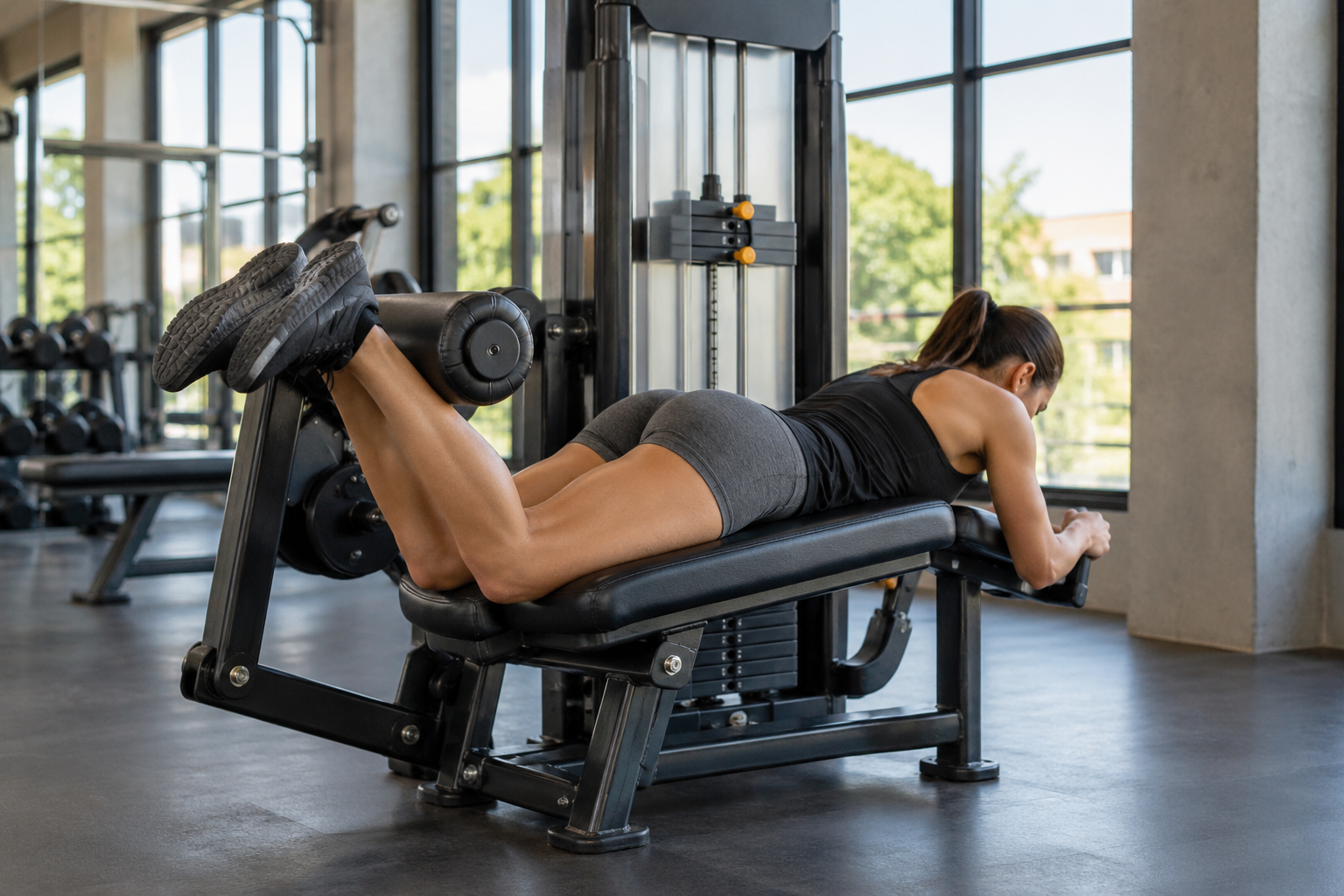
Muscles involved in the prone leg curl: a technical guide for effective training
Understanding the muscles involved in the prone leg curl is essential for gym managers and procurement officers who wish to organize an area dedicated to lower-limb training with functional and properly sized equipment. The leg curl performed in a prone position is one of the most widely used exercises for training the posterior thigh muscles through a controlled knee flexion movement.
Its apparent simplicity should not lead to underestimating the biomechanical aspects that determine its effectiveness. Pelvic positioning, support adjustment, resistance characteristics, and range of motion influence muscle work and the quality of execution. A properly designed machine must allow users to maintain a stable position, respecting anthropometric differences and promoting a fluid movement.
For a professional fitness facility, knowing how the prone leg curl works means being able to evaluate equipment with greater awareness, support technical staff in programming workouts, and improve the user experience. This in-depth analysis covers the main muscle groups involved, the factors that influence movement, and practical criteria for selecting a machine suitable for gym use.
- Anatomy and muscles involved in the prone leg curl
- Biomechanics of the movement and muscle activation
- Correct execution and machine adjustments
- Differences between prone, seated, and standing leg curls
- Technical characteristics of professional equipment
- Training programming and load management
- Practical criteria for choosing a leg curl machine
- Evaluating the prone leg curl as an investment for the gym
Anatomy and muscles involved in the prone leg curl
The prone leg curl is an isolation exercise that focuses movement primarily on the knee joint. During the flexion phase, the posterior thigh muscles develop the force necessary to bring the lower leg toward the thigh, countering the resistance applied by the machine. Muscle activity primarily involves the hamstring group, commonly referred to as the femoral muscles.
The hamstrings include the biceps femoris, semitendinosus, and semimembranosus. These muscles contribute to knee flexion and, with some anatomical differences, also participate in hip movements. Their function is important in numerous sporting activities, from running to changes of direction, to movements that require control of the posterior chain.
The prone position allows for knee flexion to be performed while keeping the torso supported by the machine. This configuration limits the need for global stabilization compared to standing exercises, but it does not eliminate the contribution of stabilizer muscles. The actual distribution of work depends on joint position, load, and the individual characteristics of the user.
Biceps femoris, semitendinosus, and semimembranosus
The biceps femoris is located in the posterior and lateral portion of the thigh. Its long head crosses both the hip and knee joints, while the short head acts on the knee without crossing the hip. Both contribute to knee flexion, also playing a role in lateral rotation of the leg when the knee is flexed.
The semitendinosus and semimembranosus mainly occupy the posterior and medial region of the thigh. They participate in knee flexion and contribute to the medial rotation of the leg under joint conditions that allow such movement. During the prone leg curl, they work together with the biceps femoris, and it is not possible to completely isolate a single muscle through simple modifications to foot position.
Gastrocnemius and stabilizer muscles
In addition to the hamstrings, the gastrocnemius can contribute to knee flexion because it crosses both this joint and the ankle joint. Its involvement varies depending on the ankle position and the mechanical conditions of the exercise. The sartorius and gracilis may also participate in the movement as accessory muscles.
The abdominal, lumbar, and gluteal musculature contributes to controlling the position of the pelvis and torso. Although this is not the main objective of the exercise, adequate stabilization helps to limit compensation and keep the movement focused on the knee joint.
Biomechanics of the movement and muscle activation
The biomechanics of the prone leg curl depend on the interaction between the user's anatomy and the mechanical characteristics of the equipment. During the exercise, the resistance applied to the lower leg generates an external moment relative to the knee joint. The flexor muscles must develop a sufficient internal moment to produce or control the movement.
Perceived difficulty does not depend solely on the selected weight. The distance between the resistance line of action and the joint center, together with the configuration of the levers, determines how the load varies throughout the range of motion. Two machines with the same nominal weight can therefore produce different sensations and require different levels of muscle strength.
Another important element concerns the relationship between muscle length and the capacity to develop force. The biarticular hamstrings change their length based on the position of the hip and knee. In the prone leg curl, the relatively extended position of the hip influences initial working conditions compared to seated variants.
Knee flexion and resistance distribution
The main movement consists of flexing the knee against external resistance. During the concentric phase, the hamstrings shorten to lift the load. In the eccentric phase, they control the return to the starting position while lengthening under tension.
Professional machines can use cams, levers, or transmission systems designed to modify perceived resistance along the range of motion. The quality of this distribution should be evaluated considering fluidity, the absence of abnormal friction points, and compatibility with the joint range of motion of the users.
Influence of hip position on muscle activity
The position of the hip changes the length of the hamstrings that cross both joints. When the hip is more flexed, as generally occurs in the seated leg curl, these muscles are in a state of greater proximal lengthening compared to the prone position.
In the prone leg curl, it is therefore particularly important to avoid pelvic compensation during knee flexion. Excessive lifting of the pelvis can modify the biomechanical conditions of the exercise and reduce the repeatability of the movement. The shape of the support and available adjustments help to promote a stable position.
Correct execution and machine adjustments
Correct execution of the prone leg curl begins with adjusting the machine. The user must position themselves on the support, keeping the pelvis stable and verifying that the mechanical axis of rotation is as consistent as possible with the anatomical axis of the knee. Inadequate alignment can produce unwanted movements and increase discomfort during the exercise.
The roller pad must be positioned on the lower leg, generally just above the heel, according to the manufacturer's instructions. A support too close to the knee modifies the lever arm and can compromise comfort, while an excessively distal or incorrect adjustment can create unwanted pressure.
The speed of execution should allow for continuous control of the movement. Using momentum, especially with heavy loads, makes it harder to keep the pelvis stable and can alter the distribution of resistance. For this reason, it is useful for technical staff to periodically check the quality of users' execution.
Knee alignment and pelvic position
Before starting a set, it is necessary to check that the knee can move without interference from the supports and without forced deviations from the intended trajectory. Alignment should be assessed in the starting position and throughout the entire range of motion, as the machine's geometry can influence the relationship between the joint and the lever system.
The pelvis should remain on the support without marked compensatory movements. Handles, when present, can help the user stabilize the torso, but they should not be used to generate jerky movements or artificially alter body position.
Range of motion and phase control
The range of motion must be compatible with individual mobility and the machine's specifications. It is not necessary to force the maximum possible flexion when this causes compensation, loss of control, or joint discomfort. The goal is to maintain a repeatable and technically correct range.
The eccentric phase deserves particular attention because it allows for controlling the return of the load without letting it drop. A gradual descent promotes muscle tension management and reduces impact between machine components, also helping to preserve the equipment during daily use.
Differences between prone, seated, and standing leg curls
The main variants of the leg curl share the goal of training the knee flexors but present differences in body position and mechanical working conditions. Understanding these characteristics allows gym managers to evaluate which equipment is most consistent with the services offered.
The prone leg curl is performed with the body lying on the support, while the seated variant involves a position with the hip flexed. The standing leg curl generally allows for training one leg at a time, requiring different management of stability and positioning.
It is not necessary to consider these configurations as equivalent alternatives in every situation. The choice depends on training goals, user characteristics, and space availability. In a professional facility, the variety of equipment should respond to concrete needs and not just to the goal of increasing the number of machines present.
Seated leg curl and muscle work at greater lengths
In the seated leg curl, hip flexion generally leads to greater lengthening of the biarticular hamstrings. This difference can influence the training stimulus and muscle response over time. Some strength training research has observed advantages of the seated variant for certain hypertrophic adaptations of the hamstrings compared to the prone variant, in specific experimental conditions.
These results do not mean that the prone leg curl is ineffective. The two variants can be used in different programs, and the choice must also consider comfort, equipment availability, and individual characteristics. For a manager, it is important to distinguish biomechanical evidence from marketing claims that present one machine as universally superior.
Standing leg curl and unilateral training
The standing leg curl generally allows for knee flexion to be performed with one leg at a time. This configuration can be useful when the program includes unilateral work or when one wishes to separately observe the motor control of the two limbs.
Execution, however, requires adequate body stabilization and correct adjustment of the supports. The presence of unilateral equipment does not automatically guarantee better training quality: it is necessary to evaluate ease of use and the machine's ability to adapt to different users.
Technical characteristics of professional equipment
Choosing professional fitness equipment dedicated to the leg curl requires an analysis that goes beyond the maximum weight available. For a gym, the quality of the equipment depends on its ability to offer precise adjustments, smooth movement, and reliability during repeated sessions. These elements affect both the user experience and maintenance organization.
Isotonic machines can use integrated weight stacks or disc-loaded systems. Both configurations have specific operating characteristics. Weight stack machines generally allow for rapid resistance selection, while disc systems require manual loading and unloading operations.
To evaluate the different available solutions, it is useful to consult the professional isotonic machines category, comparing equipment characteristics with the technical and organizational requirements of your facility.
Structure, materials, and machine stability
The frame must ensure stability during execution and withstand the stresses provided by the manufacturer. The quality of welds, the structure's geometry, and the correct distribution of support points contribute to the overall behavior of the machine.
Padding and upholstery also deserve attention. In a professional environment, they are subjected to frequent use and regular cleaning, so they must be compatible with the sanitization procedures planned by the gym. The possibility of replacing components subject to wear represents an additional evaluation element.
Adjustments, transmission, and load system
A machine intended for users with different anthropometric characteristics should offer intuitive and clearly identifiable adjustments. Support position, initial lever configuration, and handle placement must allow for practical adaptation without requiring complex procedures.
The transmission system must ensure fluidity during both phases of the movement. For models with cables and pulleys, it is important to check the quality of components and maintenance instructions, while for lever machines, it is necessary to evaluate the regularity of the trajectory and the accessibility of control points.
Training programming and load management
The prone leg curl can be included in programs oriented toward strength development, muscle hypertrophy, or improving the control capacity of knee flexors. Its utility depends on the overall programming and its relationship with other exercises dedicated to the lower limbs.
For a fitness center, it is important that technical staff know how to distinguish knee flexion work from exercises that train the hamstrings primarily through hip extension. Movements like the Romanian deadlift and some hip hinge variants involve the posterior thigh musculature under different biomechanical conditions.
The presence of a leg curl machine therefore allows for expanding programming possibilities, but it does not automatically replace other posterior chain exercises. The selection of movements should consider individual goals, experience level, and user recovery capacity.
Load progression and technical quality
Progression can be organized through gradual changes in load, number of repetitions, or overall volume. Before increasing resistance, it is appropriate to verify that the user maintains a controlled movement and a stable position during all planned repetitions.
Effective progression does not necessarily coincide with increasing weight in every session. Improvement in controlled range, executive regularity, and the ability to complete the planned work also represent useful elements for evaluating adaptation.
Integration with other lower-limb exercises
The prone leg curl can be paired with multi-joint exercises such as squats, leg presses, and hip extension movements. This combination allows for organizing programs that involve the lower limbs through different joint functions, avoiding relying on a single exercise for the entire training of the posterior musculature.
The placement of the leg curl within the session depends on program priorities. When the main goal concerns performance in a multi-joint exercise, it may be appropriate to manage isolation work so as not to excessively compromise the ability to perform priority movements. The decision must be adapted to the individual user.
Practical criteria for choosing a leg curl machine
For a procurement officer, selecting a leg curl machine means translating gym needs into verifiable requirements. The first step is to define the type of user, the expected frequency of use, and the role of the equipment within the strength-training area.
A facility with high user turnover might prioritize rapid adjustments and an easily modifiable load system. A specialized studio, on the other hand, might place greater importance on the precision of adjustments and the ability to carefully monitor movement during individual sessions.
The evaluation must also include the operational footprint, considering the space required to access the machine, adjust the load, and carry out maintenance operations. The dimensions indicated in the technical data sheet represent a starting point but must be compared with the actual layout of the gym floor.
Ergonomic adaptability and accessibility
Professional equipment should allow users with different heights and proportions to assume an appropriate position. It is useful to verify the adjustment range and, when possible, perform tests with people having different anthropometric characteristics.
Ease of access is particularly important in facilities that welcome beginner users. Reachable handles, intuitive supports, and clear indications contribute to reducing positioning errors and facilitate staff supervision work.
Reliability, maintenance, and technical support
The availability of spare parts and the clarity of maintenance procedures must be verified before purchase. Components subject to wear, adjustment systems, and transmission parts may require checks or replacements during the machine's operational life.
A qualified supplier should provide technical documentation, warranty conditions, and information on support methods. For a procurement officer, these elements allow comparing offers by considering not only initial characteristics but also future equipment management.
Comparing quotes and verifying supply
To compare different proposals, it is advisable to prepare a sheet that includes load type, available adjustments, dimensions, structure weight, warranty conditions, delivery services, and spare parts availability. Information must refer to the specific model proposed and not a generic product family.
It is also important to verify any transport, assembly, and installation costs. An economically convenient proposal can become less attractive when it requires additional services not included in the initial price. The comparison must therefore be carried out on homogeneous supply conditions.
Evaluating the prone leg curl as an investment for the gym
Including a prone leg curl machine is a decision that involves training quality, space organization, and the facility's economic management. For a manager, the value of the equipment depends not only on its technical characteristics but on its ability to meet the actual needs of users and integrate with other stations dedicated to strength.
Knowledge of the muscles involved and the biomechanical characteristics of the exercise allows for a more precise evaluation. A suitable machine must promote a controlled movement, allow adjustments consistent with anthropometric differences, and offer resistance compatible with planned training goals.
The initial cost should be considered together with maintenance expenses, spare parts availability, and expected operational lifespan. Apparently inexpensive equipment can entail additional costs if it has components that are difficult to replace or requires frequent intervention. Conversely, a machine that is properly sized and maintained according to the manufacturer's instructions can help make fitness area management more predictable.
A further element concerns the consistency of the investment with the gym's profile. In a facility oriented toward strength training, the prone leg curl can complete a selection of machines dedicated to the lower limbs. In a more compact space, however, it may be necessary to compare this solution with alternative equipment, evaluating expected frequency of use and programming versatility.
Planning should also consider the organization of instructor work. A machine with intuitive adjustments and easily understandable indications can facilitate the management of different users, reducing the time required to prepare each station. This aspect is particularly relevant during peak hours.
To make the decision verifiable, it is useful to document technical requirements, compare homogeneous quotes, and request clarifications on support conditions. The choice of a prone leg curl should derive from a balance between build quality, ergonomics, total costs, and compatibility with the gym's organization, prioritizing measurable characteristics over simple commercial statements.
Comments (0)