
Trolley
You have no items in your shopping cart

 Budgets
 Dumbers
 Discs
 Benches
 Racks and Rigs
 Weights Holders
 Isotonic machines
 Calisthenics
 Cardio
 Kettlebells
 Flooring
 Gym Set
 Accessories
 Combat
 ARTI MARZIALI
 CONTAINER GYM
 Tug-Of-War
 Used Gym Equipment
 PILATES MACCHINARI
 GINNASTICA ARTISTICA
 CAMPI DA PADEL
 Prodotti in Pronta Consegna
 Informazioni
 IRONMAN
 Gift Card
- Donatif
- General information
- 0 I like it
- 60 Views
- 0 comments
- gym flooring, safety flooring, gym safety, shock-absorbing materials
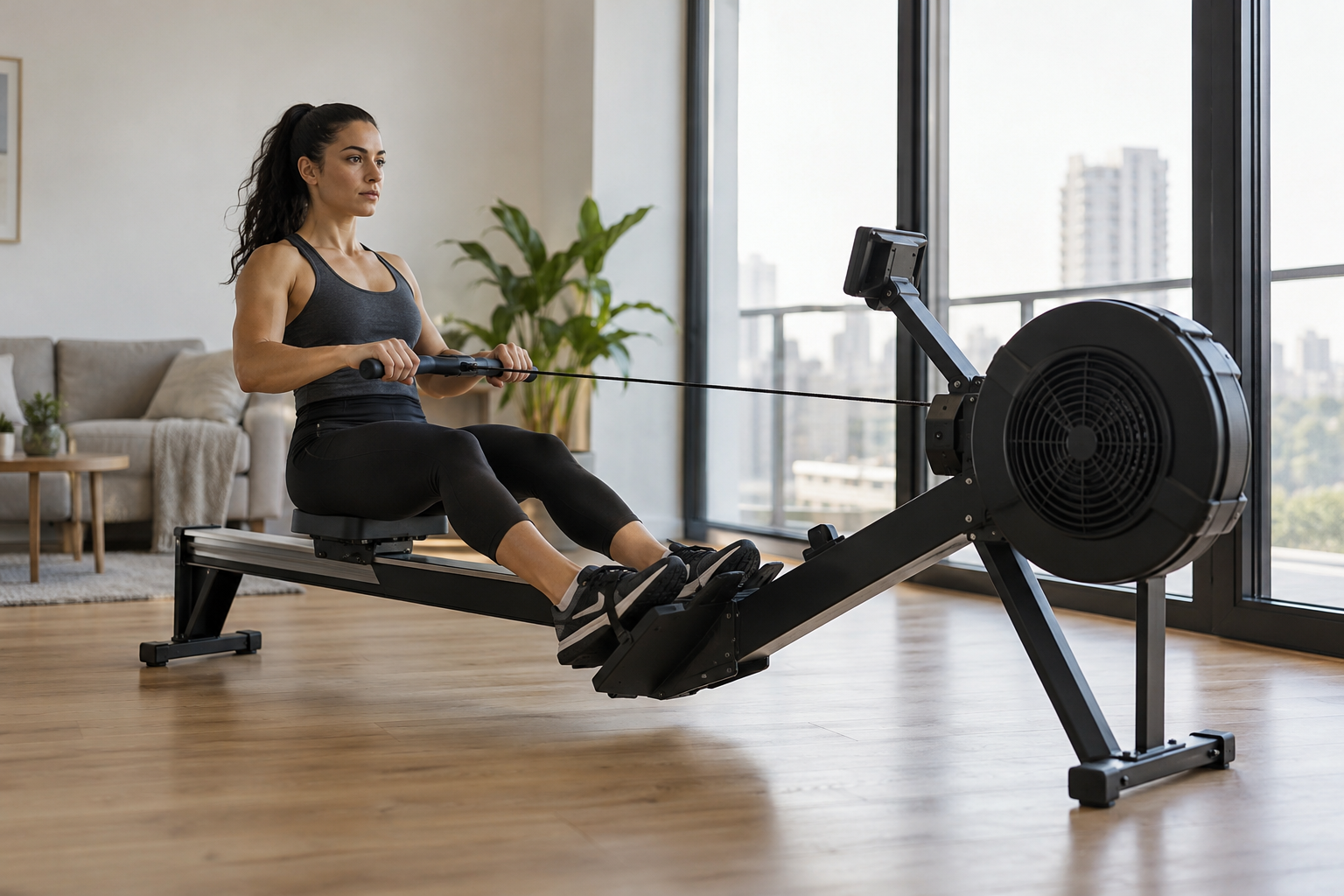
Folding or Fixed Rower for an Apartment: Space, Noise and Use
Choosing a folding or fixed rowing machine for an apartment means considering preparation, exercise and storage. A compact folded machine can be inconvenient to open daily, while a fixed model can work with dedicated space. The answer depends on room and routine.
Folding alone does not describe quality, stability or noise. These depend on the model, resistance, support and room. No category is universally better. Connect footprint, user fit and daily management rather than selecting only from stored-product photographs.
This guide uses general criteria, not universal dimensions. Check manufacturer instructions for size, clearances, storage and care. Examples illustrate situations. The choice should enable consistent training rather than merely fit equipment into a home.
- How much operating space is needed?
- What does folding actually change?
- How do you assess user fit?
- How do resistance and noise compare?
- How should stability and folding be evaluated?
- How is it moved and stored?
- Which costs and maintenance should be compared?
- How do you choose fixed or folding?
How much operating space is needed?
Measure the open configuration and user movement, not just the frame. Seat, handle and body travel through space that must remain clear. Follow model clearances rather than fitting it tightly between furniture. Consider getting on, adjusting feet and leaving. A long area can still be unusable with blocked access or movement. Resting component positions do not show the whole stroke's footprint.
Trial positioning
Mark stated dimensions on the floor and check access, separating manufacturer data from personal observation. This does not verify performance or stability; it finds obvious conflicts with furniture, doors and routes. Consider other household users during exercise. If each session requires clearing space, decide where objects go and how long it takes. A theoretically possible setup may be unsustainable with constant rearrangement.
What does folding actually change?
A folding model reduces footprint through its specific mechanism but still needs assessment open. Compare operating and storage dimensions separately. Transition needs space and manageable handling. Folding does not mean light or movable by everyone. Check mass, grips and instructions. Fixed equipment avoids some daily steps but occupies room between sessions. Evaluate frequency and location rather than an abstract preference.
Locks and permitted positions
Storage position must be approved. Not every rower can stand vertically or be supported identically. Follow folding and locking instructions without improvising extra space savings. Check correct operation and clear routes. Shared homes need protection against accidental access or impact. Minimum footprint is useful only when stable and intended rather than balanced precariously between furniture and walls.
How do you assess user fit?
External length does not fully describe usable travel. Assess seat stroke, feet, grip and allowed path. Body proportions and experience differ. If possible, try a manageable task and familiar stroke, noting limits or compensations. Compactness should not force a different movement because travel is inadequate. Respect stated user mass and operating conditions, not merely the ability to sit down.
Seat and support
Contact and adjustment affect comfort and control. Check foot straps and handle management at start and finish. A low seat or entry method may suit some people better. Another user's smooth movement does not establish your fit. Settings should be understandable and suit footwear. Distinguish setup, familiarity and model limitations during discomfort rather than forcing a position to prove compactness works for everyone.
How do resistance and noise compare?
Air, water, magnetic and other systems differ. Judge actual behaviour, adjustment and response rather than labels. Sound can arise from resistance, seat travel, transmission and floor contact. No category should be assumed silent. Intensity and room affect perception. Acoustic data need comparable measurement conditions. A single number or video recording does not necessarily represent your apartment experience.
Noise and vibration in context
Consider room, schedule and adjacent areas. Trials should resemble intended activity, not only slow strokes. A compatible mat can help without guaranteeing silence or vibration elimination. Floor and support must suit instructions. Do not remedy irregular movement or instability with random materials. Identify the source before adding accessories. Selection should account for household compatibility and realistic training hours.
How should stability and folding be evaluated?
Stability and movement depend on the full design rather than folding alone. Observe assembly, connections and appropriate operation. Ask about unusual looseness or movement. Do not assume every sensation normal or folding inherently inferior. Compare actual models and configurations. Identifiable components and instructions explain adjustments and inspections, especially when the mechanism is used frequently.
Opening and preparation
Before training, establish operating position with correct locks and supports. User weight should not be expected to finish setup automatically. Keep hands and objects outside pinch zones as instructed. Ask for a demonstration when unclear. Simple preparation benefits only when users can perform it correctly. Include setup time in the routine to avoid rushed checks for the sake of saving minutes.
How is it moved and stored?
Check wheels, grips, mass and route. Wheels do not make every threshold or floor suitable. Consider turns, doors and handling space. Delivery also involves stairs, lift and packed configuration. Check before choosing. Clarify any assembly or dismantling requirements and expertise. Delivery service may differ, so separate its scope from machine price and understand remaining personal work.
Storage is part of selection
Storage must meet model environmental conditions. Do not assume a balcony or damp room equals indoor space. Consider passages and accidental contact. Avoid stacking objects that interfere with mechanisms or preparation. Shared use requires checking configuration and settings. A tidy delivery-day arrangement may fail in everyday life. Choose for repeated restoration as well as the first installation.
Which costs and maintenance should be compared?
Include purchase, transport, assembly, necessary accessories and care. Compare cardio equipment with clear inclusions beyond purchase price. Displays may require power, applications or services; check rather than assume inclusion. Follow the particular manual. Cleaning and other interventions differ between systems. Avoid products or adjustments copied from another rower.
Support and service life
Establish parts access, identification and fault reporting. Warranty does not alone describe intervention timing and methods. Read conditions. Changed travel, damage or failed locks need attention before use. Do not improvise repairs to finish. Maintainability affects long-term availability. Value must survive a need for service, not merely look attractive at first placement.
How do you choose fixed or folding?
Summarise open space, storage, access, fit, noise and management. A dedicated area may make fixed equipment convenient; shared space may benefit from manageable folding. These are examples, not absolute rules. Compare essentials before extras. Smaller is not automatically better and larger does not guarantee a superior experience. Choose the configuration supporting regular use in real circumstances.
From selection to routine
Plan opening, checks, training and storage. Excessive preparation effort should be assessed before purchase rather than later blamed on motivation. Equipment enables the programme instead of requiring complex room rearrangement. Keep documentation and review the setup after furniture or user changes. An explainable decision links machine and habits: where it works, how it is prepared, which checks it needs and why that configuration fits.
Comments (0)