
Trolley
You have no items in your shopping cart

 Budgets
 Dumbers
 Discs
 Benches
 Racks and Rigs
 Weights Holders
 Isotonic machines
 Calisthenics
 Cardio
 Kettlebells
 Flooring
 Gym Set
 Accessories
 Combat
 ARTI MARZIALI
 CONTAINER GYM
 Tug-Of-War
 Used Gym Equipment
 PILATES MACCHINARI
 GINNASTICA ARTISTICA
 CAMPI DA PADEL
 Prodotti in Pronta Consegna
 Informazioni
 IRONMAN
 Gift Card
- Donatif
- General information
- 0 I like it
- 102 Views
- 0 comments
- gym flooring, safety flooring, gym safety, shock-absorbing materials
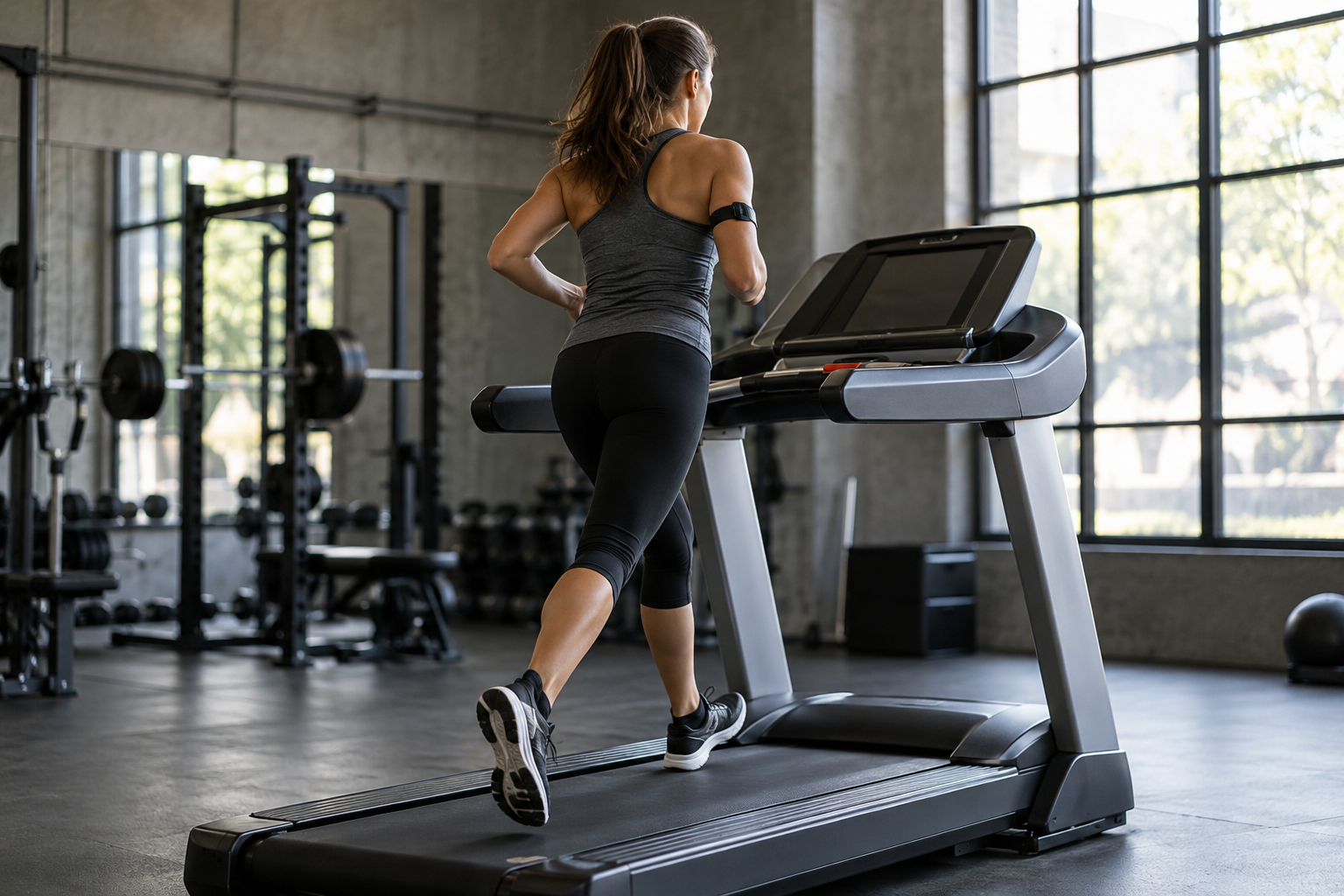
Heart rate controlled treadmills: practical criteria for gym selection
Choosing a heart rate controlled treadmill is an important decision for gym managers and fitness room supervisors who wish to offer a more controlled and customizable cardiovascular training experience. The ability to monitor heart rate during running or walking allows users to better interpret the intensity of their effort and instructors to set programs consistent with individual characteristics.
However, not all heart rate monitoring systems offer the same performance. Sensors integrated into the handles, compatible chest straps, processing algorithms, and automatic programs can behave differently during daily use. For a professional facility, it is therefore necessary to distinguish truly useful functionalities from features that mainly have commercial value.
In this in-depth analysis, we evaluate the main practical criteria for assessing a professional treadmill with heart rate monitoring, considering measurement accuracy, intensity regulation, safety, ergonomics, maintenance, and economic sustainability. The goal is not to identify a product ranking, but to provide concrete tools for choosing equipment suitable for the gym's audience and operational model.
- How heart rate control works
- Sensor accuracy and measurement reliability
- Cardiofitness programs and intensity regulation
- Safety and user management
- Technical performance for professional use
- Integrating the treadmill in the cardio area
- Maintenance and operational continuity
- Practical criteria for comparing equipment
- Evaluating the investment according to the gym
How heart rate control works
Heart rate monitoring allows you to observe the number of heart beats per minute during physical activity. In professional treadmills, this information is generally displayed on the console and, in more advanced systems, can be used to automatically adjust some training parameters. It is important to distinguish between simple heartbeat display and automatic regulation based on a target heart rate.
A treadmill equipped with heart rate detection may, in fact, simply show the measured value or integrate programs that modify speed and incline according to the detected frequency. The second solution requires a reliable control system capable of interpreting variations without producing sudden or uncomfortable changes.
For a gym manager, understanding this difference is essential. Two machines may both feature heart rate monitoring but offer very different user experiences. Evaluation must therefore start from the actual functioning and not just the presence of a specific item in the technical specifications.
Difference between heart rate detection and regulation
Detection consists of acquiring and displaying the heartbeat. Heart rate regulation, on the other hand, uses the acquired data to progressively modify the workload according to a preset program. In a professional fitness room, both functions can be useful, but they meet different needs. Monitoring informs the user, while automatic regulation contributes to maintaining a programmed intensity.
How to interpret data during training
Heart rate is an indicator of cardiovascular effort, but it does not by itself describe the physical condition or safety of a session. Age, training level, temperature, hydration, medications, and individual conditions can influence heart rate response. For this reason, the data must be interpreted together with the perceived effort, the user's goals, and the indications of qualified professionals when necessary.
Sensor accuracy and measurement reliability
The quality of heart rate monitoring depends mainly on the acquisition technology used and the conditions under which the measurement is performed. In professional treadmills, contact sensors on handles and receivers compatible with chest straps are common. These solutions have different operational characteristics that affect the convenience and continuity of the detection.
Sensors integrated into the handles are easily accessible and do not necessarily require personal accessories. However, during running, the user must modify the natural movement of the arms to maintain contact. Furthermore, an unstable grip, sweat, and movement can compromise signal quality. For this reason, they are particularly practical for occasional checks during walking or moderate-intensity exercises.
Compatible chest straps can offer more continuous detection during movement, provided they are correctly positioned and use a protocol supported by the console. It is still necessary to check the technical specifications: the presence of a wireless connection does not automatically guarantee compatibility with any heart rate device.
Sensors integrated into the handles
Contact sensors provide a simple solution for users who want to periodically check their heartbeat without wearing additional accessories. In professional evaluation, it is useful to check the position of the handles, the ease of reading the value, and the time required to obtain a stable measurement. An easily reachable sensor improves usability, but it should not encourage incorrect posture during running.
Chest straps and protocol compatibility
For workouts that require continuous reading, the chest strap is often a more appropriate choice. It is necessary to verify which protocols are actually supported by the treadmill, whether specific accessories are provided, and how device pairing is managed. In a gym with numerous nearby stations, it is also advisable to check connection stability and correct signal attribution to the individual user.
Cardiofitness programs and intensity regulation
One of the most interesting aspects of treadmills with heart rate control concerns the ability to integrate heart rate data into cardiofitness programs. These programs can help organize sessions with variable intensity, progressively adapting the work to the user's responses. However, the quality of the experience depends on the regulation logic and the possibility of customizing goals.
Some consoles allow you to set a target heart rate and automatically modify speed or incline to approach the selected value. The system should intervene gradually, considering that the heart's response is not immediate compared to changes in load. Too frequent adjustments can make the workout less fluid and increase perceived discomfort.
For a professional gym, it is useful to have programs that are easy to understand even for less experienced users. The presence of numerous modes does not necessarily represent an advantage if the interface is complex or requires long procedures. It is better to prioritize functions that are truly usable by instructors and easily explainable to clients.
Training by heart rate zones
Heart rate zones allow you to organize activity according to intensity intervals defined in relation to individual characteristics. Generic age-based formulas can only provide approximate estimates and do not replace a personalized assessment. In a professional setting, it is therefore preferable to use systems that allow goals to be modified, avoiding the assumption that automatically calculated values are universal.
Automatic adjustment of speed and incline
Automatic adjustment should be progressive, predictable, and easily interruptible. Before purchasing, it is appropriate to check which parameters are modified, with what gradualness, and what limits can be set. It is also important that the user always retains the possibility to intervene manually, reduce intensity, or immediately stop the session.
Safety and user management
Safety is a priority criterion in the choice of any treadmill intended for a gym. The presence of heart rate monitoring does not eliminate the risks associated with physical activity and does not transform the equipment into a medical device. The system can offer useful information, but it should not be considered a diagnostic tool or a mechanism capable of automatically preventing every critical situation.
A professional treadmill must provide easily accessible stop controls, an adequate emergency system, a stable running surface, and clear usage instructions. The layout of the machines also contributes to safety: access spaces, rear distances, and passage routes must comply with manufacturer indications and applicable regulations.
For fitness room managers, it is important to accompany the technical choice with operational procedures. Instructors must know how automatic programs work and explain to users how to change speed and incline. In the presence of abnormal symptoms, exercise must be interrupted and the situation handled according to the facility's safety procedures.
Emergency stop and accessible controls
The stop button and any key-based safety systems must be immediately identifiable. During a practical test, it is useful to check the machine's response to interruption and the ease with which a user can regain manual control. Automatic functions must not hinder a rapid stop when necessary.
Managing users with different preparation levels
A gym hosts people with very different experiences, motor skills, and goals. Beginners can benefit from intuitive interfaces and controlled progressions, while experienced users may require greater customization. The availability of heart rate programs does not replace any preliminary assessment of exercise suitability or health advice for those with particular clinical conditions.
Technical performance for professional use
Heart rate control is only one part of the characteristics to evaluate. A professional treadmill must ensure mechanical performance adequate for the number of users, session duration, and the type of training planned. An advanced console does not compensate for limitations in the motor, frame, or running surface.
The choice should consider the power actually available in continuous operation, the speed range, incline capacity, and transmission system stability. It is important to distinguish nominal values from sustainable performance during repeated use. For a gym with high traffic, operational continuity carries more weight than features designed for occasional home use.
Dimensions of the belt, load capacity, and cushioning system also affect the experience. A suitable surface promotes a more natural movement, while a stable structure reduces vibrations and oscillations. Values declared by the manufacturer must be compared with the real needs of users and the conditions expected in the cardio area.
Motor and continuous work capacity
The evaluation of the motor should not be based exclusively on an advertised maximum power value. It is preferable to request information on continuous operating capacity, permitted usage conditions, and cooling and maintenance procedures. In a facility with consecutive sessions, reliability over time is more important than peak performance that is rarely used.
Running surface and cushioning
The length and width of the belt must be consistent with the intended speed and the users' characteristics. The cushioning system also deserves attention, especially when the machine is used daily by people with different builds. There is no universally best solution: stability, comfort, and surface response must be evaluated together.
Integrating the treadmill in the cardio area
The choice of treadmills must be part of a broader design of the cardiovascular area. A professional gym should not evaluate each piece of equipment as an isolated element, but consider the relationship between available stations, user flows, and the types of training offered. A balanced distribution of machines allows for better management of peak traffic times.
Alongside treadmills, there is space for ellipticals, bikes, and other professional cardio machines. These pieces of equipment offer different movement modes and allow for expanding training possibilities. Heart rate control can be a transversal feature, useful for making the experience more consistent across different stations, while still considering the differences in detection technologies.
To learn more about available solutions and understand how to organize balanced equipment, you can consult the category dedicated to professional cardio machines. The comparison should focus on the functions necessary for the facility, space requirements, and the ability of the equipment to support the intended use.
Station distribution and space management
The arrangement of equipment must take into account the safety distances indicated by manufacturers, accessibility, and ventilation. It is advisable to avoid overly narrow passages and ensure that users can get on and off machines without interfering with other activities. Console visibility and the possibility of supervision by instructors contribute to improving room management.
Ratio between treadmills, ellipticals, and bikes
The number of treadmills should depend on actual demand and not on a predetermined proportion. Ellipticals can offer a movement different from running, while bikes allow cardiovascular activity in a seated position. Analyzing member preferences and station occupancy helps define a functional assortment, reducing the risk of investing in rarely used machines.
Maintenance and operational continuity
Maintenance is a determining factor in preserving the performance of a treadmill with heart rate monitoring. In addition to the mechanical component, sensors, consoles, connections, and electronic systems must be considered. A problem with heart rate detection can compromise the usefulness of heart rate programs even when the treadmill continues to work regularly.
Routine maintenance activities must follow the manufacturer's instructions and include periodic checks on the belt, tension, alignment, and general machine condition. Cleaning contact surfaces also helps maintain adequate hygienic conditions and limit problems related to residue buildup.
For a fitness center, it is useful to prepare a log of interventions, anomalies found, and checks performed. This organization allows you to identify recurring problems, plan technical activities, and evaluate equipment reliability over time. Preventive management can reduce unexpected interruptions and improve station availability.
Checks on sensors and consoles
Staff should periodically verify that sensors respond correctly, that values are displayed consistently, and that any wireless connections work according to specifications. In the presence of unstable readings, it is necessary to check usage conditions and consult technical support, avoiding automatically attributing the problem to the user's physical condition.
Technical support and spare parts availability
Before purchasing, it is appropriate to clarify support procedures, the availability of replacement components, and indicative intervention times. Consoles, sensors, electronic boards, and mechanical components may require specialized support. An economically affordable machine at purchase can become expensive if spare parts are difficult to find or downtime is high.
Practical criteria for comparing equipment
An effective comparison between heart rate controlled treadmills requires a consistent evaluation grid. The first criterion concerns the gym's audience: a corporate fitness room, a generalist fitness center, and a structure dedicated to athletic training may have different needs. Defining the user profile allows you to assign the right weight to available functionalities.
The second criterion concerns the concrete verification of declared characteristics. It is advisable to request technical documentation, information on accessory compatibility, warranty conditions, and maintenance instructions. Whenever possible, a practical test allows you to evaluate ergonomics, console readability, and the behavior of automatic programs in realistic conditions.
The third criterion consists of considering the total cost of ownership. Purchase price, consumption, maintenance, support, and expected lifespan contribute to the economic value of the machine. A correct choice does not necessarily coincide with the model richest in functions, but with one that offers adequate performance and sustainable costs compared to actual use.
Verifications to be carried out before purchase
A practical evaluation should include the type of heart rate sensor, compatible protocols, automatic regulation modes, speed and incline limits, belt dimensions, and professional usage conditions. It is also useful to verify the presence of applicable compliance documentation and instructions in the language used by staff. These elements allow you to compare proposals on firmer ground than just commercial descriptions.
Trial use and experience evaluation
During a demonstration, it is appropriate to simulate a typical session, checking start ease, command response, and the clarity of displayed data. If automatic heart rate programs are available, it is important to observe the gradualness of variations and the possibility of manual intervention. Noise, vibration, and comfort must also be considered, especially when multiple machines are running simultaneously.
Evaluating the investment according to the gym
Choosing a treadmill with heart rate control should stem from an analysis of the facility's operational needs and goals. An advanced system can help improve training personalization, but its value depends on the frequency with which it is actually used and the staff's ability to integrate it into the services offered.
To estimate investment sustainability, it is useful to consider the number of daily sessions, peak hours, average occupancy time, and the availability of alternative equipment. These data allow you to identify any shortcomings in the cardio area and determine whether it is more appropriate to increase the number of stations, replace outdated machines, or introduce additional features.
A further element concerns instructor training. The presence of heart rate programs can generate value only when staff knows the possibilities and limitations of the technology. Explaining to users the meaning of the data, usage methods, and differences between monitoring and automatic regulation fosters a more conscious and professional experience.
From an economic point of view, it is advisable to compare offers that include clear information on warranty, support, spare parts availability, and maintenance costs. The equipment's useful life and service continuity affect the return on investment at least as much as the features present at the time of purchase. For facilities with intensive use, reliability must therefore take on significant weight in the decision.
Planning can also include progressive growth of the cardio area. A gym that intends to expand personalized training services could prioritize intuitive consoles, documented compatibility with heart rate accessories, and systems that allow for consistent session management. The possibility of updating or integrating equipment must in any case be verified through technical specifications and contractual conditions, without assuming that every machine supports future developments.
For the manager, the most useful criterion remains the correspondence between technical characteristics, intended use, and service quality. Investing in well-dimensioned, easily manageable equipment supported by adequate assistance allows for the construction of a more functional cardiovascular area, in which heart rate control represents a concrete tool available to users and instructors, rather than just an additional console function.
Comments (0)