
Trolley
You have no items in your shopping cart

 Budgets
 Dumbers
 Discs
 Benches
 Racks and Rigs
 Weights Holders
 Isotonic machines
 Calisthenics
 Cardio
 Kettlebells
 Flooring
 Gym Set
 Accessories
 Combat
 ARTI MARZIALI
 CONTAINER GYM
 Tug-Of-War
 Used Gym Equipment
 PILATES MACCHINARI
 GINNASTICA ARTISTICA
 CAMPI DA PADEL
 Prodotti in Pronta Consegna
 Informazioni
 IRONMAN
 Gift Card
- Donatif
- General information
- 0 I like it
- 70 Views
- 0 comments
- gym flooring, safety flooring, gym safety, shock-absorbing materials
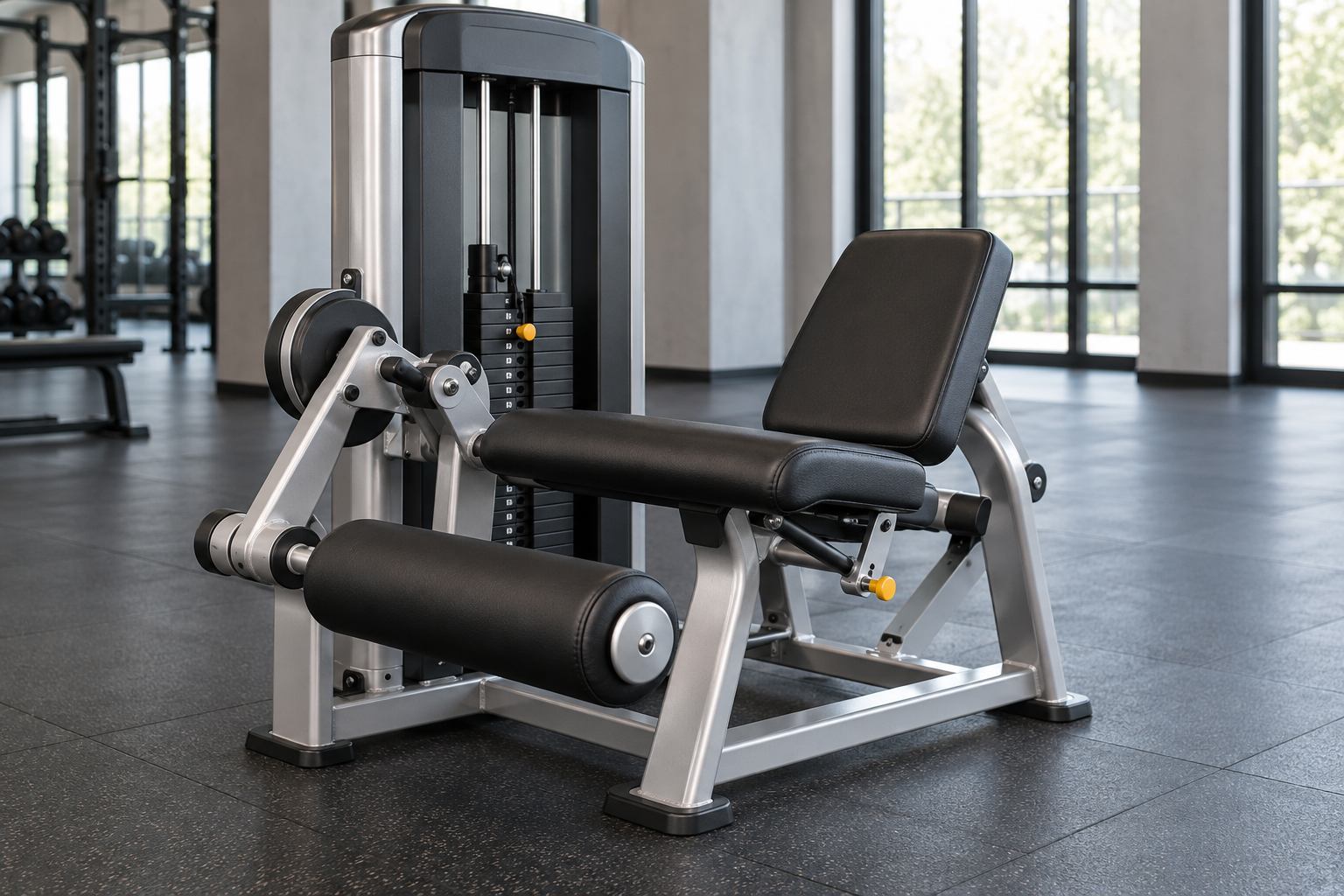
Muscles involved in the leg curl: technical guide for effective training
The leg curl is one of the most used exercises in professional gyms to train the posterior thigh muscles. Present in numerous athletic training, bodybuilding, and general fitness programs, it allows for knee flexion against resistance through machines designed to control the movement trajectory. Understanding how it works is important not only for coaches but also for managers who need to select equipment that meets their clients' needs.
The muscles involved in the leg curl belong mainly to the hamstring group, commonly called the femorals. However, the exercise also involves other muscles that contribute to knee flexion and stabilization of the lower limb. Body position, hip angle, and the characteristics of the machine can modify muscle work conditions, making some variants more suitable for specific training goals.
For a gym manager or purchasing manager, knowing these differences means being able to evaluate leg curl machines with greater awareness. The choice should not be based solely on footprint or price, but should consider biomechanics, adjustments, ergonomics, versatility, and ease of use. This guide delves into the anatomical and technical aspects of the exercise, linking them to the practical criteria necessary for organizing a professional weight room.
- What are the main muscles involved in the leg curl
- How the leg curl works from a biomechanical perspective
- Seated, lying, and standing leg curl: the differences
- How muscle work changes during the exercise
- Correct execution and errors to avoid
- How to include the leg curl in training programs
- Practical criteria for choosing a professional leg curl machine
- Safety, maintenance, and station management
- Evaluating the investment in a leg curl machine
What are the main muscles involved in the leg curl
The leg curl is a knee flexion exercise that mainly involves the hamstrings, a muscle group located at the back of the thigh. These muscles contribute to various motor functions, including knee flexion and, for some components, hip extension. Their activity is important in locomotion, running, and numerous sports movements.
The hamstring group includes the biceps femoris, semitendinosus, and semimembranosus. The biceps femoris has two heads with different anatomical characteristics: the long head crosses both the hip and knee joints, while the short head crosses only the knee. This distinction is important for understanding how hip position can influence muscle behavior during the exercise.
In addition to the hamstrings, other muscles participate in knee flexion, including the gastrocnemius, sartorius, gracilis, and popliteus. Their contribution depends on the joint position and movement conditions. However, the leg curl remains an exercise primarily oriented toward training the posterior thigh muscles.
Biceps femoris: function and involvement
The biceps femoris is located in the posterior and lateral region of the thigh. The long head contributes to knee flexion and hip extension, while the short head participates in knee flexion without crossing the hip joint. Both can contribute to external rotation of the lower leg when the knee is flexed.
During the leg curl, the biceps femoris contributes to the production of the force necessary to bring the lower part of the leg toward the thigh. The extent of its involvement depends on several factors, including load, joint angles, and individual characteristics. It is not correct to consider a single variant as capable of completely isolating this muscle compared to other knee flexors.
Semitendinosus and semimembranosus
The semitendinosus and semimembranosus are found in the posterior and medial region of the thigh. Both cross the hip and knee, contributing to hip extension, knee flexion, and internal rotation of the lower leg when the knee is flexed. Their activity is relevant in the stabilization and control of lower limb movements.
In the leg curl, these muscles work together with the biceps femoris to generate knee flexion. The distribution of muscle contribution can change with hip position and resistance characteristics. For complete programming, it is therefore useful to consider multiple training methods for the posterior chain, without attributing absolute isolation capabilities to a single machine.
How the leg curl works from a biomechanical perspective
The fundamental movement of the leg curl consists of knee flexion against external resistance. In traditional machines, resistance is applied through a roller positioned in the distal region of the leg, generally near the ankle. The user exerts force to move the roller along the trajectory planned by the mechanical system.
Hip position modifies the initial length of the hamstring muscles that cross both joints. When the hip is more flexed, these muscles are generally in a condition of greater proximal stretch. This element helps explain why seated and lying leg curls can produce different stimuli.
The perceived resistance during movement also depends on the lever arm and the machine's load curve. Two pieces of equipment with the same selected weight may require different efforts at various joint angles. For this reason, the value indicated on the weight stack alone does not represent a complete measure of the exercise's difficulty.
The role of knee flexion
Knee flexion occurs when the angle between the thigh and lower leg decreases. In the leg curl, this movement is performed against resistance that tends to bring the limb back to the initial position. The knee flexors produce the force necessary to overcome resistance during the concentric phase.
During the controlled return, the same muscles work primarily in eccentric mode, opposing knee extension. Both phases contribute to the training stimulus, while speed and amplitude must be adapted to the user's capabilities.
Why the hip angle changes the stimulus
Biarticular hamstrings cross both the hip and the knee. Changing hip position therefore changes their length and the mechanical conditions under which they develop force. In the seated leg curl, the flexed hip tends to increase the initial length of these muscles compared to a position with the hip more extended.
This difference can influence the training stimulus and adaptations over time. However, the response also depends on the machine's structure, the range of motion, and the programming. It is therefore not sufficient to observe body position to accurately predict the result of each exercise.
Seated, lying, and standing leg curl: the differences
The main variants of the leg curl are distinguished by body position and the way resistance is applied. The most common configurations in professional gyms are the seated leg curl, the lying leg curl, and the standing leg curl. All share the knee flexion movement but have ergonomic and biomechanical differences.
The seated leg curl allows for training the knee flexors with the hip flexed, while the lying version generally involves a prone position with the hip more extended. The standing variant, on the other hand, allows for predominantly unilateral work, requiring body stabilization through available supports.
For a gym manager, the choice between these configurations should consider the user profile and the characteristics of the weight room. Not all facilities need multiple machines dedicated to the same movement, but knowing the differences allows for identifying the solution most consistent with service goals.
Seated leg curl and lengthened muscle work
In the seated leg curl, the user sits with the thigh supported and the lower leg connected to the resistance system via a roller. Hip flexion determines a greater initial length of the biarticular hamstrings compared to many prone configurations.
This feature makes the seated leg curl interesting for muscle development-oriented programs. Some research has observed favorable hypertrophic adaptations for certain hamstring muscles compared to the prone variant, but the results should not be interpreted as universal superiority independent of load, volume, and machine characteristics.
Lying leg curl and position control
In the lying leg curl, the user lies prone on a padded surface, keeping the pelvis in contact with the support while flexing the knees. Hip position modifies the length conditions of the posterior thigh muscles and can influence the sensation of effort.
Execution quality depends on pelvic stability, correct roller position, and the trajectory allowed by the machine. Poor support can encourage trunk compensations, making it harder to maintain a controlled movement.
How muscle work changes during the exercise
Muscle activity during the leg curl depends on the interaction between anatomical characteristics, joint position, and external resistance. There is no fixed distribution of muscle work valid for all people and all machines. Even seemingly small variations in workstation adjustment can modify the mechanical conditions of the exercise.
The selected load represents only one of the variables. The range of motion, execution speed, and control of the eccentric phase influence the overall stimulus. For this reason, a professional machine should allow precise adjustments and a fluid movement without imposing positions incompatible with the user's characteristics.
It is also important to distinguish muscle activation measured during a single repetition from adaptations obtained over time. Higher electromyographic activity does not automatically prove greater muscle development. Programming must consider progression, recovery, and training continuity.
Concentric and eccentric phase
During the concentric phase, the knee flexors produce force while shortening to move the load. In the eccentric phase, however, they control the return of the leg toward the initial position while lengthening under tension. Both contraction modes are relevant for strength development.
Excessive speed can reduce control and encourage the use of momentum. For this reason, it is generally useful to adopt a rhythm that allows maintaining body position and managing resistance along the entire intended trajectory.
Range of motion and effort distribution
The range of motion determines the joint angles traversed during the exercise. Working through a range appropriate to individual capabilities allows muscles to be exposed to different length conditions. However, it is not necessary to force the knee beyond controllable movement to obtain an effective stimulus.
Machines with initial position adjustment allow the exercise to be adapted to the user's characteristics. This possibility is particularly important in gyms frequented by people with different levels of mobility and experience.
Correct execution and errors to avoid
Correct execution of the leg curl requires proper positioning relative to the machine's axis of rotation. The knee should be aligned, as much as the equipment's geometry allows, with the mechanical fulcrum of the system. Incorrect adjustment can alter the movement and increase discomfort during the exercise.
The push roller must be positioned according to the manufacturer's instructions, generally on the lower part of the leg. Thigh and pelvic supports must also ensure stability without creating excessive pressure. A machine with intuitive adjustments facilitates trainer work and reduces the time needed to prepare the station.
Frequent errors include using excessive loads, jerky movements, and losing contact with supports. These behaviors can reduce exercise control and make stress distribution less predictable.
Adjusting the machine before exercise
Preparation should begin with adjusting the seat or body support. Next, it is necessary to check the knee position relative to the fulcrum and adjust the roller so that the contact is stable and comfortable.
Before increasing the load, it is useful to perform a few light repetitions to verify the trajectory. This check allows for identifying any interference, abnormal pressure, or movement limitations.
Pelvic compensations and excessive loads
In the lying leg curl, lifting the pelvis off the support can indicate difficulty in maintaining the required position. In the seated leg curl, however, excessive trunk shifting can change the exercise conditions. In both cases, it is appropriate to check adjustments and load.
An adequate load should allow for controlled repetitions without systematically resorting to compensatory movements. Progression must be gradual and consistent with the user's experience, especially when the exercise is introduced into a new program.
How to include the leg curl in training programs
The leg curl can be used in programs oriented toward hypertrophy, muscle strength, and general conditioning. Its primary function is to train knee flexion against resistance, supplementing exercises that involve the hamstrings through hip extension, such as some deadlift and hip hinge variants.
This complementarity is important because biarticular hamstrings participate in movements involving two joints. A program that exclusively uses knee flexion exercises might not represent all the muscle group's functions. Similarly, relying only on hip extension exercises might leave less room for specific work on the knee flexors.
For a professional gym, having a leg curl station allows trainers to organize programs with different levels of complexity. The machine can be used by both experienced users and beginners, provided that adjustments and intensity are adapted to individual capabilities.
Leg curl in hypertrophy programs
In muscle development-oriented programs, the leg curl allows for applying progressive load to the knee flexors. The choice of the number of sets, repetitions, and frequency depends on the overall training volume and the user's level.
The presence of a machine with adequate load increments facilitates progression. For some users, especially in initial phases, increments that are too large can make it difficult to gradually adapt intensity. This aspect should be considered when choosing equipment.
Use in athletic training
Hamstrings play an important role in numerous sports gestures, especially in activities requiring running and acceleration. The leg curl can contribute to strengthening knee flexors within broader programs that include multi-joint exercises, eccentric work, and sport-specific activities.
It is not correct to consider the leg curl, alone, a guarantee of injury prevention. The effectiveness of a program depends on multiple factors, including load progression, exposure to specific efforts, and recovery management. The machine represents a useful tool but must be included in consistent programming.
Practical criteria for choosing a professional leg curl machine
The selection of professional fitness equipment requires an evaluation that takes into account the gym's operational needs. A leg curl machine must offer a functional trajectory, accessible adjustments, and a structure adequate for intensive use. The initial price is only one of the comparison elements.
Main practical criteria include ergonomics, range of adjustments, transmission quality, load progression, and operational footprint. The machine should adapt to users with different anthropometric characteristics without requiring postural compensation to reach the handles or maintain contact with supports.
It is also important to evaluate ease of use. In high-traffic gyms, complex adjustments can increase station occupancy times. An intuitive system encourages user rotation and facilitates supervision by staff.
Ergonomics, supports, and adjustments
A professional leg curl machine should allow for correct adjustment of knee, roller, and body support positions. In seated versions, backrest position and the thigh containment system are particularly important. In prone versions, it is necessary to evaluate the support shape and pelvic stability.
Pad quality influences comfort but should not be considered separately from the machine's geometry. Soft padding does not compensate for an inadequate joint position. It is therefore useful to conduct practical tests with people of different heights and builds before choosing a model.
Resistance system and load progression
Leg curl machines can use selectable weight stacks or plate-loaded systems. Versions with weight stacks generally allow for quick resistance changes, while plate-loaded ones can integrate with equipment already present in the room. Both configurations require an evaluation of mechanical characteristics.
The actually perceived load depends on the transmission ratio and the geometry of the levers. For this reason, it is not correct to compare two machines exclusively through the declared maximum weight. It is preferable to verify movement fluidity, resistance progressivity, and the adequacy of available increments.
Safety, maintenance, and station management
The safety of a leg curl machine depends on construction quality, maintenance conditions, and correct use. In professional gyms, where equipment is used repeatedly, it is fundamental to schedule periodic checks on mechanical components and adjustment systems.
Machines with cables and pulleys require checks on the transmission status, while lever systems require checks on rotation points and connections. Procedures must comply with the manufacturer's indications and involve suspending use in the presence of significant anomalies.
Space organization also contributes to safety. The station must allow access, adjustment, and exit without interfering with nearby equipment. Operational footprint can be larger than the external dimensions declared in the technical sheet.
Periodic checks and preventive maintenance
A maintenance program should include visual inspections, checks of adjustment systems, and controls of wear-prone parts. Cables, pulleys, pins, pads, and locking components must be monitored according to the manufacturer's indications.
Recording interventions allows for identifying recurring problems and scheduling replacements. The availability of spare parts and technical documentation therefore represents an important criterion in evaluating the supplier.
Footprint and accessibility in the weight room
Machine positioning must consider the space needed to sit or lie down, adjust supports, and change load. In plate-loaded versions, it is also necessary to provide access to side supports and space to move weights.
Correct layout facilitates trainer work and reduces interference between users. To define operational distances, refer to the manufacturer's indications and specific environmental characteristics.
Evaluating the investment in a leg curl machine
The choice of a leg curl machine should be integrated into an overall development strategy for the weight room. The purchasing manager must consider which exercises are already available, what needs emerge from the clientele, and what value a new station can offer. The goal is not simply to increase the number of machines, but to improve the quality and completeness of the training offer.
A generalist facility might prefer a machine with simple adjustments, an easily selectable weight stack, and good adaptability to different users. A center oriented toward athletic training or bodybuilding might instead place greater importance on the specific biomechanical configuration, resistance curve, and the possibility of integrating multiple knee flexion variants.
Economic evaluation should include initial price, transport, installation, maintenance, and spare parts availability. An apparently affordable machine may turn out to be less interesting if it has limited adjustments or requires frequent interventions. Total cost of ownership therefore represents a more complete indicator than simple purchase price.
How to evaluate the supplier and technical specifications
Before purchasing, it is appropriate to request information on dimensions, load capacity, adjustments, materials, and intended use. Documentation should include use and maintenance instructions, as well as information regarding warranty and technical assistance. These elements allow for a more reliable comparison between different solutions.
To explore the configurations available in the muscle training machine sector, you can consult the professional isotonic machines, evaluating individual equipment characteristics against the facility's needs. The choice should favor compatibility with training goals and the gym's operational conditions.
Defining purchasing priorities
When the budget is limited, it can be useful to build an evaluation matrix that assigns weight to the most important criteria. Ergonomics, versatility, footprint, reliability, maintenance, and total cost can be compared through scores consistent with the facility's needs. A machine that achieves high results in priority criteria can represent a better choice than a model with numerous little-used accessory features.
It is important to involve trainers in the selection phase as well, because daily experience allows for identifying needs that do not emerge from technical sheets alone. Ease of adjustment, support comfort, and trajectory fluidity can be effectively evaluated through practical tests.
Measuring the machine's value over time
After installation, the manager can monitor usage frequency, wait times, and any user feedback. These data help to understand if the machine meets the expected needs and if its placement in the weight room is functional.
In the medium term, information regarding maintenance, station availability, and user satisfaction allows for evaluating the investment's operational performance. A well-sized and correctly managed leg curl machine can contribute to the completeness of the training offer, providing trainers with a specific tool for hamstring work and the gym with a station usable in different programs.
Comments (0)