
Trolley
You have no items in your shopping cart

 Budgets
 Dumbers
 Discs
 Benches
 Racks and Rigs
 Weights Holders
 Isotonic machines
 Calisthenics
 Cardio
 Kettlebells
 Flooring
 Gym Set
 Accessories
 Combat
 ARTI MARZIALI
 CONTAINER GYM
 Tug-Of-War
 Used Gym Equipment
 PILATES MACCHINARI
 GINNASTICA ARTISTICA
 CAMPI DA PADEL
 Prodotti in Pronta Consegna
 Informazioni
 IRONMAN
 Gift Card
- Donatif
- General information
- 0 I like it
- 122 Views
- 0 comments
- gym flooring, safety flooring, gym safety, shock-absorbing materials
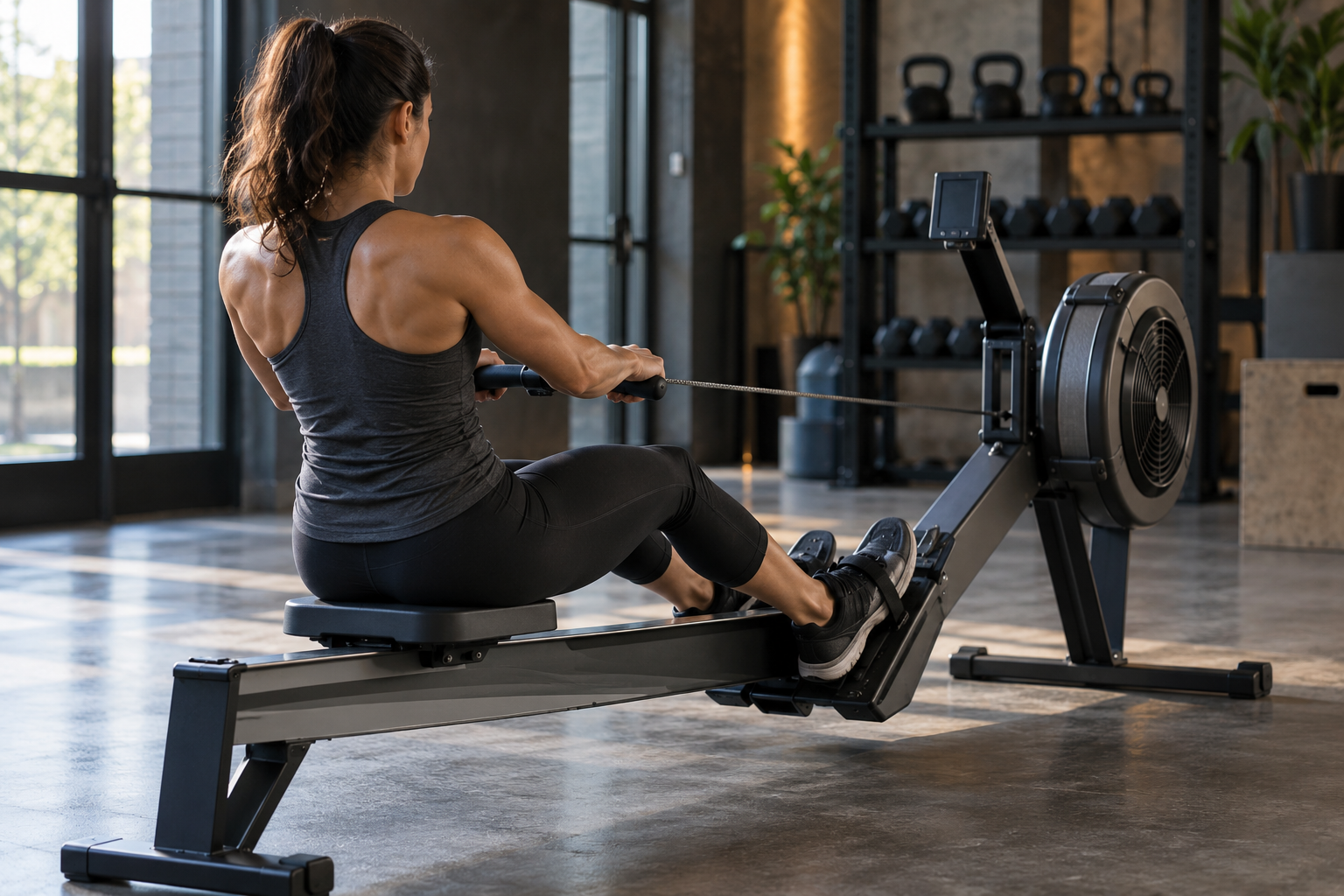
Criteria for choosing a rowing machine on sale: a practical guide for a professional purchase
Purchasing a rowing machine for a gym, fitness center, or athletic training facility requires an assessment that goes beyond the promotional price. For a purchasing manager, identifying the correct criteria for choosing a rowing machine on sale means comparing technical characteristics, component reliability, usage conditions, and long-term operating costs. Equipment that is affordable at the time of order could, in fact, prove unsuitable for the facility's operational needs.
The rowing machine represents a versatile solution for cardiovascular training and physical conditioning, as it simultaneously involves different muscle groups and allows for the modulation of exercise intensity. However, not all models are designed to support the same workload. The differences between resistance systems, construction materials, ergonomics, and components directly affect the quality of the experience and the durability of the equipment.
This buying guide explores the aspects that a purchasing manager should verify before selecting a rowing machine on promotion. The goal is not to identify a list of products, but to build an evaluation method based on practical criteria, verifiable parameters, and a correct analysis of the ratio between initial investment and operational value.
- Analyze the facility's needs before purchasing
- Compare rowing machine resistance systems
- Evaluate build quality and wear resistance
- Check ergonomics, adjustments, and accessibility
- Examine consoles and performance monitoring
- Consider maintenance and technical support
- Evaluate the supplier and purchasing conditions
- Transform the offer into a sustainable investment
Analyze the facility's needs before purchasing
The first step is to precisely define the context in which the rowing machine will be used. A commercial gym with numerous members has different needs compared to a personal training studio or a center dedicated to athletic training. The frequency of sessions, duration of workouts, and user characteristics influence the choice of the most appropriate machine.
A purchasing manager should start from the programming of planned activities, considering whether the rower will be mainly intended for warm-ups, continuous cardiovascular training, or high-intensity circuits. These modes subject the components to different stresses and require specific levels of robustness and stability.
The presence of a discounted price should not change technical priorities. Before comparing offers, it is appropriate to establish minimum requirements regarding load capacity, ease of adjustment, available space, and frequency of use. This approach allows for the quick exclusion of solutions that are apparently convenient but not consistent with the facility's needs.
Estimate daily usage frequency
A machine used occasionally requires different characteristics compared to a rower used for numerous consecutive sessions. In fitness centers with high user turnover, it is important to favor components designed for intensive use, checking the manufacturer's indications on intended use. The commercial or professional classification must be accompanied by concrete technical information and consistent warranty conditions.
Identify user profiles
Height, body weight, experience level, and training goals affect the choice. A rowing machine intended for a diverse audience must offer intuitive adjustments, a sufficiently wide stroke, and a stable structure. In professional contexts, versatility is an advantage because it allows the same equipment to be used by people with different physical characteristics, reducing the need to purchase dedicated models.
Compare rowing machine resistance systems
Among the main practical purchasing criteria is the evaluation of the resistance system. This characteristic determines the machine's behavior during the stroke, the perception of effort, and part of the maintenance requirements. The most common systems use air, magnets, water, or combinations of different technologies.
There is no universally superior technology for every context. The choice depends on the type of training, the need to adjust the load, the level of acceptable noise, and the simplicity of management. For this reason, the comparison should consider the machine's actual operation and not be limited to the name of the system.
An important element concerns the progressivity of resistance. During a professional session, the user must be able to develop an effort consistent with their preparation level without perceiving irregularities in the pull. The fluidity of the movement, response to power increases, and behavior during recovery phases contribute to the overall quality of the equipment.
Air resistance rowing machines
In air rowers, a fan generates resistance that generally increases with the intensity of the pull. This feature makes them particularly interesting for interval training and athletic conditioning activities. It is necessary to distinguish the airflow adjustment from the selection of a fixed load, as the machine's behavior also depends on the execution speed. During evaluation, it is useful to check noise levels, fan accessibility, and cleaning procedures.
Magnetic and water systems
Magnetic rowers generally allow the selection of resistance levels through mechanical or electronic adjustments and may be suitable when noise reduction is a priority. Water models, instead, use the movement of fluid inside a tank, offering a characteristic rowing feel. For the latter, it is also necessary to consider the water control and treatment operations provided by the manufacturer. The choice should therefore reflect the operating context and the resources available for management.
Evaluate build quality and wear resistance
The quality of the structure is one of the most important elements when comparing rowing machines on sale. The frame, sliding rail, supports, and mechanical connections must ensure stability during exercise. A machine intended for a professional environment is used by people with very different physical characteristics and power-output capabilities, making adequate design essential.
Robustness cannot be assessed solely through the overall weight of the equipment. Materials, frame geometry, quality of welds, and precision of couplings affect resistance to stress. Even a relatively light rowing machine can be reliable if designed correctly, while a heavy structure does not automatically guarantee superior performance.
To make a useful comparison, it is advisable to examine the technical documentation, verify the declared maximum load, and request information on the availability of components subject to wear. In contexts with intensive use, small mechanical problems can turn into service interruptions, generating indirect costs that reduce the initial economic advantage.
Frame, supports, and operational stability
A well-designed frame must limit unwanted movements during the most energetic phases of the stroke. The presence of stable supports, non-slip elements, and adequate structural connections contributes to operational safety. During a practical test, it is useful to verify that the rower remains stable even when the user rapidly increases the stroke rate, without excessive oscillations or abnormal noises.
Rail, seat, and transmission
The sliding system must allow for a smooth and regular movement along the entire stroke. Wheels, bearings, and contact surfaces are particularly important components because they are stressed with every repetition. The transmission, generally made by chain, belt, or other mechanisms, must also be evaluated considering durability, maintenance, and the possibility of replacement. An easily inspectable system simplifies management over time.
Check ergonomics, adjustments, and accessibility
Ergonomics directly affects the quality of training and the experience of members. A professional rowing machine should allow for an appropriate working position for users with different anthropometric characteristics. The distance between footrests, seat, and handle must allow for natural movement, avoiding limitations that make correct technical execution difficult.
In fitness centers, where users change frequently, adjustments must be simple and quick. A complex system can slow down sessions, require constant intervention from staff, and increase the likelihood of incorrect settings. Ease of use therefore represents an operational parameter, as well as a feature related to comfort.
Another aspect concerns the machine's accessibility. The height of the seat, lateral space, and ease of entry and exit affect the experience of people with different levels of mobility. When the facility serves a particularly broad audience, these elements deserve specific verification, without assuming that every rower is suitable for all users without distinction.
Adjustable footrests and handle
Footrests must offer stable support and simple fastening systems to adjust. It is appropriate to verify compatibility with different shoe sizes and the hold of the straps during the most intense sessions. The handle should ensure a secure grip, with appropriate dimensions and coatings. The quality of these elements affects daily usability and the need for periodic replacements.
Stroke length and seat position
The available stroke must allow taller users to perform the movement without prematurely reaching mechanical limits. It is also useful to check the position of the seat in relation to the footrests, considering that an adequate height can facilitate access to the machine. Testing with people of different heights is one of the most effective methods to identify any ergonomic limitations before purchasing.
Examine consoles and performance monitoring
The monitoring system helps determine the rowing machine's usefulness in training programming. A professional console should display understandable and relevant information, such as time, distance, stroke rate, and intensity indicators. The availability of additional data may be useful, but must be evaluated in relation to the facility's goals.
For purchasing managers, it is important to distinguish between the quantity of functions and the quality of measurements. A console full of programs is not necessarily a better solution if the data is not repeatable or difficult to interpret. In contexts where coaches use results to track progress, the consistency of the readings takes on particular importance.
It is also necessary to consider the simplicity of the interface, screen readability, and the availability of updates or spare parts. A complex electronic device can offer interesting features, but it also introduces additional components to manage. The choice should favor tools actually used by staff and members.
Metrics useful for programming
Time, average pace, stroke rate, and estimated power allow for structuring sessions with different goals. However, the displayed values may depend on the algorithms adopted by the manufacturer and should not be automatically considered comparable between different machines. When the center uses repeated assessment protocols, it is preferable to maintain consistency between devices and verify the metric calculation methods.
Connectivity and electronic management
Some rowers support connections with applications, heart rate sensors, or training platforms. Before assigning economic value to these features, it is advisable to verify supported protocols, actual compatibility, any subscriptions, and update availability. A digital feature is an advantage only when it integrates with the center's operating procedures and does not require disproportionate management activities.
Consider maintenance and technical support
The maintenance of the professional rowing machine is a determining factor in the calculation of the total cost of purchase. Every piece of equipment has components subject to wear and requires periodic checks to maintain adequate performance. Procedures can vary significantly depending on the technology used and the manufacturer's instructions.
A purchasing manager should verify which operations can be performed by internal staff and which require a specialized technician. The availability of clear instructions, identifiable spare parts, and accessible components allows for planning interventions with greater precision. In centers with high traffic, ease of maintenance can help reduce machine downtime.
It is also important to evaluate the duration of the warranty and the related exclusions. Some consumable components may be subject to specific conditions, while coverage for commercial use may differ from that provided for home use. These aspects must be verified before the order, preferably through written documentation.
Preventive checks and cleaning
Ordinary operations may include rail cleaning, fastener verification, transmission inspection, and checking support elements. Methods and frequency must follow the manufacturer's manual, avoiding unauthorized interventions. Preparing an internal control sheet allows documenting checks and timely identifying any anomalies, especially when multiple operators use or supervise the same equipment.
Availability of spare parts and intervention times
The ability to quickly obtain belts, wheels, footrests, electronic components, and other spare parts represents a concrete element of commercial reliability. It is useful to request information on indicative supply times and assistance methods. A rower purchased with a high discount can lose part of its convenience if an inexpensive component is difficult to find and results in weeks of operational downtime.
Evaluate the supplier and purchasing conditions
The choice of a fitness equipment supplier must be approached with the same attention reserved for the machine's technical characteristics. A complete commercial offer should specify model, configuration, availability, warranty, transport, and services that may be included. Without this information, comparing two quotes can produce misleading assessments.
The advertised price is only one component of the transaction. Shipping costs, assembly, floor delivery, any accessories, and payment terms can significantly change the final amount. For this reason, it is appropriate to request a detailed quote, distinguishing mandatory items from optional ones.
When evaluating multiple pieces of equipment for a new cardio area, it may be useful to consult a selection of cardio machines for gyms and compare the characteristics of rowers relevant to the project. The comparison must in any case be based on the technical sheets actually available, verifying that each product meets the requirements defined before the commercial search.
How to verify the actual convenience of the offer
A high percentage discount does not automatically prove that the final price is competitive. It is preferable to compare the actual cost with that of machines equivalent in intended use, resistance system, and build quality. It is also necessary to verify whether the promotion concerns new products, previous models, display items, or other particular commercial conditions. Transparency on these aspects allows for correctly evaluating the risk associated with the purchase.
Technical documentation and commercial guarantees
Before confirming the order, it is advisable to request the user manual, warranty conditions, maintenance instructions, and compliance documentation applicable to the product. The supplier's statements must be consistent with the intended use. A qualified contact person should also be able to clarify doubts regarding assembly, spare part availability, and post-delivery assistance, allowing the purchasing manager to document the reasons for the choice.
Transform the offer into a sustainable investment
Correctly applying the criteria for choosing a rowing machine on sale means considering the equipment as an operational resource destined to generate value over time. The initial cost must be compared with the expected lifespan, intensity of use, maintenance, and service continuity. A lower price can represent a concrete opportunity, provided it does not involve compromises incompatible with the facility's needs.
An effective methodology consists of preparing an evaluation matrix with mandatory requirements and preferential parameters. The former can include declared professional use, adequate load capacity, compatible dimensions, and acceptable assistance conditions. The latter may include digital features, ease of movement, storage possibilities, and aesthetic characteristics. Assigning a weight to each criterion helps to compare offers in a documentable way.
To estimate the total cost of ownership, it is useful to add purchase price, transport, installation, planned maintenance, and reasonably estimable costs of wear-and-tear materials. The result can be compared to the expected years of use or the indicative number of scheduled sessions, specifying the hypotheses adopted. This method does not eliminate uncertainty, but allows for distinguishing immediate convenience from a sustainable economic advantage.
Evaluate the indicative cost per session
An example can clarify the method. If a rowing machine entails an estimated total investment of 1,500 euros over five years and is used on average for 600 annual sessions, the cost attributable to the equipment is approximately 0.50 euros per session. This is an illustrative calculation that does not necessarily include energy, space occupied, and general facility costs. The main value of the indicator consists in the possibility of comparing different scenarios using homogeneous hypotheses.
Define a purchase approval procedure
Before final approval, it is appropriate to verify the correspondence between technical requirements, economic conditions, and services declared by the supplier. An evaluation sheet can include the outcome of the practical test, received documentation, delivery conditions, and responsibilities related to assistance. This process reduces the risk of decisions based exclusively on the urgency of the promotion and allows for saving information useful for subsequent purchases.
For a gym that plans to progressively expand the cardio area, it is also useful to consider the possibility of purchasing equipment with similar characteristics in the future. Uniformity of maintenance procedures, familiarity of instructors with consoles, and continuous availability of spare parts can simplify management. The choice of a rowing machine on sale should therefore be consistent not only with the current budget but also with the technical and organizational planning of the facility.
Comments (0)