
Trolley
You have no items in your shopping cart

 Budgets
 Dumbers
 Discs
 Benches
 Racks and Rigs
 Weights Holders
 Isotonic machines
 Calisthenics
 Cardio
 Kettlebells
 Flooring
 Gym Set
 Accessories
 Combat
 ARTI MARZIALI
 CONTAINER GYM
 Tug-Of-War
 Used Gym Equipment
 PILATES MACCHINARI
 GINNASTICA ARTISTICA
 CAMPI DA PADEL
 Prodotti in Pronta Consegna
 Informazioni
 IRONMAN
 Gift Card
- Donatif
- General information
- 0 I like it
- 175 Views
- 0 comments
- gym flooring, safety flooring, gym safety, shock-absorbing materials
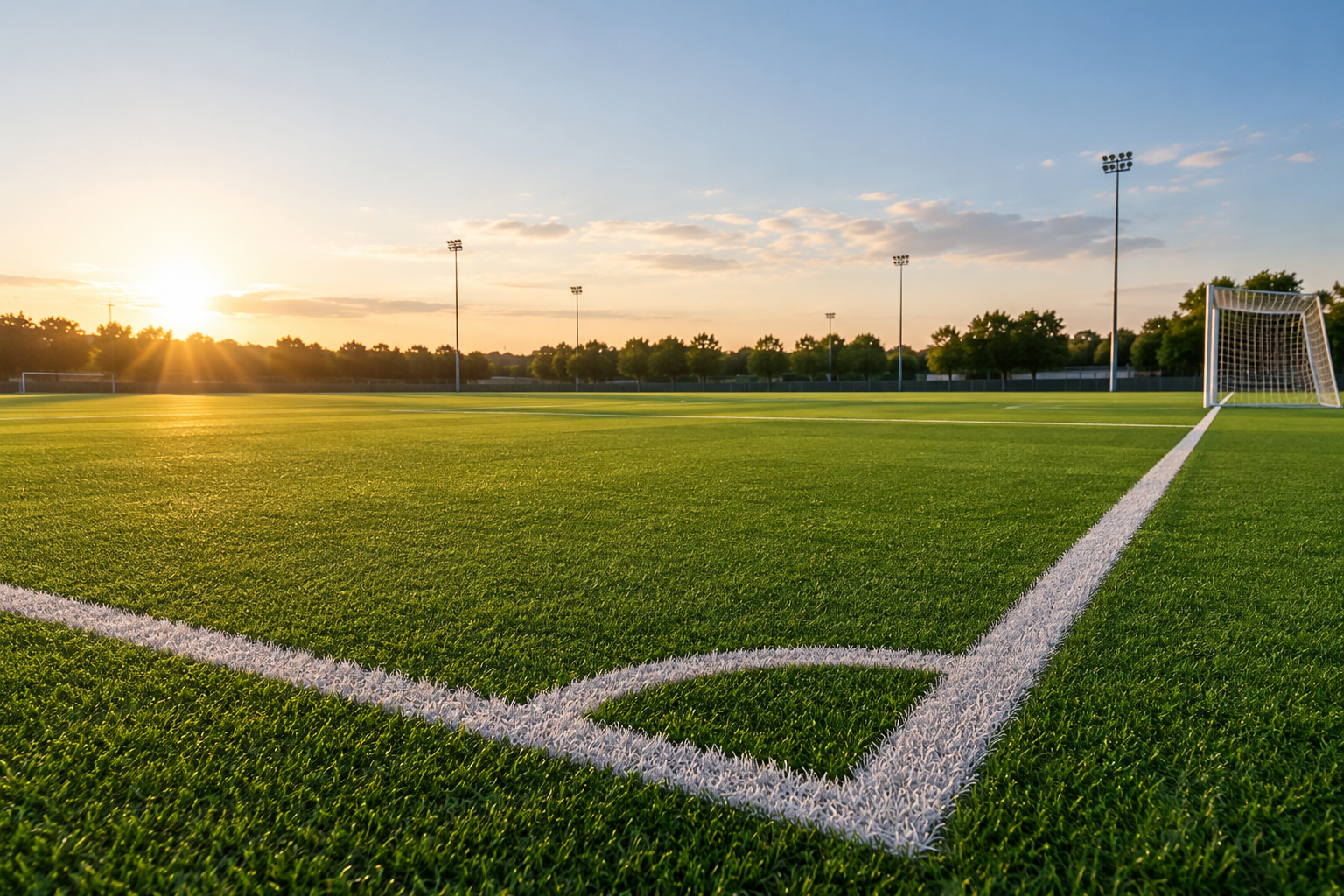
Turf suitable for a football pitch: practical criteria for choosing the best solution
Choosing a turf suitable for a football pitch is an important decision for sports facility managers, purchasing managers, and organizations looking to build or renovate a surface intended for football activities. The covering affects the quality of play, the regularity of the ground, maintenance management, and the continuity of the facility's use. For this reason, comparing alternatives must start from verifiable technical requirements rather than exclusively from the price per square meter.
Available solutions include natural grass, synthetic systems, and hybrid surfaces that combine plant and artificial components. Each technology has specific characteristics in terms of ball behavior, interaction with footwear, drainage, resistance to foot traffic, and maintenance requirements. The most appropriate solution depends on the intended use of the pitch, the expected intensity of use, and the climatic and environmental conditions.
This in-depth analysis proposes an evaluation method based on practical criteria, useful for defining the required characteristics, interpreting technical data sheets, and comparing quotes. The goal is to help the investment manager identify a surface consistent with the facility's operational needs, also considering sub-base preparation, performance checks, and life-cycle costs.
- Define the intended use of the football pitch
- Compare natural, synthetic, and hybrid grass
- Evaluate the sports performance of the surface
- Examine the materials and structure of the synthetic turf
- Check drainage and sub-base preparation
- Consider safety, compliance, and checks
- Plan maintenance and pitch lifespan
- Evaluate the supplier and compare quotes
- Plan a sustainable long-term investment
Define the intended use of the football pitch
Before selecting a covering, it is necessary to establish how the pitch will be used. A facility mainly intended for official matches has different requirements compared to a structure dedicated to daily training, football schools, or amateur rentals. The frequency of activities and the number of users affect the stress on the surface and the scheduling of maintenance work.
The purchasing manager should collect information regarding weekly hours of use, categories of users, planned activities, and peak times. This data allows for the definition of a realistic operational profile and the identification of the necessary performance levels. A pitch used for numerous consecutive sessions requires particularly careful evaluation of wear resistance and the ability to maintain uniform characteristics.
It is also necessary to consider any requirements established by federations, organizing bodies, or competition regulations. Required compliance may depend on the level of sport and the type of event. Before choosing the system, it is therefore advisable to verify the applicable provisions, avoiding the assumption that a generically defined professional surface is automatically suitable for any competition.
Estimate the weekly intensity of use
The number of scheduled hours is an important indicator, but it must be interpreted together with the distribution of activities. Training sessions concentrated in the same areas of the pitch can generate higher localized wear compared to evenly distributed use. The areas in front of the goals, the sidelines, and the zones dedicated to technical exercises deserve special attention in the assessment of durability.
Distinguish between competitive and recreational activities
The needs of a pitch intended for regulated competitions may differ from those of a facility used for recreational activities. Dimensions, required performance, and verification procedures must be consistent with the actual intended use. A correct initial definition avoids investments in unnecessary features or the selection of solutions that are insufficient regarding the facility's sporting obligations.
Compare natural, synthetic, and hybrid grass
The first technical distinction concerns the type of surface. Natural grass consists of a vegetative carpet that requires adequate agronomic conditions, while synthetic turf uses artificial fibers integrated into a specific construction system. Hybrid surfaces combine natural vegetation and synthetic components with the goal of improving certain stability and resistance characteristics.
There is no universally better solution. The choice depends on climate, water availability, intensity of use, maintenance resources, and sports requirements. A well-managed natural pitch can offer high performance but requires continuous agronomic intervention. A synthetic surface can allow for a different scheduling of activities, while still requiring specific maintenance and periodic checks.
To correctly compare alternatives, it is necessary to consider the entire system and not just the surface layer. Ground preparation, drainage, any elastic layers, and installation methods affect final performance. Two pitches built with apparently similar materials can show different behaviors due to the characteristics of the sub-base and the quality of the installation.
Characteristics of natural grass
A natural grass pitch requires the selection of plant species compatible with the local climate, the availability of an adequate substrate, and a program of irrigation, mowing, fertilization, and regeneration. The quality of the surface depends on the health of the turf and the ability of the soil to support foot traffic. In cases of intensive use, recovery periods may be necessary to maintain satisfactory playing conditions.
Characteristics of synthetic and hybrid systems
Synthetic systems use fibers designed to reproduce some functional characteristics of grass, while hybrid solutions integrate artificial components with a living vegetative carpet. Both categories include different technologies, which must be evaluated through documented performance. The presence of synthetic fibers does not automatically eliminate maintenance requirements and does not, on its own, guarantee a longer lifespan for the facility.
Evaluate the sports performance of the surface
Among the main practical selection criteria is the behavior of the surface during play. The turf must offer characteristics consistent with the discipline, allowing for controlled movements and predictable interaction between the ground, footwear, and the ball. For a purchasing manager, these parameters are more significant elements than the mere commercial description of the materials.
Sports performance is influenced by the combination of covering, any infill, elastic layer, and sub-base. For this reason, it is important to request results referring to the complete system and, where foreseen, checks carried out on the installed pitch. The values obtained on a single component do not necessarily describe the behavior of the finished surface.
The stability of performance over time constitutes a further evaluation factor. A pitch must maintain adequate characteristics not only after delivery but also during normal use. Maintenance procedures and environmental conditions can modify the behavior of the turf, making scheduled management necessary.
Ball rebound and roll
Ball behavior is influenced by surface regularity, the structure of the system, and conditions of use. Non-uniform rebounds and rolls can compromise the quality of drills and matches. In professional projects, it is appropriate to check which tests are required by applicable technical specifications and request documented results, avoiding evaluations based solely on visual impressions.
Shock absorption and traction
The interaction between the athlete and the ground includes parameters such as shock absorption, vertical deformation, and rotational resistance. These characteristics must be considered as a whole, as a surface that is excessively rigid or has inappropriate behavior can influence comfort and movement dynamics. Acceptable values depend on the standards applicable to the specific sports destination and must be verified through appropriate test methods.
Examine the materials and structure of the synthetic turf
When the choice falls on an artificial system, it is necessary to delve into the composition of the covering. A synthetic turf for football generally includes fibers, an anchoring backing, and, depending on the technology, infill materials and additional functional layers. The quality of the result depends on the integration of these elements and not on a single isolated characteristic.
Fibers can differ in material, geometry, height, density, and mechanical characteristics. These parameters influence the behavior of the turf, wear resistance, and interaction with the ball. However, a high value of density or height does not automatically guarantee superior performance. It is necessary to verify that the configuration has been designed for the intended football use.
Another important element concerns the compatibility between components. Fibers, backing, infill, and elastic layer must be considered as parts of a system. Replacements carried out without technical verification can modify declared performance and compromise any compliance requirements. For this reason, the purchasing manager should request a complete description of the proposed configuration.
Fiber height and density of the covering
The height of the yarn and the quantity of fibers present on the surface contribute to determining the characteristics of the turf. The choice must be consistent with the adopted technology and the required performance specifications. It is advisable to compare data using homogeneous units of measurement and verify that the declared characteristics correspond to the product actually intended in the project.
Infill materials and elastic layers
Some systems use infill materials to contribute to the stability of the fibers and the mechanical behavior of the surface. Alternatives can include mineral, organic, or polymeric materials, subject to different technical characteristics and regulatory provisions. It is also necessary to verify the restrictions applicable to the materials used, including environmental ones. Any elastic layers must be evaluated together with the rest of the system, considering performance, duration, and installation methods.
Check drainage and sub-base preparation
The quality of the football pitch drainage system directly affects the possibility of using the facility after rainfall and the preservation of the surface's characteristics. A permeable covering is not sufficient if the underlying layers do not allow for proper water disposal. The project must therefore consider the entire hydraulic path, from the surface to the collection and discharge systems.
Design should start from the characteristics of the soil and local climatic conditions. Rainfall intensity, soil permeability, and availability of adequate drainage points influence the necessary configuration. An undersized system can cause stagnation, reduce the availability of the pitch, and contribute to the deterioration of some components.
The regularity of the sub-base also represents a fundamental requirement. Settling, unevenness, and compaction defects can transfer to the surface, compromising uniformity and performance. For this reason, ground preparation must be considered an essential technical phase and not a simple activity preliminary to laying the turf.
Permeability and water disposal
The drainage capacity must be evaluated through parameters consistent with the project and the expected weather conditions. It is important to verify the compatibility between the permeability of the covering, foundation layers, and collection network. Sizing requires specific skills and must also consider any environmental and regulatory constraints related to water discharge.
Flatness and stability of the foundation
A stable sub-base helps maintain the regularity of the surface during use. Checks can involve levels, slopes, compaction, and characteristics of the layers provided by the project. Control before laying allows for the identification of any defects when corrective actions are still relatively accessible, avoiding the transfer of structural problems to the final covering.
Consider safety, compliance, and checks
The selection of the turf must take into account the provisions applicable to the facility and the sports destination. In Italy, requirements can depend on the type of pitch, the level of competition, and the prescriptions of competent bodies. For projects intended for regulated activities, it is appropriate to verify the updated references of the federation or organizing body in advance.
Technical documentation should clearly identify the proposed system and the declared performance. Certifications, test reports, and attestations must be examined, verifying the scope of validity, tested configuration, and conditions of application. The presence of a mark or a generic declaration does not replace the possible need for checks on the completed pitch.
It is also important to consider the environmental and health aspects related to the materials. The composition of the infills, water management, and disposal methods for components must be compatible with current legislation. Regulations can evolve over time, making an updated check necessary before approving the project.
Performance standards and laboratory tests
Laboratory tests allow for the evaluation of certain characteristics of materials and systems under the conditions provided by test methods. For football, federal specifications and quality programs applicable to the facility category can assume relevance. It is necessary to distinguish the results obtained in the laboratory from the performance measured after installation, as both can play a role in the verification path.
Checks and testing after installation
At the end of the work, it is appropriate to provide for documented checks on the correct completion of the pitch. Verifications can include surface regularity, sports behavior, drainage, and correspondence of the materials to the approved project. When required, the testing must follow the procedures of the competent body. The delivery of the final documentation also represents a useful reference for subsequent maintenance.
Plan maintenance and pitch lifespan
Turf maintenance is an essential component of operating costs. Each type of surface requires specific interventions, the frequency of which depends on use, climate, and construction characteristics. The idea that a synthetic pitch is completely maintenance-free does not correspond to the operational needs of a professional facility.
For natural pitches, management generally includes mowing, irrigation, feeding the vegetative carpet, aeration, and regeneration interventions. For synthetic systems, cleaning, debris removal, checking joints, maintaining infill, and verifying surface characteristics may be necessary. Activities must follow the manufacturer's indications and any applicable requirements.
The actual lifespan depends on the quality of the materials, the intensity of use, environmental exposure, and the regularity of interventions. It is not correct to attribute an identical useful life to all turfs belonging to the same category. For a reliable economic evaluation, it is preferable to use realistic scenarios and consider any restoration or replacement costs.
Organize ordinary interventions
A maintenance plan should identify activities, frequencies, responsibilities, and recording methods. Scheduling allows for the distribution of interventions throughout the year and reduces unexpected interruptions. It is useful to plan periodic checks of the most stressed areas, drainage systems, and general conditions of the surface, adapting procedures to the technical indications of the installed system.
Recognize degradation and plan for replacement
Loss of uniformity, fiber wear, drainage problems, or deterioration of the vegetative carpet can indicate the need for corrective action. The decision to replace the turf should be based on technical and performance evaluations, not just the age of the facility. A proper diagnosis allows for the distinction of localized problems from conditions that require more extensive renovation.
Evaluate the supplier and compare quotes
The choice of supplier must consider the ability to propose a solution consistent with the characteristics of the facility. A reliable quote should describe materials, construction system, included works, installation methods, and expected performance. For the purchasing manager, the completeness of the documentation is an important element for comparing apparently similar offers.
The price per square meter can represent an initial reference, but it does not necessarily describe the cost of the complete work. Ground preparation, drainage, foundation, covering, signage, and final checks can be included or excluded from different proposals. A correct comparison therefore requires defining a homogeneous scope of supply.
When the pitch is part of a multi-purpose sports facility, planning can also include accessories for facilities and sports equipment relevant to complementary activities. In any case, it is important to keep the evaluation of the turf separate from that of the accessories, verifying for each element the intended use, compatibility, and effective technical requirements.
Elements to request in the technical proposal
The proposal should identify the planned system, characteristics of the materials, construction layers, work phases, and warranty conditions. It is also useful to request indications on quality controls, foreseen tests, and responsibilities related to initial maintenance. A detailed description allows for the reduction of contractual ambiguities and facilitates the verification of performance after delivery.
Supplier experience and after-sales support
References relating to facilities with similar characteristics can contribute to the evaluation of the supplier. It is also appropriate to consider the availability of technical support, clarity of intervention procedures, and the possibility of finding compatible materials for any repairs. After-installation support can affect operational continuity, especially in facilities that use the pitch for numerous hours per week.
Plan a sustainable long-term investment
The choice of turf suitable for a football pitch should be included in an economic analysis that covers the entire life cycle of the facility. The initial cost represents only a part of the investment, while maintenance, water and energy consumption, checks, repairs, and future replacement can significantly impact the budget. A less expensive solution at the time of purchase is not necessarily the most convenient in the long run.
To compare alternatives, it is useful to prepare an evaluation matrix with mandatory requirements and preferential parameters. Among the first, compliance with the sports destination, required performance, drainage feasibility, and compatibility with the sub-base can be included. Among the second, maintenance simplicity, availability of support, and documented environmental characteristics can be included. Assigning a weight to each criterion makes the decision-making process more transparent.
A further indicator can be the total cost compared to the expected hours of use. For example, a hypothetical investment of 120,000 euros, distributed over ten years and associated with 1,500 annual hours of activity, corresponds to an initial share of approximately 8 euros per hour of use. The calculation is purely illustrative and does not include maintenance, consumption, financing, and other operating costs. Its utility lies in comparing scenarios using homogeneous and documented hypotheses.
Analyze the total cost of ownership
The total cost of ownership should include design, ground preparation, materials, installation, checks, maintenance, and foreseeable extraordinary interventions. In natural systems, it is important to consider the resources necessary for agronomic management, while in synthetic systems, it is necessary to evaluate specific interventions and the methods of managing materials at the end of their life. A structured analysis allows for the comparison of different technological alternatives without being limited to the initial price.
Define an investment approval procedure
Before final approval, it is appropriate to verify that the proposed solution meets the sports, technical, and economic needs of the facility. The purchasing manager should coordinate the comparison between designers, maintenance technicians, facility managers, and suppliers, collecting documentation and contractual conditions. This procedure allows for the identification of any critical issues before work begins and establishes clear responsibilities for subsequent operational phases.
Effective planning also considers the availability of the pitch during interventions and the possible economic consequences of closing periods. Realization times, weather conditions, maturation needs of natural turf, and any final checks must be integrated into the activity calendar. For a sports facility manager, the quality of the investment depends on the ability to obtain a surface adequate for the required performance and to keep it usable with sustainable costs and procedures over time.
Comments (0)