
Trolley
You have no items in your shopping cart

 Budgets
 Dumbers
 Discs
Discs
 Benches
 Racks and Rigs
 Weights Holders
 Isotonic machines
 Calisthenics
 Cardio
 Kettlebells
 Flooring
 Gym Set
 Accessories
 Combat
 ARTI MARZIALI
 CONTAINER GYM
 Tug-Of-War
 Used Gym Equipment
 PILATES MACCHINARI
 GINNASTICA ARTISTICA
 CAMPI DA PADEL
 Prodotti in Pronta Consegna
 Informazioni
 IRONMAN
 Gift Card
- Donatif
- General information
- 0 I like it
- 900 Views
- 0 comments
- gym flooring, safety flooring, gym safety, shock-absorbing materials
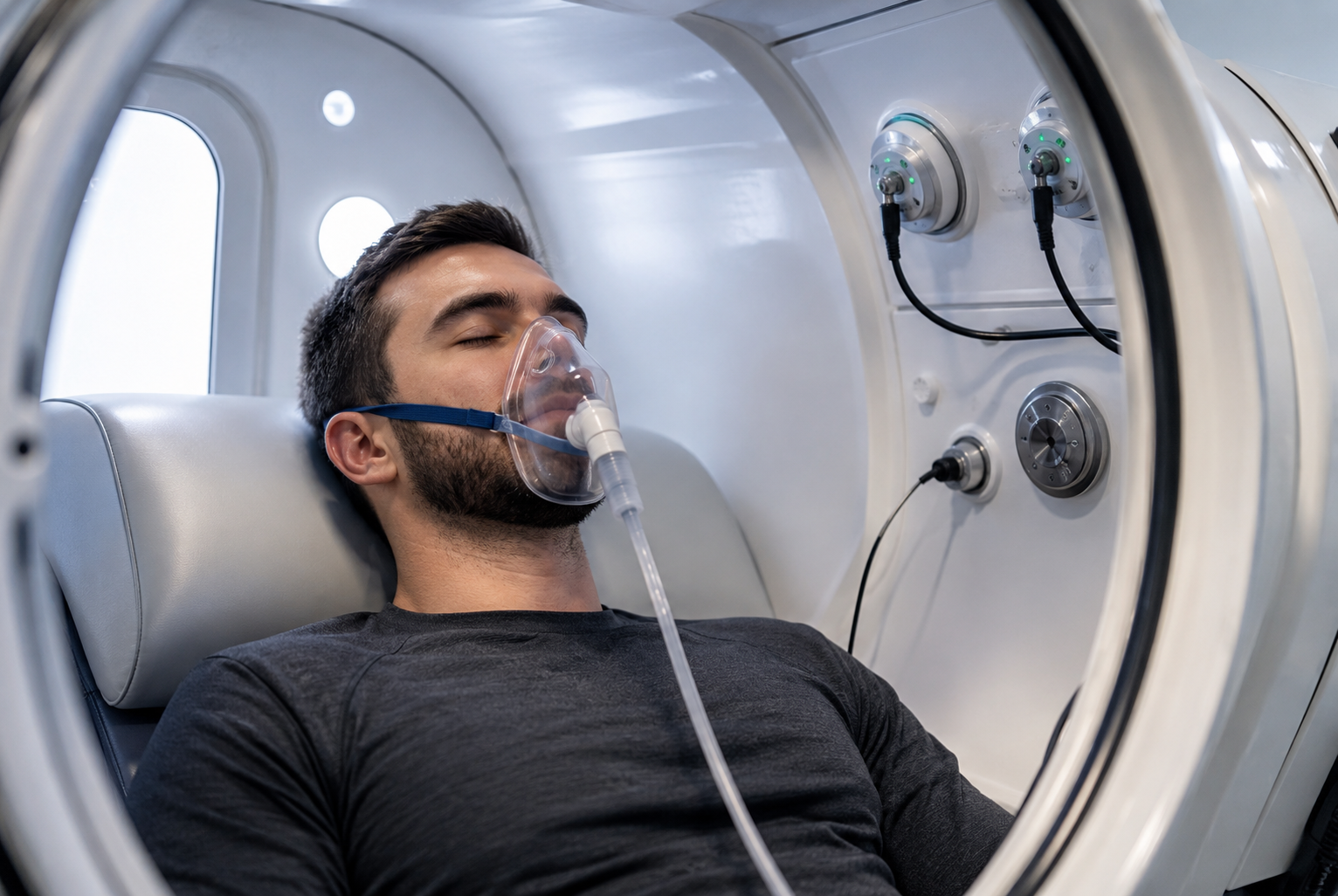
Guide to O2 Sensors: The Heart of Hypoxic Chamber Operation
A hypoxic chamber is a technological system designed to recreate environmental conditions similar to those at high altitudes through the precise management of air composition. When discussing the operation of these environments, attention is often focused on the hypoxia generator, but there is an equally fundamental component that determines the system's reliability and safety: the oxygen sensor.
O2 sensors represent the control point through which the hypoxic chamber detects and monitors the oxygen concentration present in the environment. Thanks to these devices, the system can continuously verify that the set parameters are respected and intervene when necessary to maintain stable conditions during use.
Understanding the relationship between what a hypoxic chamber is and how it works therefore also means analyzing the role of the sensors, their precision, and calibration procedures. The quality of detection directly influences the safety of hypoxic training and the ability to offer a controlled experience in both professional and advanced home settings.
- The role of O2 sensors in the operation of the hypoxic chamber
- How an oxygen sensor works
- Electrochemical oxygen sensors: characteristics and operation
- The importance of hypoxic chamber calibration
- Precision and reliability of oxygen detection
- Safety of hypoxic training through monitoring
- Maintenance and lifespan of oxygen sensors
- Sensor technology as a strategic element
The role of O2 sensors in the operation of the hypoxic chamber
Inside a hypoxic chamber, controlling the oxygen concentration is a continuous process that requires tools capable of providing precise data in real time. O2 sensors perform precisely this function: they detect the level of oxygen present in the environment and communicate this information to the management system.
The hypoxia generator produces air with a modified oxygen concentration, but without a reliable measurement system, it would be impossible to verify that the desired value is actually maintained. The sensor thus becomes the link between air production and environmental control.
In a professional facility, where the chamber may be used by multiple people throughout the day, parameter stability is essential. A precise detection system makes it possible to maintain consistent conditions and reduce the risk of uncontrolled variations.
Continuous environmental monitoring
Sensors work constantly to detect any variations in oxygen concentration.
This control allows the system to adapt to operating conditions and maintain the environment according to programmed parameters.
The sensor as a feedback system
The data detected by the sensor represents essential feedback for the automatic operation of the chamber.
Through this information, the system can adjust the production of hypoxic air and maintain greater precision.
How an oxygen sensor works
An oxygen sensor has the task of transforming the presence of oxygen in the air into a signal measurable by the control system. This process allows the hypoxic chamber to know the actual level of oxygen present in the environment at all times.
The technology used may vary depending on the type of sensor, but the general principle remains the same: detect the concentration of the gas and provide information usable by electronic management systems.
The quality of the sensor directly influences the precision of the entire system. An inaccurate device could generate erroneous readings and compromise the system's ability to maintain stable conditions.
Detection process
The sensor analyzes the air inside the chamber and determines the amount of oxygen available.
The detected value is then used by the system to control the overall operation of the equipment.
Why precision is essential
In a hypoxic environment, even small variations can influence the quality of the programmed protocol.
For this reason, reliable sensors represent an essential element of design.
Electrochemical oxygen sensors: characteristics and operation
Among the technologies used for oxygen detection, we find the electrochemical oxygen sensor, a solution widely used in gas measurement systems thanks to its ability to detect oxygen concentration through an electrochemical reaction.
These sensors use internal components capable of generating a signal proportional to the amount of oxygen detected. The electronic system interprets this signal and uses it to monitor the level present in the environment.
The choice of detection technology affects the precision, long-term stability, and maintenance needs of the system.
Advantages of electrochemical sensors
Electrochemical sensors are appreciated for their ability to provide reliable measurements in applications where oxygen control is critical.
Their integration into hypoxic systems helps maintain high control standards.
Lifecycle management
Like any technical component, sensors also have an operational lifespan and require periodic checks.
Proper management makes it possible to maintain the quality of measurements over time.
The importance of hypoxic chamber calibration
Calibration represents a fundamental phase to ensure that the detection system provides correct values. Even a high-quality sensor can lose precision over time if it is not checked and adjusted correctly.
Hypoxic chamber calibration allows the value detected by the sensor to be compared with a known reference, correcting any deviations and keeping environmental control reliable.
For fitness centers and professional facilities, proper calibration is an essential element to guarantee operational continuity and the quality of the service offered to users.
When to perform calibration
The frequency of calibration procedures depends on the type of sensor, the use of the chamber, and the manufacturer's technical instructions.
A preventive maintenance schedule helps avoid problems and maintain high performance.
Consequences of insufficient calibration
An improperly calibrated sensor can provide inaccurate values.
This can influence environmental management and reduce system reliability.
Precision and reliability of oxygen detection
Detection precision is one of the elements that distinguishes a professional hypoxic system from a less evolved solution. The ability to maintain consistent environmental conditions depends in fact on the quality of the data collected by the sensors.
Precise control makes it possible to replicate different protocols and adapt the environment to the users' needs. This aspect is particularly important in facilities that work with athletes or clients with specific goals.
The reliability of the system thus stems from the integration of sensors, control software, and components designed to work together.
Measurement stability
Stable measurements make it possible to maintain a predictable environment during sessions.
Data continuity improves the management of hypoxic protocols.
Reducing management errors
A precise detection system reduces the risk of uncontrolled variations.
This helps improve safety and the quality of the experience.
Safety of hypoxic training through monitoring
Safety is one of the main aspects when using a hypoxic environment. Controlling the oxygen concentration makes it possible to maintain conditions consistent with the chosen protocol and reduce risks related to improper management.
Continuous monitoring offers greater technical transparency and allows operators to verify system operation at all times.
For gyms and fitness centers, this aspect represents an important element in building a professional and reliable service.
Control of main parameters
The O2 sensor is one of the tools used to keep environmental conditions under control.
The availability of updated data allows for more conscious management of the equipment.
Building user trust
Technological transparency helps improve the perception of safety by users.
A controlled environment increases the overall quality of the service.
Maintenance and lifespan of oxygen sensors
Maintenance of O2 sensors is essential to preserve system precision over time. Periodic checks and correct procedures make it possible to identify any variations before they can affect the chamber's operation.
The lifespan of the sensor depends on various factors, including frequency of use, operating conditions, and quality of technical management.
Scheduled maintenance therefore represents an investment in the operational continuity of the system.
Scheduled technical checks
Periodic checks help keep the system efficient.
Preventive control reduces the risk of sudden interruptions.
Component replacement
When a sensor reaches the end of its operational life, it must be replaced according to technical instructions.
This keeps detection reliability high.
Sensor technology as a strategic element
The O2 sensor represents the invisible eye that allows the hypoxic chamber to operate in a precise and controlled manner. Without a reliable detection system, it would be impossible to guarantee the same quality in environmental management.
For professional facilities and advanced users, sensor quality, calibration, and maintenance are elements that determine the real value of the purchased technology.
Understanding the role of measurement systems makes it possible to evaluate a hypoxic chamber not only for its ability to create simulated altitude, but for the precision with which it manages to control it over time.
Comments (0)