
Trolley
You have no items in your shopping cart

 Budgets
 Dumbers
 Discs
Discs
 Benches
 Racks and Rigs
 Weights Holders
 Isotonic machines
 Calisthenics
 Cardio
 Kettlebells
 Flooring
 Gym Set
 Accessories
 Combat
 ARTI MARZIALI
 CONTAINER GYM
 Tug-Of-War
 Used Gym Equipment
 PILATES MACCHINARI
 GINNASTICA ARTISTICA
 CAMPI DA PADEL
 Prodotti in Pronta Consegna
 Informazioni
 IRONMAN
 Gift Card
- Donatif
- General information
- 0 I like it
- 15 Views
- 0 comments
- gym flooring, safety flooring, gym safety, shock-absorbing materials
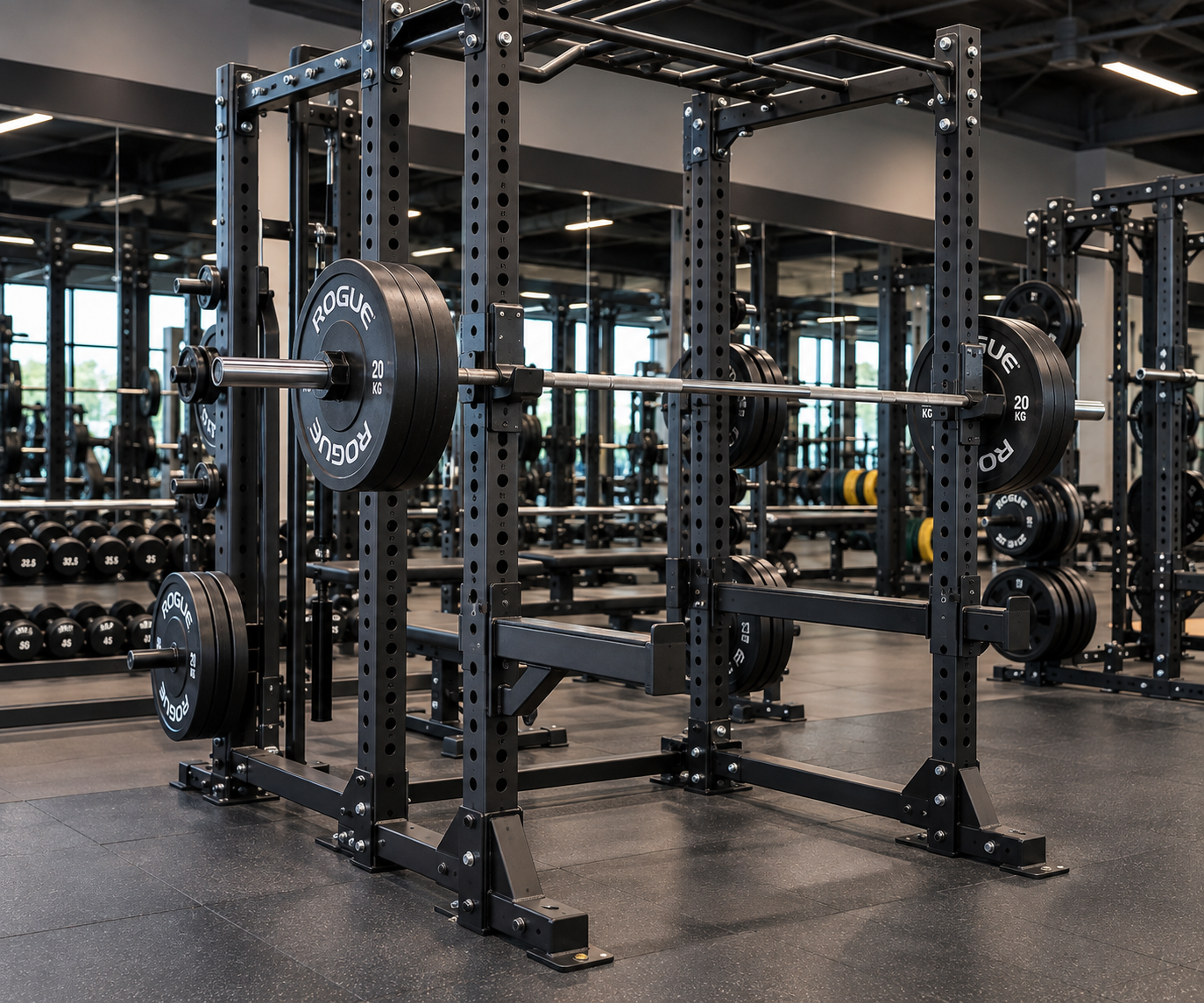
Power rack in a professional gym: layout, anchoring and distances
A power rack intended for a professional gym should be installed within an area designed to guarantee operating space, accessibility, compatibility with accessories and compliance with the installation instructions provided by the manufacturer. The design must consider layout, anchoring, safety distances, flooring and user traffic management.
The arrangement of the power rack affects the organization of the entire weight room. A correct configuration facilitates the use of the stations, reduces interference between users and allows the integration of accessories and complementary equipment without compromising the functionality of the environment.
This guide illustrates the main criteria for designing the installation of a professional power rack, highlighting the aspects to check before purchase and during the assembly phase.
- What requirements must the area have?
- How to design the layout
- When and how to evaluate anchoring
- How to manage distances and operating space
- Configuration and accessories
- Design errors to avoid
- Verification table
- How to properly plan the investment
What requirements must the area intended for the power rack have?
The area should allow the use of the rack without hindering the passage of users and without interfering with other equipment in the room.
Before installation, it is advisable to check the room dimensions, available height, characteristics of the support surface and space required for the planned exercises.
The manufacturer's technical documentation represents the main reference for knowing the dimensional requirements and installation methods.
Why check the height of the room?
The usable height must be compatible with the dimensions of the rack and with exercises that involve the barbell overhead or the use of upper accessories.
How much does the available surface matter?
The space must include both the footprint of the rack and the operating area necessary to allow free movement during exercises.
How to design the weight room layout?
The layout should favor clear paths, easy access to the rack and an orderly distribution of other equipment.
It is advisable to prevent the power rack from being placed along main passageways or in spots that limit user circulation.
Careful planning also facilitates the organization of multiple stations dedicated to barbell exercises.
Why organize paths?
Orderly paths reduce interference between users and improve the overall management of the weight room.
How to integrate the rack with other equipment?
The positioning should allow the simultaneous use of different stations without overlapping operating areas.
When to evaluate anchoring the power rack?
Anchoring methods depend on the rack design and the manufacturer's instructions.
Before installation, it is necessary to check whether the model requires fixing to the support surface or if it is designed to be used without permanent anchoring.
Any intervention must be carried out following exclusively the instructions provided in the technical documentation.
Why follow the manual?
The manufacturer indicates installation methods, compatible fastening systems and requirements of the surface intended for assembly.
How much does the support surface matter?
The flooring must be suitable for the type of installation planned and compatible with the weight of the equipment.
How to manage distances and operating space?
Distances must not be evaluated considering only the dimensions of the rack but also the area necessary to perform exercises safely.
Sufficient space must be provided for squats, bench press, use of safety systems and barbell handling.
Even accessories installed on the rack can modify the required operating area.
Why consider movement space?
The operating space allows using the rack without interfering with other stations or passageways.
Why keep access free?
Easy access facilitates the use of the machine and room management during peak hours.
Which elements to evaluate in the configuration?
Before purchase, it is useful to check the number and arrangement of holes, available adjustments, compatibility with accessories and characteristics of safety systems.
The load capacity declared by the manufacturer must also be compared with the intended use and with the specifications reported in the official documentation.
To learn more about the various configurations available, you can consult the professional power racks category.
Why check safety features?
Safety arms, supports and adjustment systems must be compatible with the installed model and used according to the manufacturer's instructions.
Do accessories affect the design?
Yes. Pull-up bars, supports, platforms and other accessories can modify the dimensions and usage methods of the rack.
Which design errors to avoid?
One of the most frequent errors consists in installing the rack without evaluating the operating space necessary for the exercises.
It is also advisable to avoid configurations that obstruct room paths or do not respect the installation methods indicated by the manufacturer.
Neglecting accessory compatibility, maintenance and spare parts availability can affect equipment management over time.
Why not consider dimensions only?
External measurements represent only a part of the design. It is also necessary to evaluate the operating area and planned movements during training.
How much does technical documentation matter?
Manuals and technical sheets constitute the main reference for installation, anchoring, maintenance and use of the rack.
Compact verification table
| Criterion | What to check |
|---|---|
| Layout | Paths and accessibility |
| Dimensions | Footprint and operating space |
| Anchoring | Requirements indicated by the manufacturer |
| Flooring | Compatibility with installation |
| Load capacity | Declared specifications |
| Accessories | Compatibility with the rack |
This table represents a useful checklist to compare different configurations and correctly plan the installation.
Definitive characteristics must always be confirmed by consulting the manufacturer's official technical documentation.
Which documents to consult?
Installation manuals, technical sheets, assembly instructions and the manufacturer's official documentation constitute the primary sources to check dimensional requirements, fixing methods and maintenance programs.
Which aspects to compare before purchase?
Layout, dimensions, load capacity, safety systems, accessory compatibility, spare parts availability and completeness of technical documentation are fundamental criteria for an objective evaluation.
How to properly plan the investment?
The choice of a professional power rack should be integrated into an overall project that considers available space, usage methods, compatibility with other equipment and installation requirements. Preventive evaluation allows comparing different configurations using verifiable technical criteria.
Before purchase, it is advisable to prepare a checklist including layout, operating area, anchoring methods, accessory compatibility, load capacity, technical documentation and maintenance program. This approach facilitates a choice consistent with the gym's needs.
FAQ
Is it always necessary to anchor a power rack? It depends on the model and the manufacturer's instructions. It is necessary to follow exclusively the instructions provided in the technical documentation.
How much space must be provided? It is necessary to consider both the footprint of the rack and the operating area required for exercises and user passage.
Do accessories modify the layout? Yes. Some accessories increase the footprint and require additional space during use.
What is the most reliable source for designing the installation? Installation manuals, technical sheets and the manufacturer's official documentation represent the main reference for requirements, assembly and maintenance.
Comments (0)