
Trolley
You have no items in your shopping cart

 Budgets
 Dumbers
 Discs
Discs
 Benches
 Racks and Rigs
 Weights Holders
 Isotonic machines
 Calisthenics
 Cardio
 Kettlebells
 Flooring
 Gym Set
 Accessories
 Combat
 ARTI MARZIALI
 CONTAINER GYM
 Tug-Of-War
 Used Gym Equipment
 PILATES MACCHINARI
 GINNASTICA ARTISTICA
 CAMPI DA PADEL
 Prodotti in Pronta Consegna
 Informazioni
 IRONMAN
 Gift Card
- Donatif
- General information
- 0 I like it
- 346 Views
- 0 comments
- gym flooring, safety flooring, gym safety, shock-absorbing materials
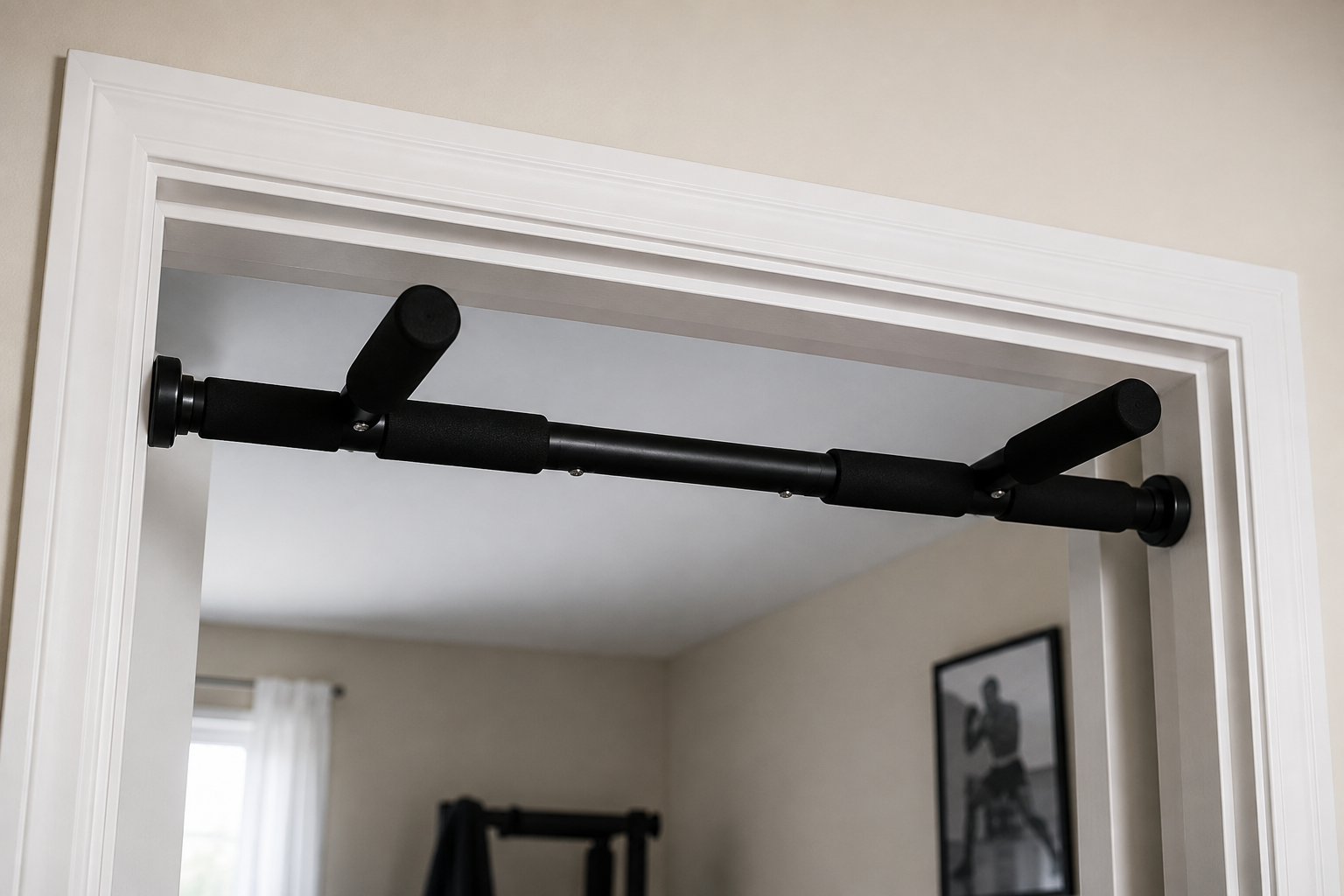
Professional vs. Amateur Pull-Up Bar: 5 Differences That Save Your Tendons
When choosing a professional pull-up bar, many users focus exclusively on the price or the aesthetics of the product. In reality, the differences between a structure designed for intensive use and one intended for occasional workouts directly affect the quality of movement, safety, and the health of tendons and joints. An apparently similar bar can offer completely different sensations during the execution of pull-ups, muscle-ups, or calisthenics exercises.
Every repetition generates significant forces that are transmitted from the hands to the wrists, elbows, and shoulders. If the structure flexes, vibrates, or features unsuitable grips, these stresses increase and can turn, over time, into chronic discomfort or actual injuries. For this reason, build quality is not a luxury, but an investment in training continuity.
In this guide, we analyze the five main differences between a professional and an amateur bar, delving into technical aspects related to materials, structural rigidity, grip diameter, and stability—fundamental elements for those who wish to train with intensity without compromising the health of their tendons.
- Structural rigidity and stability
- Construction materials
- Grip diameter
- Vibrations and steel behavior
- Long-term safety
- How to choose the right bar
- Common mistakes to avoid
- Why a professional structure is an investment
Structural rigidity and stability
The most obvious difference between a professional and an amateur bar concerns the rigidity of the structure. A frame designed for intensive use minimizes deformation during the execution of exercises, keeping the athlete's position constant. This feature allows for a more uniform transmission of forces and makes the movement predictable.
Cheap structures, on the other hand, tend to oscillate or flex when subjected to high loads or explosive movements. This instability forces the body to make continuous compensations that involve the wrists, elbows, and shoulders, increasing the load on soft tissues.
Greater rigidity also improves the technical quality of the exercises. The athlete can focus on execution without having to continuously correct their balance or adapt to the oscillations of the structure.
Importance of anchoring
A professional structure uses fastening systems designed to distribute loads evenly on the wall or floor. This reduces unwanted movements and increases safety during the most demanding sets.
Load distribution
The design of the welding points and tubular sections allows for the avoidance of stress concentrations that could compromise the durability of the structure over time.
Construction materials
The pull-up bar materials represent one of the most underestimated aspects. Higher quality steels guarantee better mechanical resistance and less deformation under load, contributing to the overall stability of the equipment.
Professional structures are often made with thicker tubulars and welds performed to high standards. This translates into greater durability even in environments where dozens of people use the bar every day.
The quality of the finishes also protects against corrosion and wear, keeping the surface characteristics unchanged over the years.
Structural steels
Steels with high mechanical characteristics allow for limiting flexing and deformation even during high-intensity dynamic exercises.
Professional welds
A uniform weld contributes to the overall rigidity of the structure and reduces the risk of localized failures.
Grip diameter
The pull-up bar diameter directly affects the biomechanics of the grip. A well-studied measurement allows for a more balanced distribution of pressure on the hand and facilitates control throughout the entire movement.
Grips that are too thin increase local compression and can quickly fatigue the forearm muscles. Conversely, excessive diameters require superior grip strength, reducing the quality of execution, especially during prolonged workouts.
Professional bars are designed taking these ergonomic aspects into account to offer an optimal compromise between comfort, control, and safety.
Grip ergonomics
An ergonomic grip allows the wrist to be kept in a more natural position, limiting tension on the flexor tendons.
Grip performance
The correct diameter improves the quality of the grip even in the presence of intense workouts and numerous repetitions.
Vibrations and steel behavior
Every pull-up generates vibrations that travel through the structure. In a cheap bar, these oscillations can be evident and transmitted directly to the athlete.
A professional construction reduces this phenomenon thanks to the greater rigidity and the quality of the steel used. The result is a more stable and predictable movement.
Limiting vibrations also means reducing the repeated micro-stresses that, in the long run, can contribute to joint overload.
Vibration damping
The structural design allows for the dissipation of part of the energy generated during dynamic movements.
Movement precision
A stable structure improves technical control during advanced exercises such as muscle-ups, front levers, and weighted pull-ups.
Long-term safety
Calisthenics injury prevention also depends on the quality of the equipment used. A stable support reduces the need for compensations and limits abnormal loads on tendons and joints.
Training for months or years on an unstable structure can increase tissue fatigue, especially in individuals who perform high volumes of training.
Investing in a professional bar therefore means reducing the risk of training interruptions due to recurring discomfort.
Frequent training
Those who train multiple times a week benefit more from a structure designed for continuous use.
Joint protection
Better stability promotes a more uniform distribution of forces during each repetition.
How to choose the right bar
Before purchasing, it is advisable to evaluate the intended type of use, the weight of the users, and the frequency of workouts.
For intensive home or professional use, it is better to opt for certified products designed to support high loads without deformation.
Those who wish to compare models designed to last can consult the selection of professional pull-up bars available in the Donatif catalog.
Analyze the technical data sheet
Checking materials, tubular thickness, load capacity, and the fastening system allows for a more informed choice.
Evaluate the intended use
A gym, a personal training studio, or an advanced athlete have very different needs compared to occasional use.
Common mistakes to avoid
Many buyers compare price exclusively, neglecting aspects such as rigidity, weld quality, and anchoring reliability.
Another mistake is underestimating the importance of correct installation. Even an excellent structure can offer inferior performance if mounted improperly.
Finally, choosing products without detailed technical information makes it difficult to evaluate the real performance of the structure.
Looking only at the cost
Initial savings can turn into shorter equipment life and a worse training experience.
Neglecting assembly
Correct installation is essential to take advantage of all the design features of the structure.
Why a professional structure is an investment
The choice between a professional and an amateur bar does not only concern the athlete's level,but also the quality of the training experience over time. Stability, rigidity, and construction precision contribute to making every repetition more controlled.
A structure designed with quality materials offers greater durability, reduces maintenance, and maintains constant performance even after years of intensive use.
Considering the value of joint health, training continuity, and safety, investing in professional equipment represents a rational choice for those who wish to achieve results in the long term without compromising tendons and joints.
Comments (0)